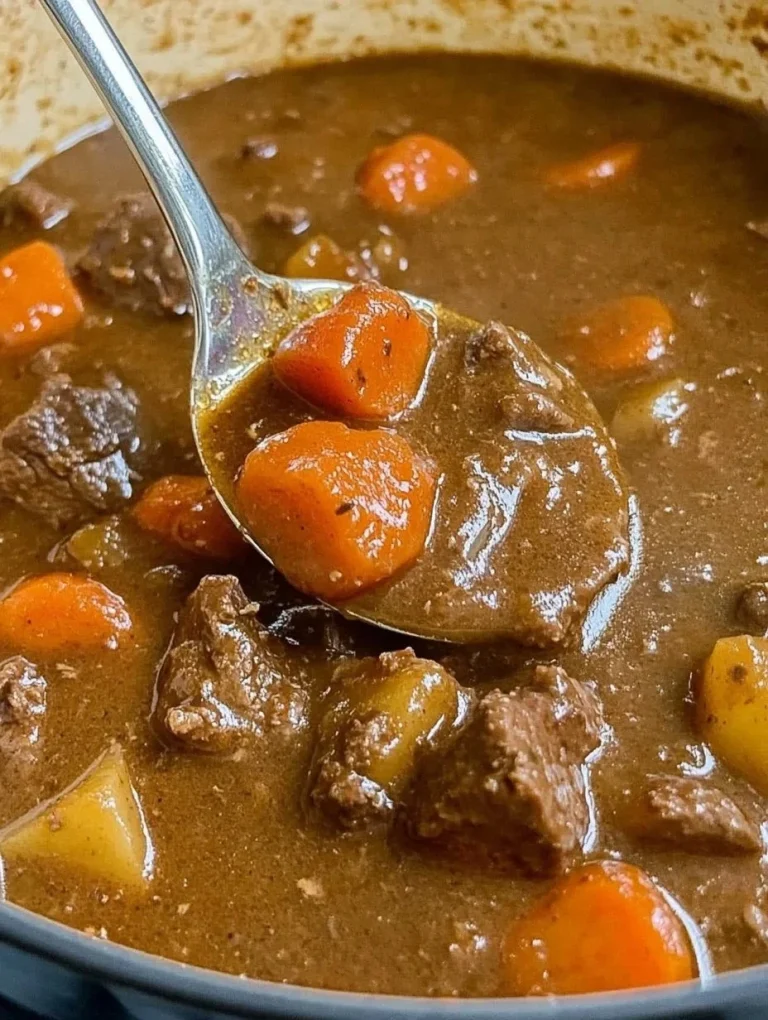
Traditional Irish Beef Stew

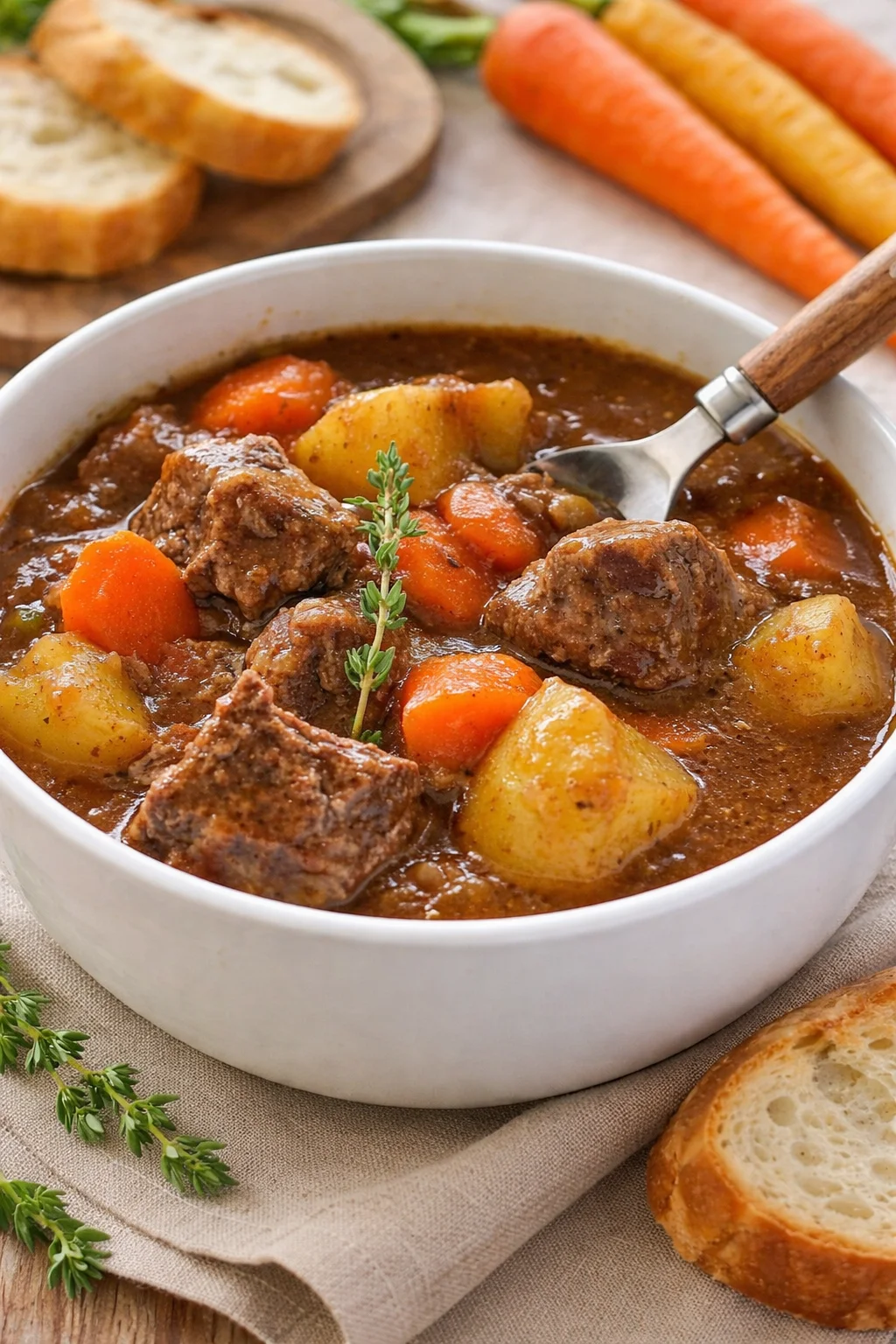
I’ve been making this old-school Irish beef stew for years when I want a bowl that feels like a warm hug—rich, slow-cooked beef with tender potatoes and carrots in a savory, slightly tangy gravy. It’s the kind of recipe that’s perfect for chilly nights, family dinners, or when you want something comforting that improves on leftovers. If you prefer a version with step-by-step photos, see this traditional beef Irish stew recipe for a close variation of this dish.
Why you’ll love this dish
This stew is hearty without being fussy. A few reasons people search for and make this recipe:
- Economical: beef chuck is budget-friendly and becomes meltingly tender with slow cooking.
- Make-ahead friendly: flavors deepen after a day, so it’s great for meal prep.
- Family-approved: soft vegetables and a thick gravy make it kid-friendly and satisfying.
- Versatile: easily adapted (beef, lamb, or even a vegetarian version with mushrooms).
“This stew warmed up an entire weekend: the meat was fall-apart tender and the sauce was rich without being heavy.” — a regular at my dinner table
How this recipe comes together
Step-by-step overview so you know what to expect:

- Brown the beef in olive oil to build deep flavor.
- Sauté onion and garlic, then stir in tomato paste to caramelize its sugars.
- Deglaze the pan with stout (optional) and add beef broth, herbs, and browned meat.
- Simmer slowly until the beef is nearly fork-tender.
- Add potatoes and carrots and continue cooking until the vegetables are soft and the sauce has thickened.
- Adjust seasoning, rest briefly, and serve.
This process creates a stew with layered flavors: browning (Maillard reaction) for savory notes, tomato paste for subtle sweetness and body, and gentle simmering to break down connective tissue.
What you’ll need
Ingredients (serves about 4–6):
- 2 lbs beef chuck, cut into chunks — perfect for stewing; becomes tender with slow cooking.
- 4 carrots, sliced — adds sweetness and color.
- 3 potatoes, diced — provides heartiness and helps thicken the stew (use Yukon Gold or russet).
- 1 onion, chopped — aromatic base for the stew.
- 3 cloves garlic, minced — enhances flavor.
- 4 cups beef broth — essential for a deep, savory flavor.
- 1 cup stout beer (optional) — adds depth; omit and use extra broth if preferred.
- 2 tbsp tomato paste — adds sweetness and depth.
- 1 tsp dried thyme — a must-have herb for classic flavor.
- 1 tsp dried rosemary — fragrant notes elevate the dish.
- Salt and pepper to taste — adjust seasoning at the end.
- 2 tbsp olive oil — for browning the beef.
Notes and substitutions inline:
- For gluten-free: ensure your beef broth and tomato paste are labeled gluten-free and skip the stout.
- Want a thicker gravy? A tablespoon of flour (toss with beef before browning) or a cornstarch slurry at the end will do the trick.
- If you prefer lamb, swap beef for lamb shoulder and reduce simmering time slightly.
For a slightly different ingredient layout and photo guide, you might like this alternate traditional beef Irish stew post.
Step-by-step instructions

Preparation and cooking written as clear actions:
- Prep: Pat beef chunks dry and season with salt and pepper. Chop vegetables and measure liquids.
- Brown the beef: Heat 2 tbsp olive oil in a large heavy pot over medium-high heat. Brown beef in batches so pieces sear rather than steam — about 2–3 minutes per side. Transfer browned beef to a plate.
- Sauté aromatics: Reduce heat to medium. Add chopped onion to the pot and cook until soft, 4–5 minutes. Add garlic and cook 30 seconds. Stir in 2 tbsp tomato paste and cook 1–2 minutes to reduce acidity and deepen flavor.
- Deglaze: Pour in 1 cup stout beer (or 1 more cup beef broth) and scrape up browned bits from the bottom of the pot. Let the liquid reduce slightly for 2 minutes.
- Add liquids and herbs: Return beef to the pot. Add 4 cups beef broth, 1 tsp dried thyme, and 1 tsp dried rosemary. Bring to a simmer.
- Slow simmer: Reduce heat to low, cover partially, and simmer gently for 1½–2 hours, or until beef is nearly fork-tender. Check occasionally and skim fat if needed.
- Add vegetables: Stir in diced potatoes and sliced carrots. Simmer uncovered for another 30–40 minutes until vegetables are tender and the sauce thickens.
- Finish and season: Taste and adjust salt and pepper. If gravy needs thickening, simmer a little longer or whisk in a cornstarch slurry (1 tsp cornstarch + 1 tbsp cold water). Let rest 10 minutes before serving.
For a slow-cooker adaptation and timing tweaks, see this helpful traditional Irish beef stew variant.
Best ways to enjoy it
Serving suggestions and pairings:
- Classic: ladle into bowls with crusty soda bread or buttered brown bread to soak up gravy.
- Over mash: serve the stew atop mashed potatoes for shepherd’s-pie vibes.
- Greens: a simple buttered cabbage or roasted Brussels sprouts balance the richness.
- Wine pairing: a medium-bodied red (Merlot or Malbec) complements the beef; if using stout, a dark beer also pairs well.
- Plating: serve in deep bowls, garnish with chopped parsley for color, and offer extra cracked black pepper.
Storage and reheating tips
How to keep leftovers tasting great:
- Refrigeration: Cool stew to room temperature (within 2 hours), place in an airtight container, and refrigerate up to 3–4 days.
- Freezing: Freeze in meal-sized portions for up to 3 months. Use freezer-safe containers or heavy-duty bags, removing as much air as possible.
- Reheating: Thaw overnight in the fridge. Reheat gently on the stove over low-medium heat until steaming, stirring occasionally. Add a splash of broth if the stew seems too thick. Microwave in covered bowls, stirring halfway through.
- Food safety: Always reheat to at least 165°F (74°C) and avoid leaving perishable food at room temperature for more than 2 hours.
Pro chef tips
Small tricks that really improve the dish:
- Don’t crowd the pan when browning: sear meat in batches for better flavor and color.
- Caramelize the tomato paste: cooking it for a minute or two before adding liquids deepens the taste.
- Low and slow: gentle simmering breaks down collagen in chuck, giving silky meat. High heat makes beef tough.
- Rest before serving: 10–15 minutes off the heat lets flavors settle and the gravy thicken naturally.
- To thicken without flour: mash a few cooked potato pieces in the pot to naturally thicken the stew.
Creative twists
Ways to make the recipe your own:
- Guinness twist: use a full cup of stout for deeper maltiness.
- Root vegetable boost: add parsnips, turnips, or rutabaga for an autumnal touch.
- Barley beef stew: stir in ½ cup pearl barley with the broth for a chewier texture.
- Slow cooker: brown beef and aromatics, then transfer to a slow cooker and cook on low 6–8 hours.
- Vegetarian version: replace beef with large portobello mushrooms or seitan and use vegetable broth; add a splash of soy sauce for umami.
Your questions answered
Q: Can I use a different cut of beef?
A: Yes. Beef chuck is ideal because of its marbling and connective tissue that melt into gelatin. Brisket or short ribs also work but adjust simmering time as needed.
Q: Is the stout necessary?
A: No. Stout adds complexity, but you can substitute an equal amount of beef broth or a mix of broth and a tablespoon of Worcestershire sauce.
Q: How long should I simmer?
A: Total simmer time is usually 1¾–2½ hours. The goal is fork-tender beef. If you use a slow cooker, 6–8 hours on low is typical.
Q: Can I make this ahead?
A: Absolutely. Stew often tastes better the next day. Cool, refrigerate, and reheat gently.
Q: How do I fix a stew that’s too thin or too salty?
A: Too thin — simmer uncovered to reduce, or add a slurry (cornstarch + water). Too salty — dilute with unsalted broth, add a peeled potato to absorb some salt, or add a bit of acid (a teaspoon of vinegar) to balance flavors.
Conclusion
If you want a Guinness-forward ingredient idea and technique comparison, this Irish Beef and Guinness Stew – RecipeTin Eats is a solid reference. For a step-by-step pictorial take and alternate ingredient notes, check out Irish Beef Stew – Vikalinka. And for another kitchen-tested classic version to compare timings and methods, see Irish Beef Stew – Simply Recipes.
Enjoy the stew—there’s something genuinely satisfying about a pot that simmers low and slow and feeds a family for days.
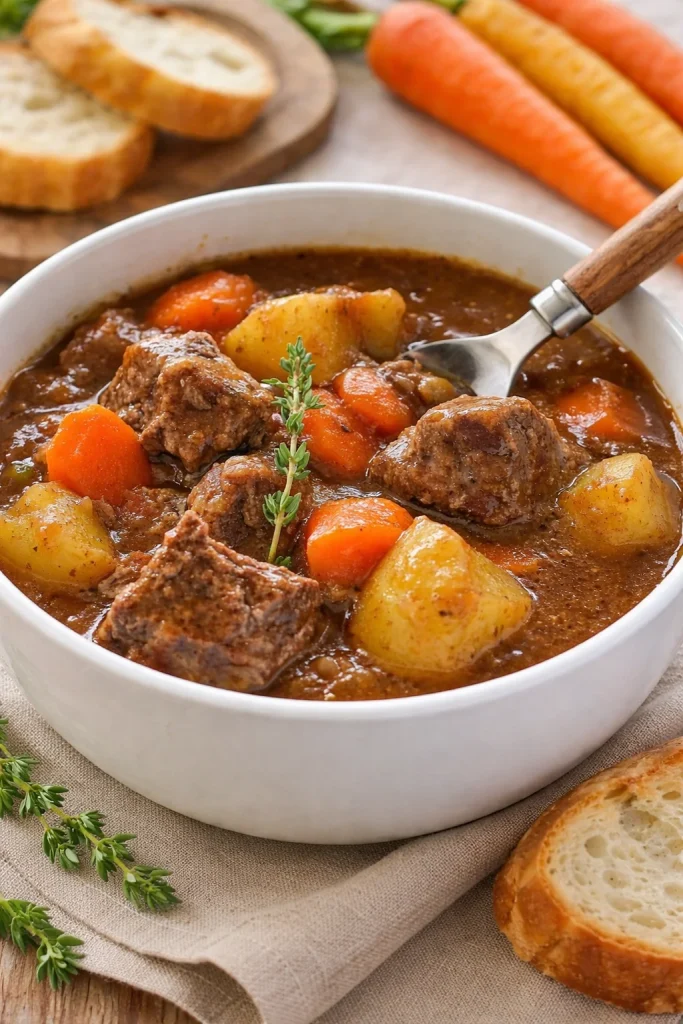
Irish Beef Stew
Ingredients
Method
- Pat beef chunks dry and season with salt and pepper. Chop vegetables and measure liquids.
- Heat 2 tbsp olive oil in a large heavy pot over medium-high heat. Brown beef in batches for about 2–3 minutes per side. Transfer to a plate.
- Reduce heat to medium. Add chopped onion and cook until soft, about 4–5 minutes. Add garlic and cook for 30 seconds. Stir in tomato paste and cook for 1–2 minutes.
- Pour in stout beer (or additional beef broth) and scrape up browned bits from the bottom. Let reduce slightly for 2 minutes.
- Return beef to the pot. Add beef broth, dried thyme, and dried rosemary. Bring to a simmer.
- Reduce heat to low, cover partially, and simmer gently for 1½–2 hours until beef is nearly fork-tender. Skim fat if needed.
- Stir in diced potatoes and sliced carrots. Simmer uncovered for another 30–40 minutes until vegetables are tender and sauce thickens.
- Taste and adjust salt and pepper. If gravy needs thickening, simmer longer or whisk in a cornstarch slurry. Let rest for 10 minutes before serving.