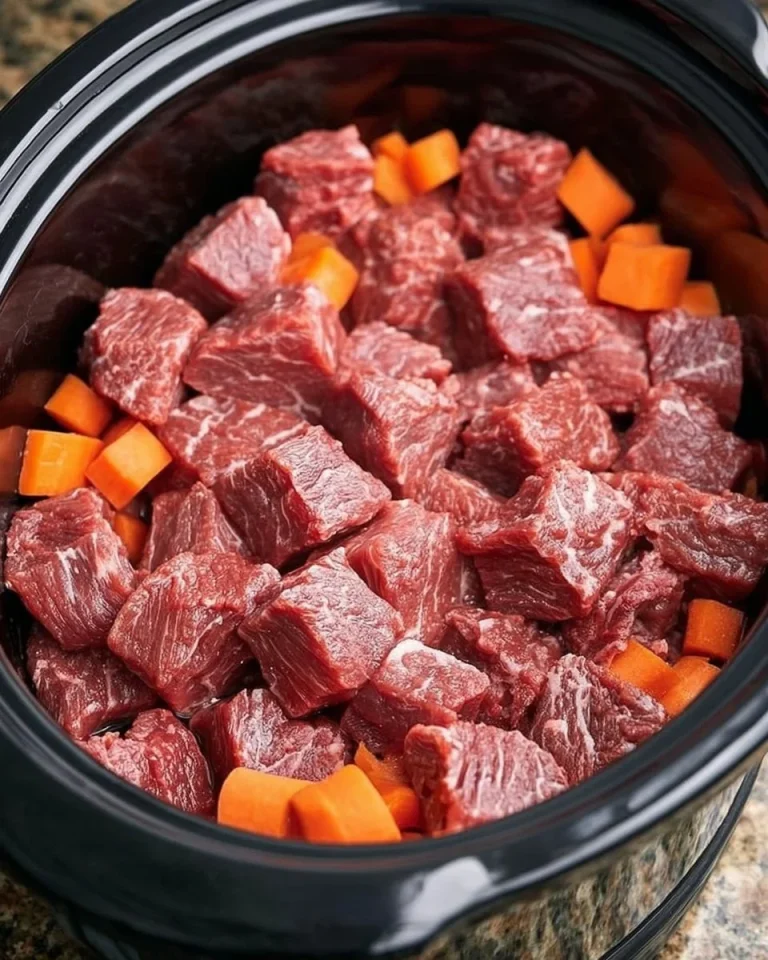
Traditional Beef Irish Stew

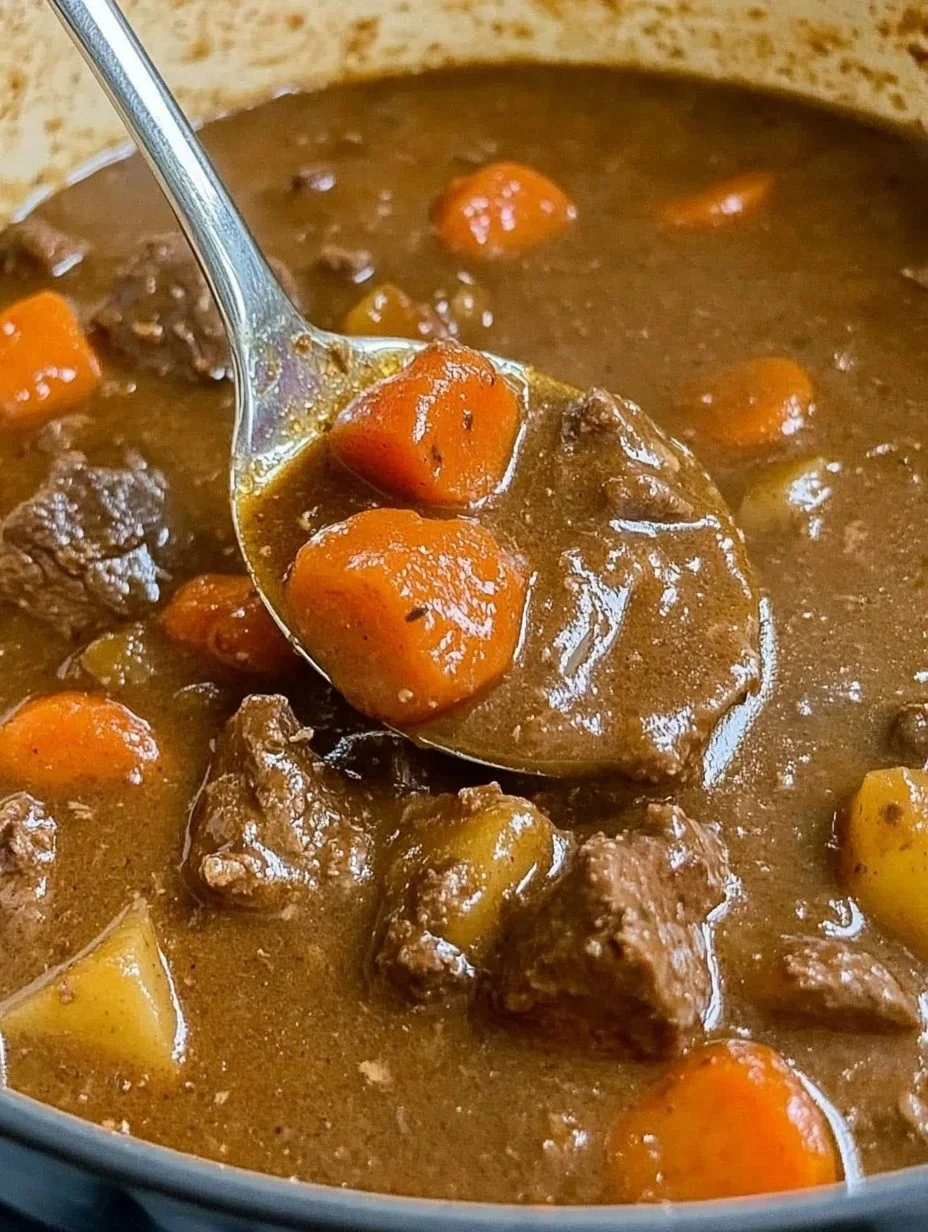
I grew up with a pot of beef stew bubbling on the stove most Sundays — the smell of caramelized beef and rosemary makes the house feel like home. This Traditional Beef Irish Stew is all about tender chuck, hearty potatoes, sweet carrots, and a savory broth that’s perfect for chilly evenings or family dinners. It’s simple, forgiving, and built for slow cooking, which makes it ideal whether you’re feeding a crowd or saving portions for the week. If you want a close reference to a classic preparation, check this write-up on traditional beef Irish stew for another take.
Why you’ll love this dish
This stew is comfort in a bowl: economical cuts become melt-in-your-mouth beef, root vegetables add natural sweetness, and the tomato paste and herbs deepen the flavor without fuss. It’s one of those recipes that improves after a day in the fridge, so it doubles as great meal prep. Make it for weeknight dinners, a cozy weekend meal, or whenever you want something filling and low-effort.
“The slow-cooked beef is unbelievably tender and the broth is the kind you’ll want to sop up with crusty bread—simple, honest, and unforgettable.”
Reasons people search for this: easy slow-cooker dinners, hearty family meals, make-ahead lunches, or a traditional Irish-style stew without exotic ingredients.

Step-by-step overview
Before you start, here’s the big picture so you won’t be surprised:
- Brown the beef to build flavor.
- Sauté onion and garlic, add tomato paste to deepen color.
- Add broth, herbs, and the beef, then simmer gently until beef is tender.
- Add potatoes and carrots partway through to keep their texture.
- Finish with seasoning adjustments and serve with bread or greens.
This gives you an efficient workflow: sear first, aromatics second, long simmer, then vegetables.
What you’ll need
- 2 pounds beef chuck, cut into chunks (Perfect for slow cooking.) — or labeled “stew meat” from the butcher.
- 4 cups beef broth (Opt for low-sodium if watching salt intake.) — adds body to the liquid.
- 4 large carrots, sliced (Adds sweetness and color.)
- 3 large potatoes, diced (Essential for heartiness.) — Yukon Gold or Russet both work.
- 1 large onion, chopped (Brings foundational flavor.)
- 3 cloves garlic, minced (Adds a zing that complements beef.)
- 2 tablespoons tomato paste (Deepens color and flavor.)
- 1 teaspoon dried thyme (Enhances warmth of the stew.)
- 1 teaspoon dried rosemary (Lifts the dish with its aroma.) — crush lightly between your fingers before adding.
- Salt and pepper, to taste (Adjust to preference.)
- 2 tablespoons olive oil (Used for sautéing.)
Notes and substitutions inline: If you prefer a Guinness-flavored version, replace 1 cup of beef broth with stout beer. For a gluten-free stew, ensure your broth is labeled gluten-free. For a richer gravy, whisk 1 tablespoon flour with the tomato paste when you add it (or use a cornstarch slurry at the end).
Also see a similar ingredient approach and tips on this Irish beef stew guide.
Step-by-step instructions

- Pat the beef dry with paper towels and season generously with salt and pepper. Dry meat sears better and builds flavor.
- Heat 2 tablespoons olive oil in a heavy-bottomed pot or Dutch oven over medium-high heat. Working in batches, brown the beef on all sides — 3–4 minutes per batch. Transfer browned chunks to a plate.
- Reduce heat to medium. Add the chopped onion and sauté until translucent, about 5 minutes. Add the minced garlic and cook 30–45 seconds until fragrant.
- Stir in the 2 tablespoons tomato paste and cook 1–2 minutes to caramelize it slightly. This step deepens color and removes raw tomato taste.
- Return the beef to the pot. Pour in the 4 cups beef broth, scraping any brown bits from the bottom (those are flavor gold).
- Add the 1 teaspoon thyme and 1 teaspoon rosemary. Bring the pot to a simmer, then reduce heat to low, cover, and simmer gently for 1 to 1 1/2 hours, or until the beef is nearly fork-tender.
- Add the diced potatoes and sliced carrots. Continue simmering, covered, for another 30–45 minutes until vegetables and beef are tender.
- Taste and adjust seasoning with salt and pepper. If you want a thicker sauce, simmer uncovered for 10 minutes to reduce, or stir in a cornstarch slurry (1 tbsp cornstarch + 1 tbsp cold water) and simmer until thickened.
- Serve hot.
Quick alternate methods: For a slow cooker, brown beef and sauté aromatics on the stovetop, then transfer everything to the slow cooker and cook on low 6–8 hours, adding potatoes and carrots in the last 2 hours. For an Instant Pot, use the Sauté function for browning and then pressure cook for 35 minutes with a 15-minute natural release.
Best ways to enjoy it
Pair this stew with thick slices of crusty bread or buttered soda bread to soak up the broth. A simple buttered green like steamed kale or sautéed Brussels sprouts offers a bright contrast. For a rustic presentation, serve in shallow bowls with a sprinkle of chopped parsley and a grind of black pepper.
If you like a slightly different pairing idea, try the heartier twist found in this beef and corn stew write-up for side inspiration and plating variations.
Storage and reheating tips
- Refrigerator: Cool the stew to room temperature, then store in airtight containers for up to 3–4 days.
- Freezing: Freeze in portioned containers for up to 3 months. Leave a little headspace for expansion.
- Reheating: Thaw overnight in the fridge if frozen. Reheat on the stovetop over medium-low heat until just simmering, stirring occasionally. Microwave reheats work for single portions — cover and stir halfway through.
- Safety: Reheat to an internal temperature of 165°F (74°C) before serving. Do not leave cooked stew at room temperature for more than two hours.
Helpful cooking tips
- Don’t overcrowd the pan when browning beef; do it in batches. Crowding traps steam and prevents good browning.
- Use beef chuck for the best texture — it gets tender without falling apart.
- Cut vegetables to uniform sizes so they cook evenly.
- If you want a glossy, thicker sauce, finish with a small knob of butter stirred in off the heat.
- Taste and adjust: salt at the end after reduction because flavors concentrate.
- Make ahead: stew often tastes better the next day as flavors meld.
Creative twists
- Guinness beef stew: add 1 cup Guinness and reduce broth by the same amount for depth and slight bitterness.
- Lamb swap: replace beef with lamb shoulder for an Irish lamb stew twist.
- Root vegetable boost: add parsnips, turnips, or rutabaga for extra autumn character.
- Vegetarian version: replace beef with mushrooms and tempeh; use vegetable broth and add a splash of soy sauce for umami.
- Herb variations: fresh thyme and rosemary work beautifully if you have them; add bay leaves for a classic aroma.
Your questions answered
Q: How long will this take from start to table?
A: Active hands-on time is about 25–35 minutes (browning and prep). Total cook time is 2–2.5 hours for stovetop simmering; slow cooker will take longer.
Q: Can I use stew meat from the supermarket?
A: Yes — labeled stew meat (often from chuck) works fine. If pieces are pre-cut small, reduce initial browning time to prevent overcooking.
Q: How can I thicken the stew without flour?
A: Reduce the liquid by simmering uncovered, or use a cornstarch slurry (mix cold water with cornstarch and stir in at the end) for a clear, glossy finish.
Q: Is it safe to freeze the stew with potatoes?
A: Yes, but potatoes can become a bit grainy after freezing. If you plan to freeze for a long time, consider leaving potatoes out and adding fresh ones when reheating.
Conclusion
If you want a Guinness-tinged alternative, try the hearty take on Irish Beef and Guinness Stew – RecipeTin Eats. For another classic perspective and technique notes, see Irish Beef Stew – Simply Recipes. And if you’re exploring related variations and flavor swaps, this Irish Beef Stew – Vikalinka page has some useful ideas.
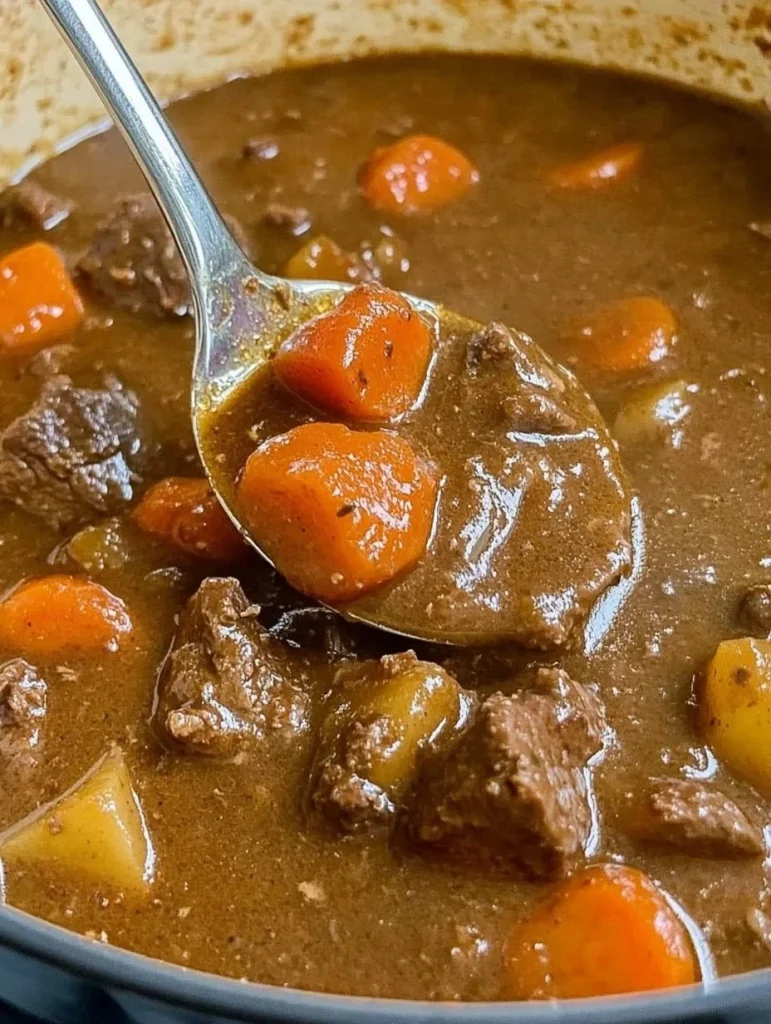
Traditional Irish Beef Stew
Ingredients
Method
- Pat the beef dry with paper towels and season generously with salt and pepper.
- Heat olive oil in a heavy-bottomed pot or Dutch oven over medium-high heat.
- Brown the beef on all sides in batches for 3–4 minutes. Transfer to a plate.
- Reduce heat to medium. Add the chopped onion and sauté until translucent, about 5 minutes.
- Add minced garlic and cook for 30–45 seconds until fragrant.
- Stir in the tomato paste and cook for 1–2 minutes to caramelize it slightly.
- Return the beef to the pot. Pour in the beef broth and scrape any brown bits from the bottom.
- Add thyme and rosemary. Bring to a simmer, then reduce heat to low, cover, and simmer for 1 to 1.5 hours, or until beef is nearly fork-tender.
- Add the diced potatoes and sliced carrots. Continue simmering, covered, for another 30–45 minutes until vegetables and beef are tender.
- Taste and adjust seasoning with salt and pepper. If a thicker sauce is desired, simmer uncovered for 10 minutes or add a cornstarch slurry.
- Serve hot.