This delicious traditional Polish stuffed Cabbage Rolls Recipe combines ground sausage, ground beef, and long grain rice wrapped in tender cabbage leaves with a sweet and tangy tomato sauce.

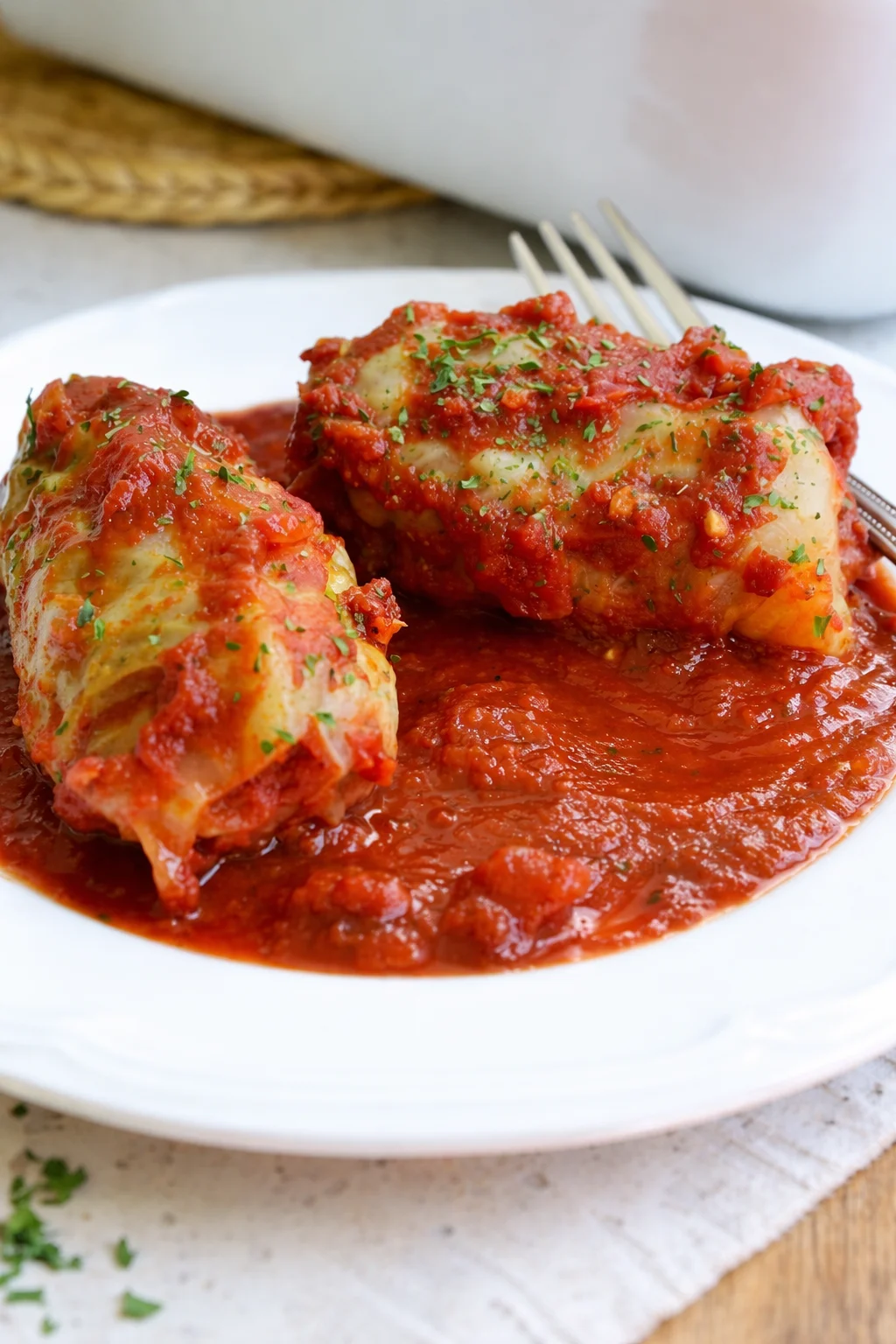
I grew up watching my grandmother fold cabbage leaves around a savory mix of ground sausage, beef, and rice — the steam, the tomato-sweet sauce, the way the kitchen smelled for hours. This traditional Polish stuffed cabbage rolls recipe (gołąbki) delivers that same comfort: tender cabbage parcels, a hearty meat-rice filling, and a sweet-tangy tomato sauce that soaks into every bite. It’s the kind of dish people make for family dinners, holiday spreads, or any time you want a make-ahead meal that tastes even better the next day. If you like a good cabbage-forward main, this pairs nicely with a crunchy side like this crunchy cabbage salad with sweet and tangy dressing to balance the richness.
Why you’ll love this dish
There’s a reason gołąbki show up at Polish family tables: it’s comforting, economical, and scalable. Ground sausage contributes smoky seasoning and fat, beef adds structure, and long-grain rice stretches the filling so a little goes a long way. The cabbage leaf keeps the filling moist as it simmers in tomato sauce so nothing dries out, making it kid-friendly and easy to reheat.
“Bold flavors, unpretentious technique — every bite tastes like home. I doubled the sauce and still ran out.” — a happy dinner guest
This recipe is perfect for:

- Weeknight batch cooking (make a pan and eat for days).
- Potlucks and holidays (feeds a crowd without fussy plating).
- Meal prep (freezes well and reheats beautifully).
How this recipe comes together
Quick overview so you know what to expect:
- Soften a whole cabbage head so leaves peel off intact (boiling or steaming).
- Cook rice until nearly done and cool it slightly.
- Mix ground sausage and beef with seasonings, cooked rice, egg, and aromatics.
- Spoon filling into cabbage leaves and roll snugly.
- Layer rolls in a deep skillet or baking dish, cover with tomato sauce, and simmer or bake until flavors meld.
That’s the full arc: soften, stuff, roll, sauce, and slow-cook. Expect about 20–30 minutes active prep and 60–90 minutes cooking time depending on method.
Gather these items
- 1 medium head green cabbage (about 2–3 pounds)
- 1 pound ground pork sausage (mild or smoked)
- 1/2 pound ground beef (80/20 is forgiving)
- 3/4 cup long-grain rice, cooked until just tender (see note)
- 1 medium onion, finely chopped
- 2 cloves garlic, minced
- 1 large egg (binds the filling)
- 1 tsp salt, 1/2 tsp black pepper
- 1 tsp paprika (optional, adds warmth)
- 2 cups tomato sauce (or crushed tomatoes)
- 1/3 cup tomato paste (for body)
- 1/4 cup brown sugar (adjust to taste for the sweet note)
- 2 tbsp apple cider vinegar (for tang)
- 1–2 cups low-sodium chicken or beef broth (to thin the sauce)
- 2 tbsp oil (for softening onion)
Notes and substitutions:
- Rice: short- or medium-grain will work, but long-grain keeps texture light. You can substitute cooked quinoa for a slightly nuttier bite.
- Sausage: using pork sausage (not just ground pork) gives flavor — try kielbasa or fresh country sausage for authenticity.
- Sauce: canned tomato sauce plus paste is quicker; use crushed tomatoes for a chunkier finish.
How to prepare it

- Prepare the cabbage: core the cabbage and blanch the whole head in boiling water for 8–12 minutes until outer leaves peel away easily. Alternatively, steam the head for 15 minutes. Reserve softened leaves.
- Cook rice: simmer rice in salted water until just tender (al dente). Drain; let cool.
- Sauté aromatics: heat oil in a skillet, cook onion until translucent (about 5 minutes), add garlic, cook 30 seconds more. Let cool slightly.
- Make filling: in a large bowl combine sausage, beef, cooked rice, sautéed onion and garlic, egg, paprika, salt, and pepper. Mix gently — don’t overwork the meat.
- Trim thick ribs: if cabbage leaf stems are very thick, shave the rib with a knife so rolling is easier.
- Assemble rolls: place ~2–3 tablespoons filling on a leaf, fold sides in, and roll from stem end to tip to make a snug parcel. Repeat.
- Make sauce: whisk tomato sauce, tomato paste, brown sugar, apple cider vinegar, and broth to the consistency you like. Taste and adjust sweetness or acidity.
- Layer and cook: place a shallow layer of sauce in a wide pot or baking dish, arrange rolls seam-side down in rows, pour remaining sauce over them and add enough broth to come halfway up the rolls.
- Simmer or bake: stove-top simmer gently for 60–75 minutes with lid on, or bake at 350°F (175°C) for 60–90 minutes until filling is cooked through and cabbage is tender.
- Rest a few minutes before serving so sauce thickens. Spoon sauce over each roll.
Best ways to enjoy it
Serve warm with a ladle of the tomato sauce and a sprinkle of fresh dill or parsley. Classic pairings:
- Mashed potatoes or buttered egg noodles to soak up sauce.
- A spoonful of sour cream on top for tang.
- Roasted root vegetables for a hearty plate.
- For lighter meals, a crisp cucumber salad pairs well.
If you want a bowl-style meal, serve the roll over creamy mashed potatoes and top with extra sauce. For a cross-cultural pairing, try it alongside the comforting potato corn chowder for a warming spread.
Storage and reheating tips
- Refrigerator: cool rolls to room temperature, then store in an airtight container for up to 4 days.
- Freezing: freeze in sauce in a freezer-safe container for up to 3 months. Thaw overnight in the fridge before reheating.
- Reheating: gently reheat covered in a low 300–325°F oven until heated through (about 20–30 minutes) or simmer on the stovetop over low heat. Microwaving works for single portions — cover and heat in short intervals to avoid drying.
Food safety: ensure the center of rolls reaches 160°F (71°C) when reheating from refrigerated or thawed state. Cool leftovers within 2 hours of cooking to avoid bacterial growth.
Pro chef tips
- Don’t overcook the rice before mixing; it should be slightly underdone so it finishes cooking inside the roll without getting mushy.
- Save the smaller inner leaves for assembly — they make perfectly sized wrappers for smaller rolls.
- Use a light brush of oil or a quick sear on the rolls seam-side down to help them hold shape if you’ll be serving them pan-fried.
- If cabbage leaves split when rolling, patch with a tiny extra leaf or lay the roll seam-side down so it seals during cooking.
- For easier work, assemble rolls on a clean board and keep a damp towel over them to prevent drying.
For an inspiration on using cabbage in a different baked context, see this Runza-style cabbage and beef idea.
Creative twists
- Vegetarian: swap meat for cooked lentils or a mix of mushrooms and lentils, and use a flax egg or omit egg as binder.
- Different meats: try a lamb and pork combo for deeper flavor, or use ground turkey for a leaner roll.
- Smoky sauce: add a tablespoon of smoked paprika and a splash of liquid smoke.
- Sweet-and-sour: increase brown sugar to 1/2 cup and add 1/4 cup apple cider vinegar for a tangier glaze.
- Slow cooker method: layer rolls and cover with sauce, cook on low for 6–8 hours for an effortless set-it-and-forget-it meal.
Your questions answered
Q: How long does this take from start to finish?
A: Plan 20–30 minutes active prep and 60–90 minutes cooking. Using a slow cooker increases hands-off time but yields deep flavor.
Q: Can I use pre-shredded cabbage instead of whole leaves?
A: Pre-shredded cabbage cannot be rolled, so it won’t work for traditional rolls. You can make a deconstructed casserole with shredded cabbage layered with filling and sauce instead.
Q: Can I assemble rolls ahead of time?
A: Yes — assemble and refrigerate up to 24 hours before cooking. If freezing, assemble and freeze in sauce; bake or simmer from frozen, adding time to reach safe internal temperatures.
Q: Is it safe to freeze these?
A: Absolutely. Freeze in a single layer or stacked with sauce between layers in a sealed container for up to 3 months. Thaw in the refrigerator overnight before reheating.
Q: My cabbage leaves keep tearing — any tricks?
A: Trim the thick rib of each leaf, don’t overfill, and use inner leaves for smaller rolls. If a leaf tears, overlap two leaves to create a stronger wrapper.
Conclusion
If you’re looking for a dependable, comforting recipe for cabbage rolls with an authentic balance of savory filling and sweet-tangy tomato sauce, this version is a great place to start. For a variation on the homemade sauce and extra step-by-step photos, try this helpful guide to Cabbage Rolls with Homemade Sauce. If you want another tested Polish take on gołąbki with detailed instructions, see Cabbage Rolls Recipe, Polish Golabki Recipe | Jenny Can Cook for comparison. And for a different blogger’s straightforward stuffed cabbage approach with tips on rolling and simmering, check out Stuffed Cabbage Rolls – Sip and Feast.
Enjoy the slow, rewarding process — and don’t be surprised if everyone asks for seconds.
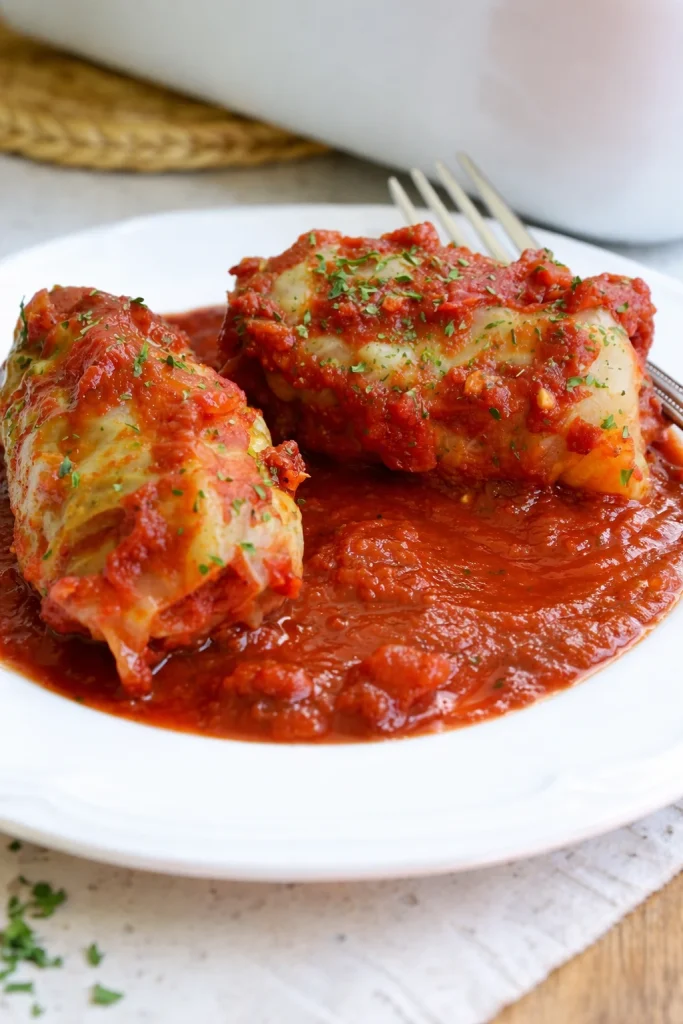
Gołąbki
Ingredients
Method
- Core the cabbage and blanch the whole head in boiling water for 8–12 minutes until outer leaves peel away easily or steam for 15 minutes.
- Simmer rice in salted water until just tender (al dente). Drain and let cool.
- Heat oil in a skillet and cook onion until translucent (about 5 minutes), then add garlic and cook for an additional 30 seconds. Let cool.
- In a large bowl, combine sausage, beef, cooked rice, sautéed onion and garlic, egg, paprika, salt, and pepper. Mix gently to avoid overworking the meat.
- If the cabbage leaf stems are very thick, shave the rib with a knife to make rolling easier.
- Place about 2–3 tablespoons of filling on each leaf, fold sides in, and roll from stem end to tip to make a snug parcel.
- In a wide pot or baking dish, place a shallow layer of sauce, arrange rolls seam-side down in rows, and pour remaining sauce over them. Add enough broth to come halfway up the rolls.
- Simmer on the stove gently for 60–75 minutes with a lid on, or bake at 350°F (175°C) for 60–90 minutes until filling is cooked through and cabbage is tender.
- Let rest for a few minutes before serving to allow sauce to thicken. Spoon sauce over each roll.