Traditional Mexican Capirotada

 235
235
 18
18
 1.30k
1.30k

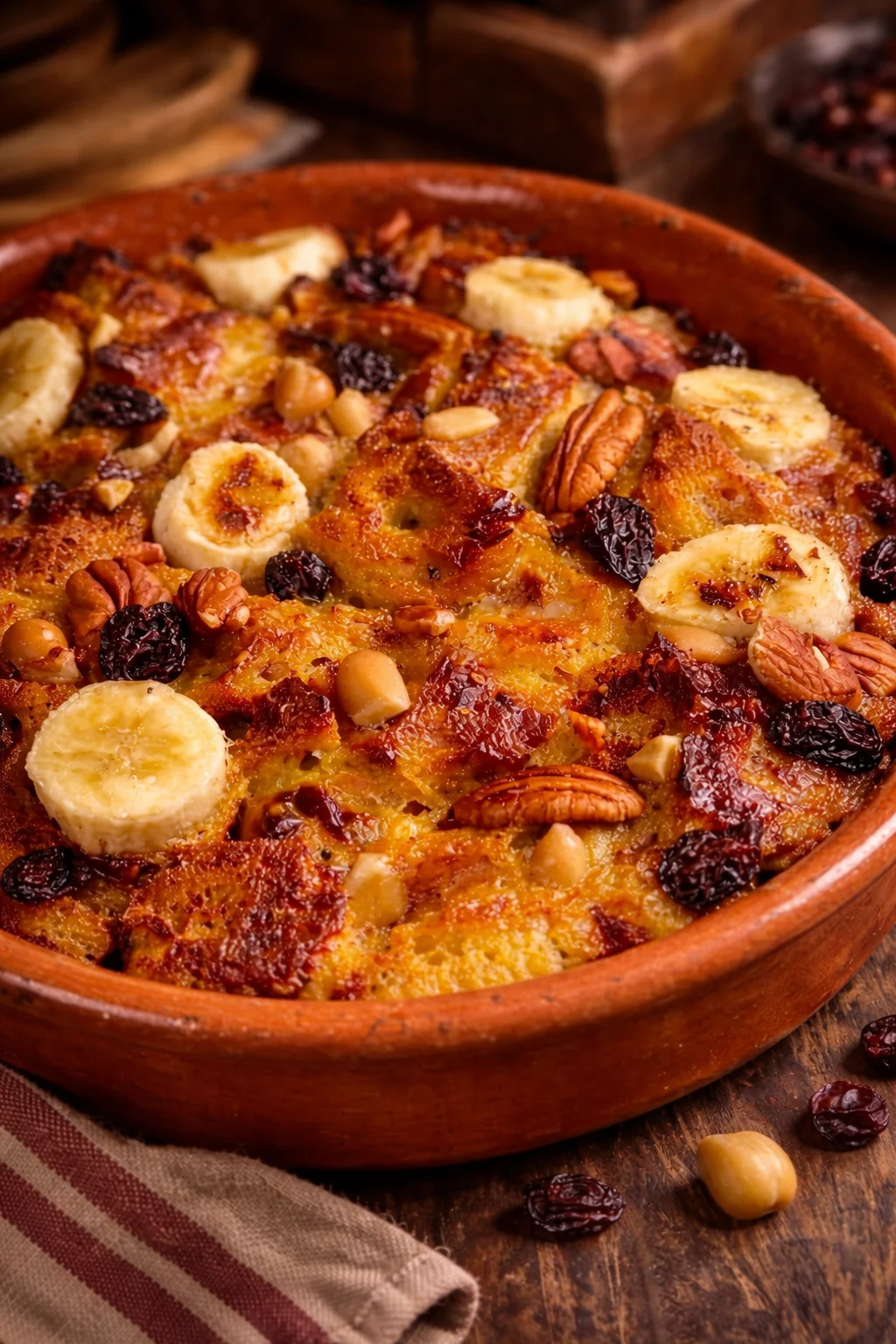
I grew up eating capirotada during Lent and Easter — it’s the Mexican version of bread pudding, built from toasted tortillas, crusty bread, and a sweet piloncillo syrup layered with fruits, peanuts and queso fresco. This traditional capirotada recipe is comforting, slightly spicy from cinnamon and cloves, and wonderfully textural: crisp-edged bread, soft soaked interior, and pops of fruit and cheese. It’s the kind of dish families share warm from the oven.
Why you’ll love this dish
Capirotada is a practical, celebratory dessert that stretches simple ingredients into something memorable. It uses leftover or sturdy bread and tortillas, so it’s budget-friendly. The piloncillo syrup flavored with cinnamon and cloves gives a deep, molasses-like sweetness that’s very different from plain sugar syrups. Add the salty queso fresco and crunchy peanuts and you get the classic sweet–savory contrast that keeps people coming back for seconds.
“A perfect balance of textures — crunchy, gooey, fruity and salty. Makes any family gathering feel like a holiday.” — a long-time home cook’s take
The cooking process explained
Before you start: you’ll make a light piloncillo syrup, toast the bread and tortillas until dry and crisp, slice plantain and cube fresh cheese, then build alternating layers of tortilla, bread, fruits, peanuts, plantain, and cheese. Pour the warm, strained syrup and a little evaporated milk over the layers, cover, and bake until the center is soft and the top is evenly moistened. If it dries while baking, simply spoon extra syrup over it. Expect about 15–25 minutes active prep and 1 hour baking.
Gather these items
What you’ll need (quantities as provided):
- 2 pzas. de Plátano Macho (plantains), peeled and cut into thick pieces
- 5–6 pzas. de Tortillas, toasted until crisp
- 7 pzas. de Pan, cut into large chunks (day-old bolillo or French bread works well)
- 3–4 conos de Piloncillo (piloncillo cones) — for the syrup
- 1 vara de Canela (cinnamon stick)
- 3 pzas. de Clavos de olor (whole cloves)
- 300 g Ciruelas pasa (prunes)
- 250 g Pasas (raisins)
- 200 g Queso fresco, cut into small cubes
- 150 g Cacahuate (peanuts) — toasted if possible
- 245 ml Leche evaporada (evaporated milk)
Ingredient notes and substitutions:
- Piloncillo: substitute dark brown sugar plus a splash of molasses in a pinch.
- Queso fresco: try ricotta salata or queso panela for a similar mild, salty crumbly cheese. For a vegan version, use firm tofu or a plant-based cheese and evaporated coconut milk.
- Nuts: walnuts, pecans, or almonds work beautifully instead of peanuts.
- Fruit swaps: guava or dried cranberries are traditional alternatives.
Directions to follow

- Make the piloncillo syrup: Place the piloncillo cones in a saucepan with 2 liters of water. Add the cinnamon stick and whole cloves. Bring to a simmer and cook until the piloncillo dissolves and you have a light syrup (about 10–15 minutes). Strain and set aside warm.
- Toast the bread: Slice the bread into large pieces. Toast or bake on a sheet until golden and very dry-crisp. Reserve.
- Toast the tortillas: Lightly toast the tortillas in a dry skillet or oven until they’re browned and crisp. Set aside.
- Prep fillings: Cut plantain into thick chunks. Cube the queso fresco. If peanuts aren’t toasted, dry-roast them in a pan until fragrant.
- Grease the baking dish: Butter or oil the bottom and sides of your baking dish or pan.
- Layer: Start with a base layer of toasted tortillas across the bottom. Add a layer of toasted bread pieces. Scatter prunes, raisins, peanuts, plantain chunks, and cheese cubes evenly. Pour about one-third of the strained piloncillo syrup over this layer and add a splash of evaporated milk.
- Repeat: Continue layering bread, fruits, nuts, plantain and cheese, adding more syrup and evaporated milk between layers until the dish is full.
- Cover and bake: Cover the dish tightly with aluminum foil. Bake at 200°C (about 400°F) for around 1 hour, or until the capirotada is tender in the center and the bread has absorbed the syrup.
- Adjust moisture: If the top or center looks dry during baking, spoon a little more syrup over it. After baking, let it rest 10–15 minutes so flavors meld. Serve warm.
Best ways to enjoy it
Serve capirotada warm or at room temperature. Spoon it into shallow bowls and offer extra evaporated milk or a drizzle of warm syrup at the table. Pair with:
- A cup of strong coffee or piloncillo-spiced hot chocolate.
- Fresh seasonal fruit or a lightly sweetened crema if you want extra richness.
- For brunch, serve alongside scrambled eggs to balance the sweetness.
Storage and reheating tips
- Refrigerator: Store covered in the fridge for up to 4 days. Because the dish contains cheese and evaporated milk, keep it chilled when not serving.
- Reheating: Reheat individual portions in a microwave for 45–60 seconds, or rewarm the whole dish in a 160°C (325°F) oven, covered, until heated through (about 20–30 minutes). Add a splash of syrup or evaporated milk if it seems dry.
- Freezing: Freeze cooled portions in airtight containers for up to 2 months. Thaw overnight in the fridge and reheat as above.
- Food safety: Don’t leave capirotada at room temperature for more than 2 hours because of the dairy. Discard if left out longer.
Pro chef tips
- Dry the bread well: The drier and slightly stale the bread, the better it soaks flavors without turning into mush. Toast until very dry for best texture.
- Strain the syrup: Straining removes cloves and cinnamon fragments and keeps the layers smooth.
- Taste the syrup: Piloncillo sweetness varies. Taste and adjust by adding a bit more piloncillo or water to get a balanced syrup.
- Even layers: Distribute cheese and fruit evenly so each serving has a mix of textures.
- Prevent sogginess: Slightly under-sweetening the first pour of syrup helps keep the top from getting overly wet; you can always add more later.
Creative twists
- Tropical: Swap prunes for dried guava and add shredded coconut.
- Nut-forward: Replace peanuts with toasted pecans or almonds for a richer crunch.
- Spiced fruit: macerate the raisins and prunes in orange juice and a pinch of cinnamon for brighter fruit notes.
- Vegan capirotada: Use plant-based evaporated milk, a firm tofu or vegan cheese substitute, and vegan butter. Sweeten the syrup with brown sugar plus molasses if you don’t have piloncillo.
- Personalize the layers: Add thin apple slices or pears for seasonal variation, or scatter chocolate chips into the warm capirotada just before serving for an indulgent touch.
Helpful answers
Q: How long does this take from start to finish?
A: Plan about 15–25 minutes active prep (syrup, toasting, slicing) and about 1 hour baking. Total time is roughly 1 hour 30 minutes including resting.
Q: Can I make capirotada ahead of time?
A: Yes. Assemble and refrigerate the unbaked dish for up to 24 hours, then bake when ready. Alternatively, bake ahead and reheat gently before serving.
Q: My capirotada turned out too dry — what can I do?
A: Warm some extra piloncillo syrup (or more evaporated milk) and spoon it over the dry spots. For future batches, add a little more syrup when layering.
Q: Is this recipe suitable for vegetarians or vegans?
A: The base recipe is vegetarian but not vegan because of queso fresco and evaporated milk. For vegan, substitute plant-based cheese and evaporated coconut or soy milk.
Conclusion
If you want another traditional take or recipe variations, check a well-tested version at Capirotada Receta Mexicana. For a detailed home-cook guide with photos and tips, see Cómo Hacer Capirotada Mexicana • Mama Latina Tips. For a chef’s perspective and plating ideas, read Capirotada – Pati Jinich en Español. And for a family-style narrative and variations, I recommend Abuelita Toña’s Capirotada, a Mexican Bread Sweet for Easter ….
Enjoy crafting your capirotada — it’s as much about the memories as the flavors.
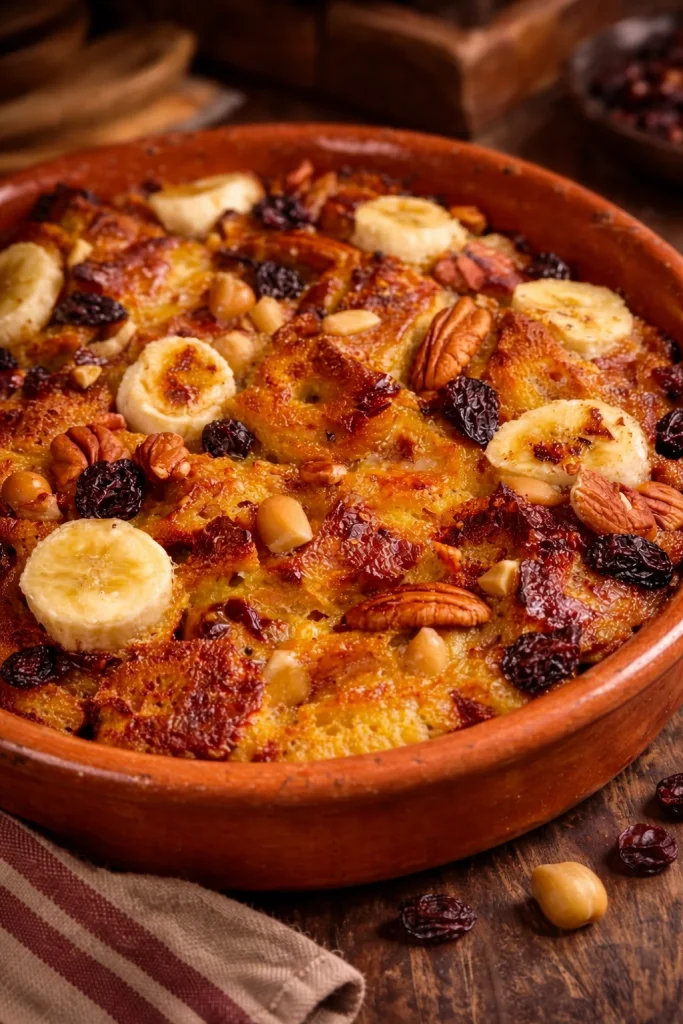
Capirotada
Ingredients
Method
- Make the piloncillo syrup: Place the piloncillo cones in a saucepan with water. Add the cinnamon stick and whole cloves. Bring to a simmer and cook until the piloncillo dissolves and you have a light syrup (about 10–15 minutes). Strain and set aside warm.
- Toast the bread: Slice the bread into large pieces. Toast or bake on a sheet until golden and very dry-crisp. Reserve.
- Toast the tortillas: Lightly toast the tortillas in a dry skillet or oven until they’re browned and crisp. Set aside.
- Prep fillings: Cut plantain into thick chunks. Cube the queso fresco. If peanuts aren’t toasted, dry-roast them in a pan until fragrant.
- Grease the baking dish: Butter or oil the bottom and sides of your baking dish.
- Layer: Start with a base layer of toasted tortillas across the bottom, add a layer of toasted bread pieces, and scatter prunes, raisins, peanuts, plantain chunks, and cheese cubes evenly. Pour about one-third of the strained piloncillo syrup over this layer and add a splash of evaporated milk.
- Repeat: Continue layering bread, fruits, nuts, plantain, and cheese, adding more syrup and evaporated milk between layers until the dish is full.
- Cover and bake: Cover the dish tightly with aluminum foil. Bake at 200°C (about 400°F) for around 1 hour, or until the capirotada is tender in the center and the bread has absorbed the syrup.
- Adjust moisture: If the top or center looks dry during baking, spoon a little more syrup over it. After baking, let it rest for 10–15 minutes before serving warm.