Grilled Salmon with Dijon Sauce

 235
235
 18
18
 1.30k
1.30k

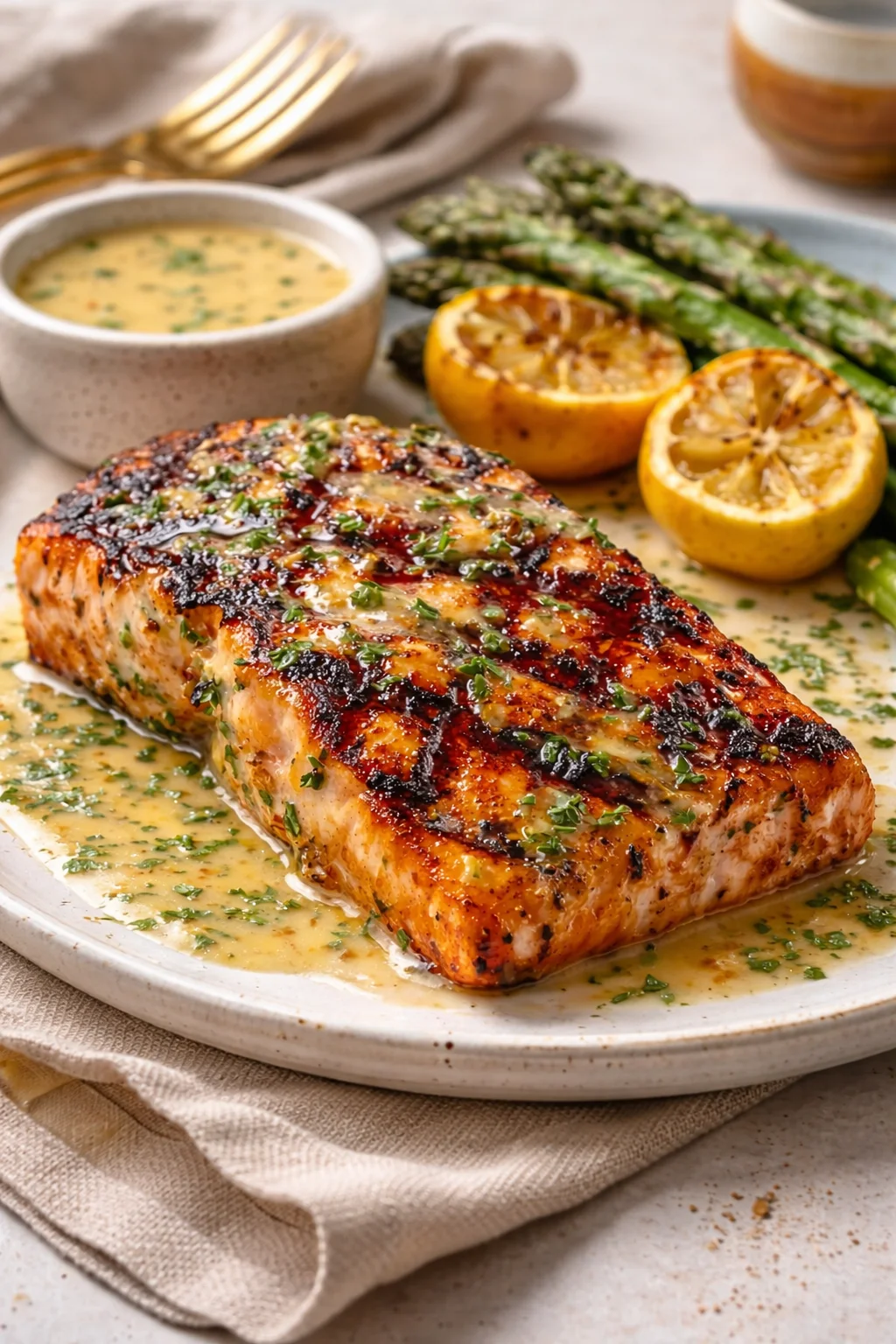
I still remember the first time I tossed salmon on a hot grill and finished it with a quick Dijon-honey sauce — the char, the tang, and that bright hit of dill made a weekday dinner feel special. This grilled salmon with Dijon sauce is simple, fast, and built to impress: perfect for weeknights when you want something healthy that tastes like you spent more time on it than you did. If you’re pairing this as part of a larger menu, it sits beautifully next to a showy starter like a crowned puff pastry wreath with burrata and grilled peaches.
Why you’ll love this dish
This recipe balances bold, pantry-friendly flavors with very little fuss. Salmon grills quickly, develops attractive char, and stays moist when treated gently. The Dijon-honey drizzle adds acidity and a touch of sweetness so the fish never tastes one-note. It’s ideal for:
- Fast weeknight dinners (ready in about 15–20 minutes).
- Healthy, high-protein meals with minimal cleanup.
- Entertaining when you want something that looks plated yet remains hands-off.
“A perfect weeknight steak substitute — salmon grills quickly, gets those beautiful marks, and the Dijon glaze turns it into something you’d serve guests.” — home cook review
Step-by-step overview
You’ll preheat the grill, whisk a quick Dijon-honey sauce, oil and season the salmon, grill skin-side down until it flakes, then rest and drizzle with the sauce. The whole process is straightforward: mix, season, grill, rest, and serve.
What you’ll need
- 2 (6-ounce) salmon fillets (preferably skin-on; wild or farmed is fine)
- 2 tablespoons olive oil
- 1 teaspoon garlic powder
- 1 teaspoon paprika
- Salt and pepper, to taste
- 1 tablespoon Dijon mustard
- 1 tablespoon honey
- 1 tablespoon lemon juice
- 1 tablespoon fresh dill, chopped (or 1 teaspoon dried dill)
Ingredient notes and swaps:
- Salmon: Choose even-thickness fillets for uniform cooking. Skin-on helps protect flesh from overcooking and crisps nicely if you want it crisp.
- Dijon: If you don’t have Dijon, a whole-grain mustard or a smooth yellow mustard mixed with a pinch of cayenne will work.
- Honey: Swap maple syrup for a slightly deeper flavor.
For an extra-textured side idea, try pairing this with a savory pastry from our collection of crowd-pleasing recipes like this crowned puff pastry wreath variation.
Step-by-step instructions

- Preheat your grill to medium-high heat (about 400–450°F). Oil the grates lightly.
- In a small bowl, whisk together the Dijon mustard, honey, lemon juice, and dill. Set the sauce aside.
- Pat the salmon dry with paper towels. Drizzle both sides with olive oil.
- Sprinkle garlic powder, paprika, salt, and pepper evenly over the fillets. Press the seasoning gently so it adheres.
- Place the salmon skin-side down on the grill. Cook undisturbed for 4–5 minutes. You should see good grill marks and the fish will start to turn opaque up the sides.
- Carefully flip using a thin spatula. Grill for another 3–4 minutes, depending on thickness, until the flesh flakes easily with a fork. Internal temperature target: 125–130°F for medium-rare or up to 145°F if you prefer fully cooked per FDA guidance.
- Remove from the grill and let the fillets rest 2 minutes. Spoon or drizzle the Dijon sauce over the warm salmon and serve immediately.
Best ways to enjoy it
- Plating: Place the fillet over a bed of herbed quinoa or lemony couscous. Spoon extra sauce along the side for a polished look.
- Side pairings: Grilled asparagus, a crisp arugula salad, roasted baby potatoes, or a simple cucumber-dill yogurt salad are all great partners.
- Wine and beverage: A chilled Sauvignon Blanc, dry Rosé, or a citrus-forward IPA complements the mustard-honey lift. For nonalcoholic pairings, try sparkling water with lemon and a sprig of dill.
For plating inspiration that pairs bold flavors and textures, consider styling ideas inspired by this puff pastry and burrata presentation.
Storage and reheating tips
- Refrigerate: Cool leftovers within two hours and store in an airtight container for up to 3 days. Keep the sauce separate if possible to avoid sogginess.
- Reheat: Warm gently in a 275–300°F oven for 8–10 minutes, covered loosely with foil. Avoid microwaving at high power; it can dry the salmon.
- Freeze: Wrap raw salmon tightly for up to 3 months. Cooked grilled salmon freezes well for up to 2 months; thaw overnight in the fridge before reheating.
- Safety note: Always refrigerate perishable foods within two hours, or one hour if ambient temperature is above 90°F.
Pro chef tips
- Dry the skin: Pat skin thoroughly before oiling to help it crisp.
- Don’t over-flip: Flip once only. Leaving the fish undisturbed helps it develop a seared surface without falling apart.
- Use a fish spatula: A thin, flexible spatula slides under delicate fillets without tearing them.
- Test for doneness: Instead of relying only on time, check for flakiness and a slight translucency in the center. A quick internal temp reading is the most reliable (125–130°F for medium-rare; 145°F is fully cooked).
- Make sauce ahead: The Dijon-honey sauce can be mixed up to a day ahead and refrigerated—bring to room temperature before using.
Creative twists
- Caper-dill Dijon: Add a tablespoon of chopped capers to the sauce for briny zip.
- Herb crust: Press chopped parsley, lemon zest, and panko onto the top before grilling for added texture.
- Spicy-sweet: Stir in 1/2 teaspoon sriracha or hot honey to the Dijon mix for a kick.
- Citrus-scallion: Add orange juice instead of lemon and fold in thinly sliced scallions for a brighter profile.
- Paleo/Keto: Swap honey for a sugar-free honey substitute or omit it and increase lemon for acidity.
Helpful answers
Q: How long does this recipe take from start to finish?
A: Plan on about 15–20 minutes active time: 5 minutes to prep the sauce and season, 8–10 minutes on the grill, plus a couple minutes to rest.
Q: Can I cook this in the oven or on a stovetop if I don’t have a grill?
A: Yes. To broil: place under a hot broiler for 4–6 minutes skin-side down, then broil 2–4 minutes after flipping. To pan-sear: cook skin-side down over medium-high for 4–5 minutes, then finish 2–3 minutes after flipping, covering briefly if needed.
Q: Is it safe to eat salmon slightly pink in the center?
A: Yes—many chefs prefer salmon at 125–130°F (medium-rare) for ideal texture. The USDA recommends cooking fish to 145°F for safety; use personal preference and always source fresh, reputable fish.
Q: Can I use frozen salmon?
A: Yes, thaw fully in the refrigerator before grilling and pat dry to remove excess moisture so it sears instead of steaming.
Q: What if my salmon sticks to the grill?
A: Make sure the grates are clean and well-oiled and the fish is dry. Let it naturally release after searing—if you try to move it too early, it will stick.
Conclusion
If you loved this quick Dijon-honey glaze, you might enjoy other flavor takes like a citrus-herb or nut-crusted finish. For a slightly different sweet-Dijon glaze that leans rosemary-forward, try this rosemary honey Dijon glazed salmon recipe. If capers and mustard are a favorite, see how they perform in this grilled salmon with dill-caper-mustard sauce for another bright option. And for a crunchy, nutty contrast you can take to the grill, consider this pistachio-crusted salmon idea.
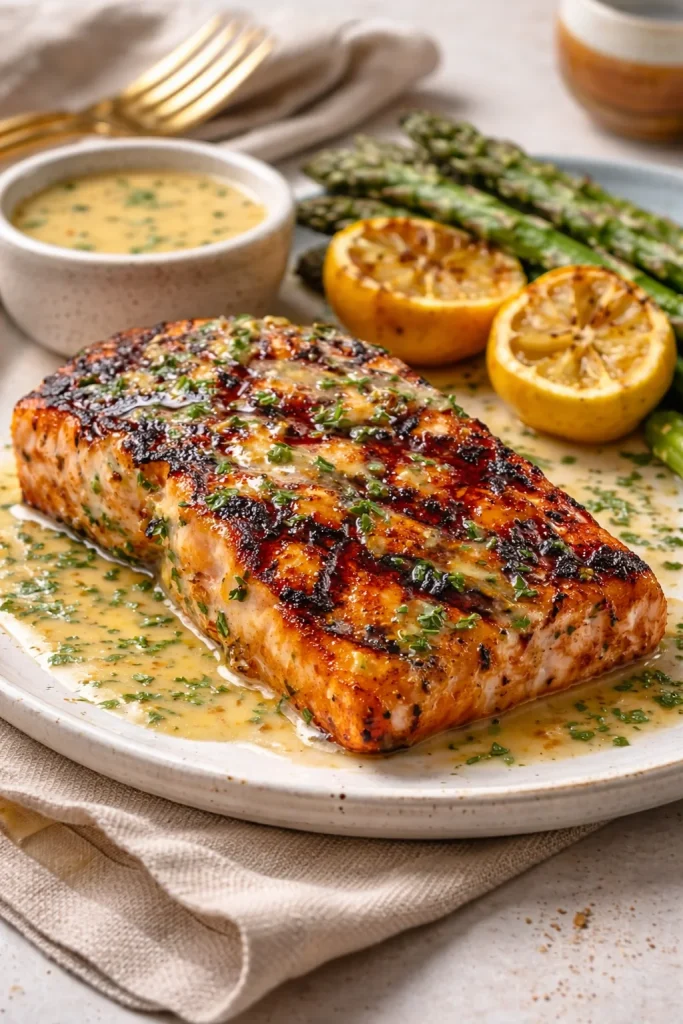
Grilled Salmon with Dijon-Honey Sauce
Ingredients
Method
- Preheat your grill to medium-high heat (about 400–450°F). Oil the grates lightly.
- In a small bowl, whisk together the Dijon mustard, honey, lemon juice, and dill. Set the sauce aside.
- Pat the salmon dry with paper towels. Drizzle both sides with olive oil.
- Sprinkle garlic powder, paprika, salt, and pepper evenly over the fillets. Press the seasoning gently so it adheres.
- Place the salmon skin-side down on the grill. Cook undisturbed for 4–5 minutes until grill marks appear and the fish starts to turn opaque.
- Carefully flip the salmon using a thin spatula. Grill for another 3–4 minutes, until the flesh flakes easily with a fork.
- Remove from the grill and let the fillets rest for 2 minutes. Spoon or drizzle the Dijon sauce over the warm salmon and serve immediately.