Coconut Curry Salmon with Jasmine Rice

 235
235
 18
18
 1.30k
1.30k

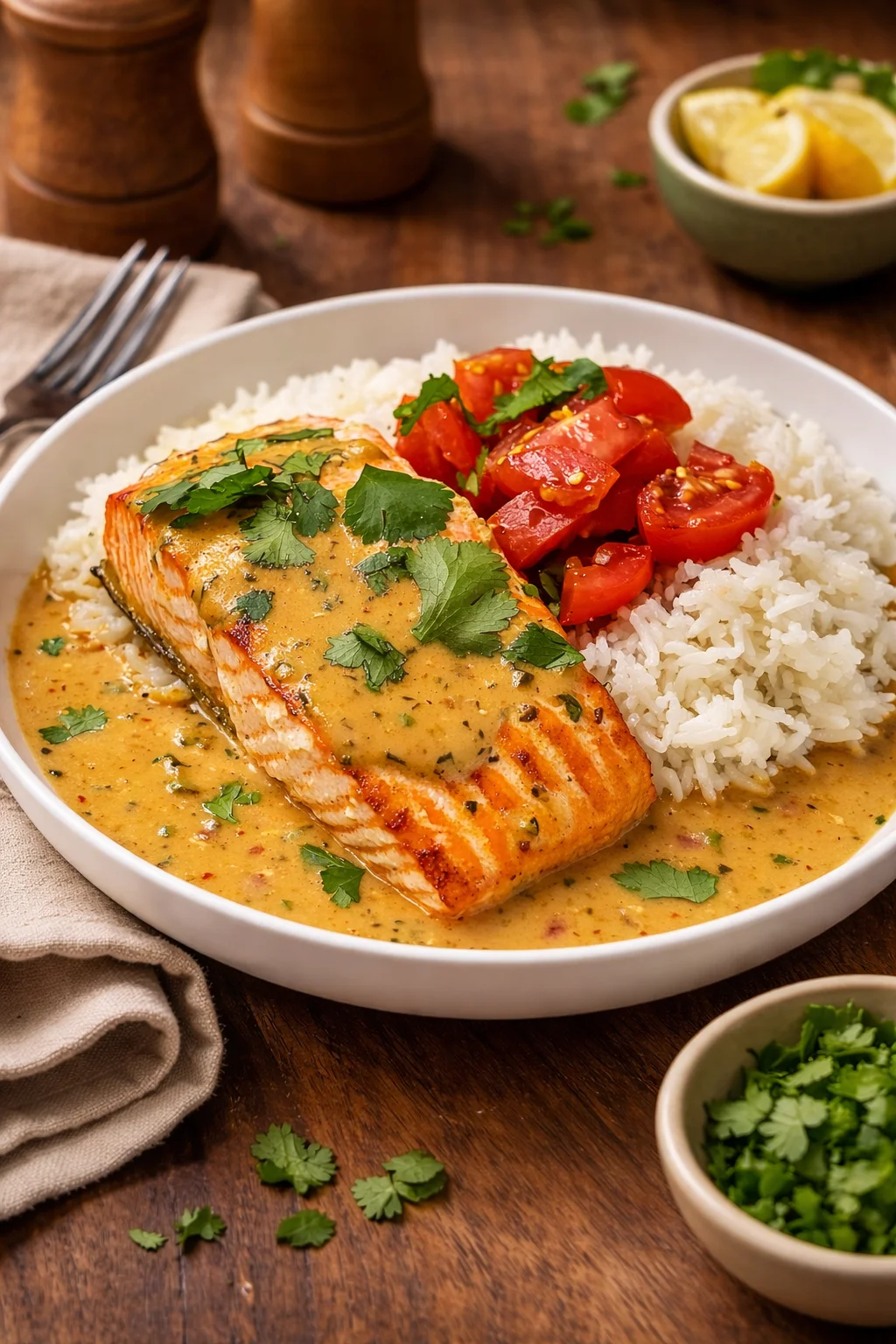
I first made this coconut curry salmon after a rainy week when my fridge needed both comfort and something light. The result was a silky coconut curry that hugs tender salmon fillets, served over fragrant jasmine rice — an easy, elegant meal that comes together in about 30–40 minutes. If you love quick salmon dinners, this dish hits the balance between creamy, bright, and subtly spicy; it’s also a great weeknight showstopper that doubles as an impressive weekend plate. For a different quick-salmon idea, I sometimes pair this with the flavors of air fryer salmon bites with hot honey when I want bite-sized starters.
Why you’ll love this dish
This recipe gives you restaurant-worthy flavor with everyday pantry ingredients. The coconut milk creates a lush sauce that balances the heat from red curry paste, while lime, fish sauce, and a touch of brown sugar layer savory, sour, and sweet notes. It’s fast enough for weeknights, impressive enough for guests, and flexible for dietary swaps (use soy sauce for a pescatarian-friendly umami boost).
"Comforting, bright, and impossibly simple — the coconut curry turns ordinary salmon into something I want every week."
Reasons to make it:
- Fast midweek dinner: jasmine rice cooks while the curry simmers.
- Minimal cleanup: one pan for the sauce, a pot for rice.
- Crowd-pleaser: kids and adults usually like the creamy, mildly spicy sauce.
- Healthy and balanced: omega-3 rich salmon and greens like spinach or basil.
How this recipe comes together
- Cook the jasmine rice so it’s ready when the salmon finishes.
- Sauté aromatics (onion, garlic, ginger) and bloom the red curry paste.
- Add coconut milk, fish sauce, lime, and sugar to form a silky curry.
- Gently simmer salmon in the sauce until just cooked through; finish with spinach or basil.
- Plate over jasmine rice and garnish with cilantro and lime wedges.
This quick overview shows the workflow: rice first, sauce second, salmon last — which keeps the fish perfectly tender.
What you’ll need
- 4 salmon fillets (about 6 oz each). Opt for fresh, skin-on or skinless as you prefer.
- 14 oz coconut milk (full-fat for creamier sauce).
- 1 cup jasmine rice. Rinse briefly for fluffier grains.
- 1 tbsp vegetable oil or coconut oil (coconut oil adds a subtle tropical note).
- 1 small onion, finely chopped.
- 3 cloves garlic, minced.
- 1 tbsp fresh ginger, minced.
- 1–2 tbsp red curry paste (start with 1 tbsp and add more if you like heat).
- 1 tbsp fish sauce (swap soy sauce for vegetarian option).
- 1 tbsp lime juice (freshly squeezed).
- 1 tsp brown sugar or coconut sugar.
- 1 cup baby spinach or fresh basil leaves (torn).
- Salt and pepper, to taste.
- Fresh cilantro and lime wedges, for garnish.
Ingredient notes and substitutions:
- Coconut milk: full-fat gives the creamiest texture; light works if you want fewer calories but may be thinner.
- Fish sauce: a little goes a long way — it adds umami without making the dish fishy. Use soy sauce or tamari for a vegetarian swap.
- Rice tips: for more one-pot rice ideas, check this one-pot chicken and jasmine rice post for techniques that also apply to cooking perfect jasmine rice here.
Directions to follow

Cooking the Rice
- Rinse 1 cup jasmine rice under cold water until water runs clear.
- Combine rinsed rice with 1 1/4 cups water (or follow package ratio) in a covered pot. Bring to a boil, then reduce to low and simmer 12–15 minutes. Remove from heat and let rest covered for 10 minutes before fluffing.
Preparing the Sauce
- Heat 1 tbsp oil in a large skillet over medium heat. Add the chopped onion and cook until translucent, about 4–5 minutes.
- Add minced garlic and ginger; sauté 30–45 seconds until fragrant.
- Stir in 1–2 tbsp red curry paste and cook for 30 seconds to bloom the spices.
- Pour in 14 oz coconut milk, 1 tbsp fish sauce (or soy sauce), 1 tbsp lime juice, and 1 tsp brown sugar. Stir to combine and bring to a gentle simmer.
Cooking the Salmon
- Season salmon fillets with salt and pepper. If fillets are skin-on, place skin-side down first.
- Gently nestle the salmon into the simmering curry, spooning some sauce over the tops. Reduce heat to medium-low.
- Simmer uncovered for 6–10 minutes, depending on thickness — salmon is done when it flakes easily and reaches an internal temperature of 125–130°F (52–54°C) for medium-rare or 145°F (63°C) for fully cooked. (Always follow local guidelines and your preference.)
- In the last minute of cooking, stir in 1 cup baby spinach or torn basil leaves until wilted.
Finishing Touches
- Taste the sauce and adjust seasoning — add more fish sauce for saltiness, lime for acidity, or a pinch more sugar if it needs balance.
- Serve salmon and sauce over jasmine rice, garnished with chopped cilantro and lime wedges.
Best ways to enjoy it
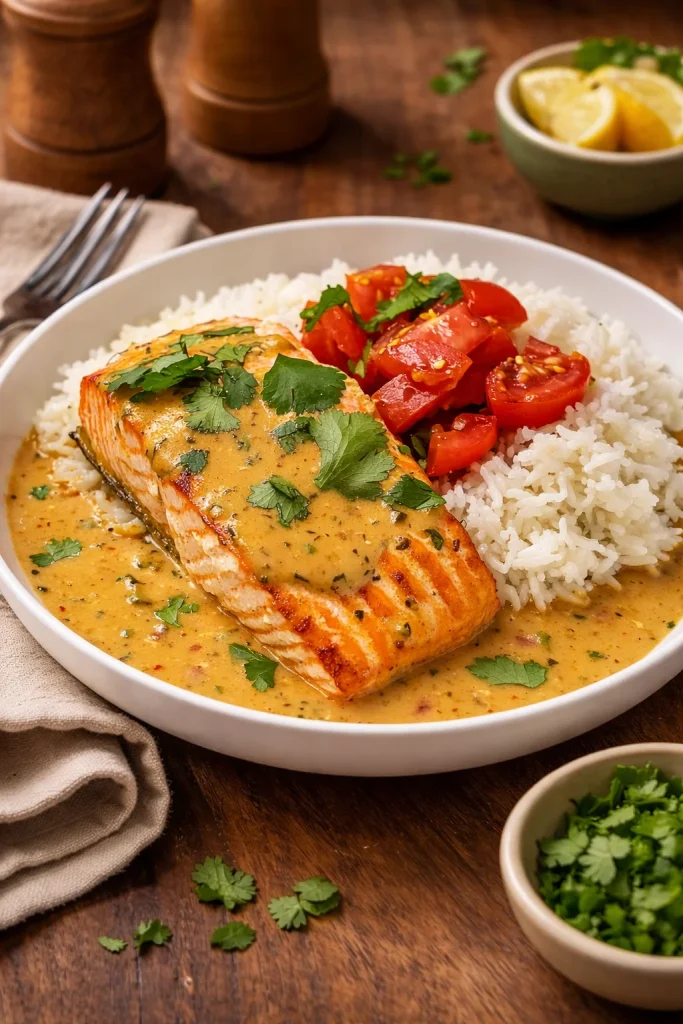
- Plating: Spoon rice onto the center of the plate, lay a salmon fillet on top, and ladle extra coconut curry around it for a restaurant-style look.
- Pairings: A crisp cucumber salad or quick pickled radishes cut through the richness. Steamed broccoli or roasted eggplant also work well.
- Drinks: A dry Riesling or an IPA with citrus notes complements the curry’s sweetness and spice.
- Dessert: If you want something coconut-forward to follow, try simple treats like almond-coconut rice krispie cookies for an easy finish.
Keeping leftovers fresh
- Refrigerator: Store cooled salmon and sauce in an airtight container for up to 2 days. Rice can be stored separately for 3–4 days. Reheat gently to prevent overcooking the fish.
- Reheating: Warm on the stove over low heat with a splash of water or additional coconut milk to loosen the sauce; heat until just warmed through. Microwaving works — cover loosely and use short intervals.
- Freezing: Cooked salmon in curry can be frozen for up to 1 month. Use a freezer-safe container and leave a small headspace. Thaw overnight in the refrigerator before reheating. Note: texture changes may occur; sauce freezes better than the fish itself.
- Safety tip: Do not leave cooked seafood at room temperature for more than 2 hours. Reheat leftovers to 165°F (74°C) before eating.
Pro chef tips
- Don’t overcook salmon: remove from heat when it still looks slightly translucent in the center; carryover heat will finish it.
- Bloom the curry paste: frying the paste briefly in oil unlocks deeper flavor than stirring it straight into liquid.
- Control spice: red curry paste varies by brand. Start with 1 tablespoon, taste, then add more.
- Texture balance: add a splash of coconut milk or water if sauce reduces too much while the salmon cooks.
- Quick shortcut: use pre-cooked jasmine rice or microwaveable packets when time is tight.
Creative twists
- Make it smoky: use roasted red curry paste or add charred pineapple for a smoky-sweet angle.
- Coconut curry cod or shrimp: swap salmon for cod, halibut, or shrimp; adjust cooking times accordingly.
- Vegetarian: replace fish sauce with soy sauce and use firm tofu instead of salmon; pan-sear tofu cubes before simmering briefly in the sauce.
- Noodles instead of rice: serve the curry over rice noodles or udon for a different texture.
- Heat lovers: add sliced Thai chiles or a drizzle of chili oil to finish.
Your questions answered
Q: How long does this take from start to finish?
A: About 30–40 minutes total — rice cooks while you make the sauce and gently poach the salmon.
Q: Can I make the sauce ahead of time?
A: Yes. Make the sauce up to 2 days ahead, refrigerate, then gently reheat and simmer with salmon for 6–8 minutes when ready to serve.
Q: Is this safe for pregnant people?
A: Use pasteurized fish sauce or substitute with reduced-sodium soy sauce if you have concerns. Cook salmon to at least 145°F (63°C) to follow standard safety guidelines; consult your healthcare provider for personalized advice.
Q: My coconut milk split — how do I fix it?
A: If the coconut milk separates after cooking, whisk in a splash of warm water or an extra tablespoon of coconut milk off heat; a quick whisk restores a smoother texture.
Q: Can I make this spicier/less spicy?
A: Yes — adjust the red curry paste amount. You can also add chili flakes for extra heat or a bit more sugar/lime to temper spice.
Conclusion
If you want to compare variations, the Salt & Lavender Salmon Coconut Curry (Thai Inspired) offers a great take on similar flavors. For another clear coconut-curry salmon method, see the detailed notes at Simply Whisked’s Coconut Curry Salmon. And for a different but related home-cooked approach, Something Nutritious’s Coconut Curry Salmon provides useful variations and plating ideas.
Enjoy the balance of creamy, tangy, and savory in this simple coconut curry salmon — it’s one of those dinners that feels both indulgent and wholesome.
Coconut Curry Salmon
Ingredients
Method
- Rinse 1 cup jasmine rice under cold water until water runs clear.
- Combine rinsed rice with 1 1/4 cups water in a covered pot. Bring to a boil, then reduce to low and simmer for 12–15 minutes.
- Remove from heat and let rest covered for 10 minutes before fluffing.
- Heat 1 tbsp oil in a large skillet over medium heat. Add the chopped onion and cook until translucent, about 4–5 minutes.
- Add minced garlic and ginger; sauté for 30–45 seconds until fragrant.
- Stir in 1–2 tbsp red curry paste and cook for 30 seconds to bloom the spices.
- Pour in 14 oz coconut milk, 1 tbsp fish sauce (or soy sauce), 1 tbsp lime juice, and 1 tsp brown sugar. Stir to combine and bring to a gentle simmer.
- Season salmon fillets with salt and pepper. If fillets are skin-on, place skin-side down first.
- Gently nestle the salmon into the simmering curry, spooning some sauce over the tops. Reduce heat to medium-low.
- Simmer uncovered for 6–10 minutes, depending on thickness until salmon is done and flakes easily.
- In the last minute of cooking, stir in 1 cup baby spinach or torn basil leaves until wilted.
- Taste the sauce and adjust seasoning — add more fish sauce for saltiness, lime for acidity, or a pinch more sugar if it needs balance.
- Serve salmon and sauce over jasmine rice, garnished with chopped cilantro and lime wedges.