Traditional Irish Lamb Stew

 235
235
 18
18
 1.30k
1.30k

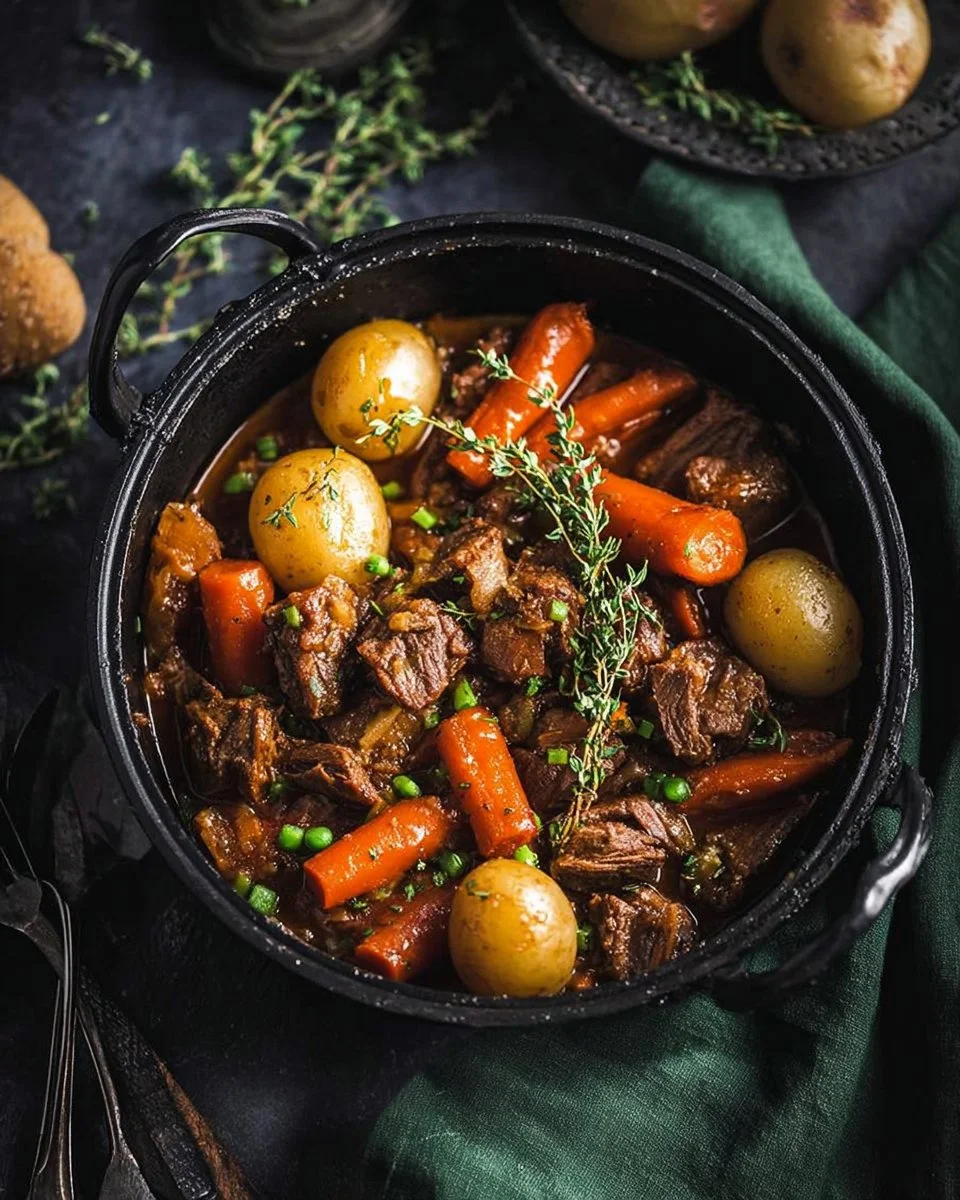
I still remember the first time I slow-cooked a proper Irish lamb stew—the kitchen filled with the gentle scent of thyme and garlic, and the lamb fell apart from the bone with the kind of tenderness you only get from low, patient heat. This Traditional Irish Lamb Stew is the kind of dish families make on blustery evenings, for Sunday lunches, or whenever you want comfort in a bowl. If you already love a hearty beef version, compare textures with our traditional beef Irish stew to see how lamb changes the game.
Why you’ll love this dish
This stew is all about slow-cooked depth: seared lamb for caramelized flavor, soft leeks and onions for sweetness, and simple herbs that let the meat shine. It’s budget-friendly (lamb shoulder is forgiving and full of connective tissue that becomes luscious with long cooking), family-friendly, and easy to scale for guests. Make it for a midweek dinner that feels special, or bring it to the table for St. Patrick’s gatherings where you want an authentic, rustic centerpiece.
"Comfort food done right—rich lamb, soft potatoes, and a broth that tastes like home." — a neighbor after my first batch
For a beef-forward comparison and serving ideas, check this other stew variation that’s popular with readers.
How this recipe comes together
Overview: Brown lamb in batches to build flavor, then sweat onions and leeks. Return the lamb to the pot with carrot, herbs, and beef stock. Simmer gently in a covered cast-iron casserole in a low oven for about 2.5 hours until the lamb is meltingly tender. Add baby potatoes and Dutch carrots for the final 30 minutes so they stay intact. Finish with Worcestershire sauce and adjust seasoning.
What to expect while cooking:
- Active time: 20–30 minutes (browning and prepping).
- Passive oven time: 3 hours total (2.5 hours, then 30 minutes after adding veg).
- Result: fork-tender lamb, a silky broth, and vegetables that hold shape without becoming mushy.
What you’ll need
- 2 tbsp extra virgin olive oil (use more if your pan is dry)
- 1.2 kg lamb shoulder, cut into 4 cm cubes (a bone-in shoulder works too; remove bones before serving or leave for more flavor)
- 1 leek, finely sliced (white and light-green parts) — clean thoroughly to remove grit
- 1 brown onion, finely sliced
- 3 cloves garlic, crushed
- 1 large carrot, peeled and sliced into 1 cm rounds
- 1 litre beef stock (use low-salt stock if you’re moderating sodium)
- 1 bay leaf
- 2 sprigs thyme (or 1 tsp dried thyme)
- 2 sprigs flat-leaf parsley, tied or chopped at the end
- 1 bunch Dutch carrots, trimmed (or regular carrots cut thicker so they don’t disintegrate)
- 6 baby potatoes (or 3 larger potatoes cut in half)
- 1 tbsp Worcestershire sauce
- Sea salt flakes and freshly ground black pepper to taste
Substitutions/notes:
- Beef stock adds depth; for a lighter broth use chicken stock but expect a different flavor profile.
- Lamb neck or shank can replace shoulder; adjust cooking time slightly.
- If you prefer a gluten-free Worcestershire, check the label or substitute a splash of balsamic vinegar and soy-free alternatives.
Directions to follow

- Preheat the oven to 150°C. Position a rack in the middle.
- Heat a cast-iron casserole over medium-high heat. Add 1 tbsp olive oil and let it shimmer.
- Pat lamb cubes dry with paper towel. Season lightly with salt and pepper. Add a few pieces to the hot pot—do not overcrowd. Brown on all sides, about 3–4 minutes per batch. Remove browned pieces to a plate and repeat until all lamb is seared, adding more oil if needed.
- Reduce heat to medium. Add the remaining oil, then sauté the sliced onion and leek until softened and translucent, about 6–8 minutes. Add garlic and cook 30 seconds more until fragrant.
- Return all browned lamb to the pot. Add the large carrot slices, bay leaf, thyme sprigs, parsley sprig, and pour in the beef stock so it just covers the meat. Bring the pot to a gentle simmer on the stovetop.
- Cover the casserole with a tight lid and place it in the preheated oven. Cook for 2.5 hours. The lamb should be very tender and almost falling apart.
- Carefully remove the pot from the oven. Add the baby potatoes and Dutch carrots, nestling them into the broth. Return the pot to the oven, uncovered or with the lid slightly ajar, for another 30 minutes. This keeps the vegetables intact but fully cooked.
- Check for tenderness: potatoes should be easily pierced with a fork. Stir through 1 tbsp Worcestershire sauce. Taste and season with sea salt flakes and freshly ground black pepper. Remove bay leaf and thyme stems before serving. Garnish with chopped parsley if desired.
Best ways to enjoy it
- Ladle the stew into deep bowls and serve with rustic soda bread or crusty sourdough to mop up the broth.
- For a pub-style meal, serve on mashed potatoes and spoon stew over the mash.
- Pair with a green vegetable—steamed cabbage or buttered kale adds freshness.
- Drink pairing: a medium-bodied red like a Côtes du Rhône or a malty Irish stout complements the stew’s richness.
Storage and reheating tips
- Refrigerator: Cool to room temperature, then store in an airtight container for up to 3 days.
- Freezing: Cool fully, portion into freezer-safe containers, and freeze for up to 3 months. Label with date.
- Reheating: Thaw overnight in the fridge if frozen. Reheat gently on the stovetop over low-medium heat until steaming (internal temperature should reach 75°C). Avoid rapid reheating which can toughen the meat.
- Food safety: Do not leave cooked stew at room temperature for more than 2 hours. When reheating, bring to a rolling simmer to ensure safety.
Pro chef tips
- Dry the lamb well before searing. Moisture prevents proper browning.
- Brown in small batches to maximize Maillard flavor. Crowding the pan steams the meat.
- Use a heavy pot (cast iron) to keep a steady temperature when adding cold ingredients.
- If your gravy is too thin after cooking, reduce it uncovered on the stovetop for 5–10 minutes, or whisk in a beurre manié (equal parts butter and flour) to thicken slightly.
- For a clearer broth, skim any foamy impurities after the first simmer.
- Looking for beef-based technique notes that translate to lamb? This traditional Irish beef stew tips article has overlapping methods you can borrow.
Creative twists
- Guinness lamb stew: replace 250 ml of stock with Guinness for a darker, maltier flavor.
- Herb-forward: add rosemary sprig with thyme for more aromatic notes.
- Root-vegetable version: swap Dutch carrots for parsnips and add turnips for earthiness.
- One-pot shortcut: brown lamb and add all vegetables at once, but reduce oven time and accept that the potatoes may be softer—use larger potato pieces to counteract.
- Make it lighter: use leg of lamb trimmed of excess fat and a lighter stock; reduce cooking time to avoid drying the meat.
Common questions
Q: Can I use lamb chops or leg instead of shoulder?
A: Shoulder is ideal because of its connective tissue and fat, which break down into gelatin and give the stew body. You can use leg or chops, but they’re leaner—cook time may be shorter and the stew less rich.
Q: Why use beef stock for a lamb stew?
A: Beef stock provides a deep, savory backbone that pairs well with lamb’s flavor. It’s traditional in many Irish recipes. If you prefer, use lamb or chicken stock, but the flavor balance will change.
Q: How do I keep the carrots and potatoes from overcooking?
A: Add them in the last 30 minutes of cooking as the recipe directs. Choose baby potatoes or larger-cut chunks; smaller diced potatoes will overcook.
Q: Is this stew freezer-friendly?
A: Yes. Cool completely, then freeze in portioned containers for up to 3 months. Thaw in the refrigerator before reheating.
Q: Can I make this on the stovetop only?
A: Yes—simmer gently on the stovetop for 2.5 hours covered, then add vegetables and cook another 30 minutes. Keep the heat low to avoid toughening the meat.
Conclusion
For a pub-style take on the dish, this Irish Pub Lamb Stew from The Kitchn is a great comparison. If you want another home-cook’s classic, see An Irishman’s Wife’s Traditional Irish Stew Recipe for a different approach to herbs and timing. For a widely loved, crowd-pleasing method that’s similar in spirit, try The Pioneer Woman’s Best Irish Stew Recipe for ideas on presentation and sides.
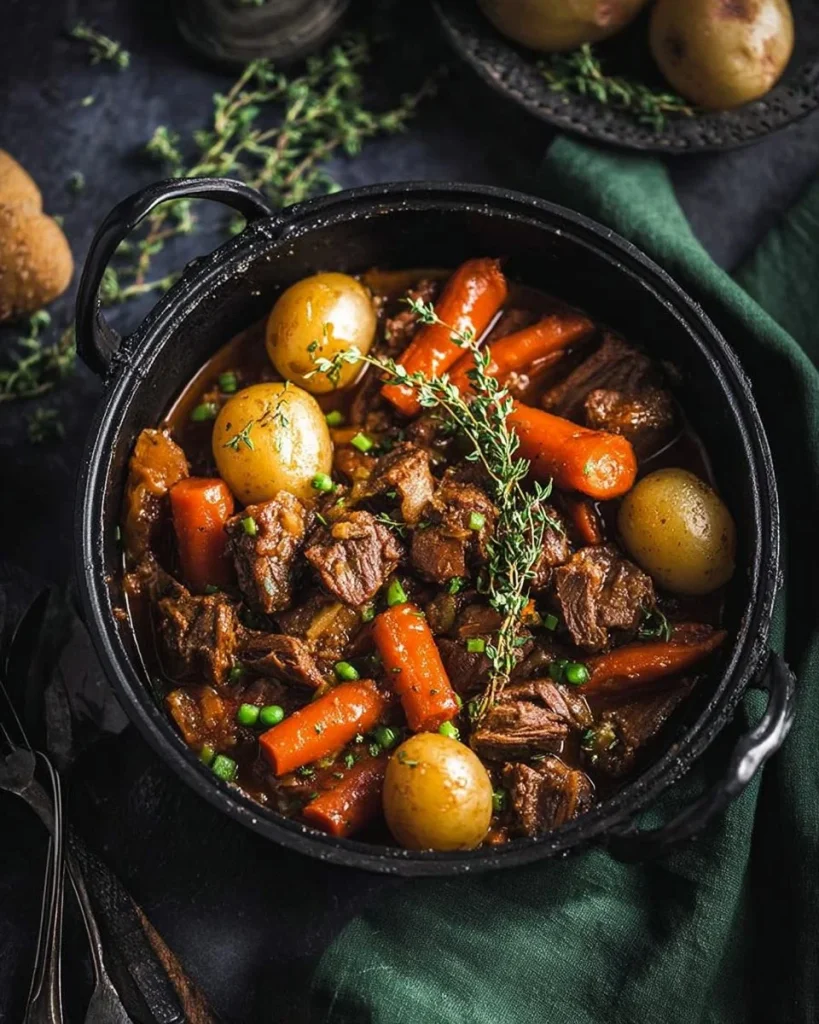
Traditional Irish Lamb Stew
Ingredients
Method
- Preheat the oven to 150°C. Position a rack in the middle.
- Heat a cast-iron casserole over medium-high heat. Add 1 tbsp olive oil and let it shimmer.
- Pat lamb cubes dry with paper towel. Season lightly with salt and pepper.
- Add a few pieces of lamb to the hot pot—do not overcrowd. Brown on all sides, about 3–4 minutes per batch. Remove browned pieces to a plate and repeat until all lamb is seared, adding more oil if needed.
- Reduce heat to medium. Add the remaining oil, then sauté the sliced onion and leek until softened and translucent, about 6–8 minutes.
- Add garlic and cook 30 seconds more until fragrant.
- Return all browned lamb to the pot. Add the large carrot slices, bay leaf, thyme sprigs, parsley sprig, and pour in the beef stock so it just covers the meat.
- Bring the pot to a gentle simmer on the stovetop.
- Cover the casserole with a tight lid and place it in the preheated oven. Cook for 2.5 hours.
- Carefully remove the pot from the oven. Add the baby potatoes and Dutch carrots, nestling them into the broth.
- Return the pot to the oven, uncovered or with the lid slightly ajar, for another 30 minutes.
- Check for tenderness: potatoes should be easily pierced with a fork. Stir through 1 tbsp Worcestershire sauce. Taste and season with sea salt flakes and freshly ground black pepper.
- Remove bay leaf and thyme stems before serving. Garnish with chopped parsley if desired.