Texas Roadhouse-Style Salmon

 235
235
 18
18
 1.30k
1.30k

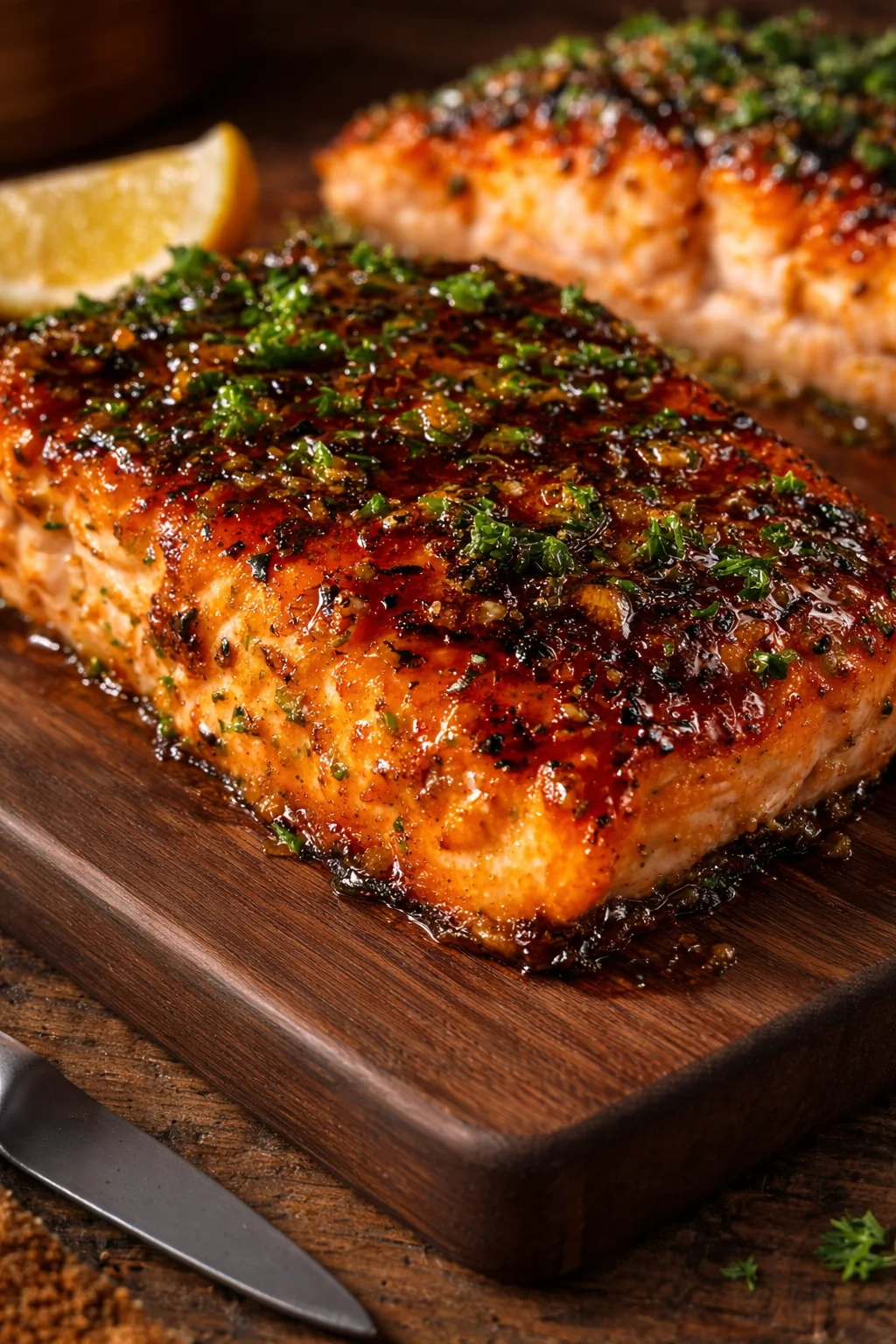
I make this Texas Roadhouse–style salmon whenever I want a fast weeknight dinner that tastes restaurant-polished with minimal fuss. It’s a simple oven-baked fillet brushed with a bright lemon-olive oil blend and warm spices—comforting, flaky, and ready in about 25 minutes from start to finish. If you like salmon recipes that are easy enough for a weekday but impressive enough for guests, this one hits the sweet spot; it pairs especially well with roasted vegetables or a crisp salad. For another quick salmon idea that’s great for busy nights, try an air-fryer version like this air-fryer salmon bites with hot honey.
Why you’ll love this dish
This dish takes just a handful of pantry spices and a quick lemon-olive oil marinade to produce salmon with a bright, slightly smoky edge and a tender, flaky interior. It’s forgiving, speedy, and family-friendly—kids usually love the mild paprika flavor and the bright lemon finish. Make it when you want something healthy that still feels a little special: weeknights, casual dinner parties, or a light Sunday supper.
“I made this for dinner and my family couldn’t believe how restaurant-like it tasted—simple spices, bright lemon, perfectly flaky salmon.” — home cook review
The cooking process explained
Before you start: you’ll whisk a simple oil-and-lemon mixture, pat the fillets dry, brush them generously, and bake at 400°F (200°C) until just flaky. Expect 15–20 minutes in the oven depending on thickness; use an instant-read thermometer to hit your desired doneness. The method is intentionally hands-off—no searing required—so cleanup is quick when you line the sheet with parchment.
What you’ll need
- 4 salmon fillets (6 ounces each) — skin on preferred for structure
- 2 tablespoons olive oil (sub: avocado oil for higher smoke point)
- 2 tablespoons lemon juice (fresh is best; bottled works in a pinch)
- 2 teaspoons garlic powder (or 2 cloves minced garlic)
- 1 teaspoon paprika (sweet or smoked for a subtle smoky note)
- 1 teaspoon dried thyme (or 1 tablespoon fresh, chopped)
- 1 teaspoon salt
- ½ teaspoon black pepper
- Lemon wedges, for serving
- Fresh parsley, chopped, for garnish
Notes: If you prefer a lower-sodium version, reduce salt to ¾ teaspoon and finish with a squeeze of lemon at the table. If you like a glaze, swap half the oil for melted butter.
Step-by-step instructions

- Preheat the oven to 400°F (200°C) and line a rimmed baking sheet with parchment paper for easy cleanup.
- In a small bowl, whisk together the olive oil, lemon juice, garlic powder (or minced garlic), paprika, thyme, salt, and black pepper until evenly combined.
- Pat each salmon fillet dry with paper towels and arrange them skin-side down on the prepared baking sheet. Drying the fish helps the seasoning stick and encourages even browning.
- Brush the oil-lemon mixture generously over the tops and sides of each fillet so they’re well coated. Don’t skimp—the oil carries flavor and helps the surface develop a nice finish.
- Bake on the middle oven rack for 15–20 minutes. Thicker fillets may need the full 20 minutes. The fish is done when it flakes easily with a fork and reaches an internal temperature of 125–130°F (52–54°C) for medium; if you prefer fully done salmon, cook to 145°F (63°C).
- Remove from the oven and let rest for 2–3 minutes. Serve with lemon wedges and a sprinkle of chopped fresh parsley.
For other baked salmon techniques and flavor ideas, see this baked Boursin salmon recipe.
What to serve it with
- Classic pairings: garlic mashed potatoes, roasted asparagus, green beans almondine, or a warm rice pilaf.
- Lighter pairings: mixed greens with a lemon vinaigrette, cucumber-dill salad, or quinoa and cherry tomatoes.
- To make it a full plate: add a slice of lemon-butter grilled sourdough and a side of sautéed spinach for color and texture contrast.
For a quicker dinner, serve the salmon over a bed of baby arugula and thinly sliced fennel with a drizzle of the leftover pan juices.
Storage and reheating tips
- Refrigerator: Store cooked salmon in an airtight container for up to 3 days. Cool to room temperature no longer than 2 hours before refrigerating.
- Freezing: Wrap tightly in plastic wrap and foil or place in a freezer-safe container for up to 2 months. Thaw overnight in the refrigerator before reheating.
- Reheating: Gently reheat in a 275°F (135°C) oven for 10–12 minutes or until warmed through to avoid drying. You can also flake cold salmon into salads or grain bowls without reheating.
Food safety note: USDA recommends cooking fish to 145°F (63°C) for safety; many chefs prefer slightly lower temps for texture—use an instant-read thermometer and your personal preference as a guide.
Helpful cooking tips
- Pat dry: Removing surface moisture helps the seasoning stick and encourages a better finish.
- Even thickness: If fillets vary greatly in thickness, fold the thin end under or start a thinner piece a few minutes earlier to prevent overcooking.
- Freshness check: Fresh salmon should smell faintly of the sea, not fishy. Look for bright flesh and firm texture.
- Thermometer use: An instant-read thermometer is the most reliable way to achieve your preferred doneness. Aim for 125–130°F for medium-rare to medium, or 145°F for well done.
- Make-ahead: Mix the oil-lemon seasoning up to a day ahead and keep chilled; brush right before baking for convenience.
For another fast method that gives crisp edges and great flavor, try this best air fryer salmon recipe.
Creative twists
- Honey-chipotle glaze: Add 1 tablespoon honey and ½ teaspoon chipotle powder to the oil mix for a sweet-spicy finish.
- Herbed crust: Combine 1/3 cup breadcrumbs with 1 tablespoon melted butter and 1 tablespoon chopped fresh herbs; press on top of fillets before baking for crunch.
- Citrus-herb swap: Use orange juice instead of lemon and swap thyme for basil for a brighter, sweeter note.
- Low-FODMAP / garlic-free: Omit garlic or substitute with a pinch of asafoetida if tolerated, and use extra lemon zest to boost flavor.
FAQ
How long does this salmon take from start to table?
Plan for about 25 minutes total: 5–10 minutes prep (mixing, patting, brushing) and 15–20 minutes baking depending on thickness.
Can I use frozen salmon?
Yes—thaw overnight in the fridge, pat dry, and proceed. For best texture, avoid cooking from frozen with this recipe; it’s designed for thawed fillets.
Is 125–130°F safe for salmon?
Many chefs prefer 125–130°F for a moist, medium doneness. The USDA recommends 145°F for safety; choose based on your comfort level and always use an instant-read thermometer to confirm internal temperature.
Can I make this gluten-free / dairy-free?
Absolutely—this recipe is naturally gluten-free and dairy-free as written. If you add a breadcrumb crust, use gluten-free breadcrumbs.
What’s the best way to reheat leftovers without drying them out?
Low and slow: 275°F (135°C) oven for 10–12 minutes, covered loosely with foil, keeps the salmon moist.
Conclusion
If you want a home-cooked salmon that tastes like it came from a favorite steakhouse, this lemony, spiced bake is fast, reliable, and crowd-pleasing. For a similar copycat take you can compare ingredient balances with this detailed Texas Roadhouse Salmon recipe from The Food Hussy. To cross-check how the restaurant presents its seafood options and portioning, view the official Texas Roadhouse menu. For another home-cook’s spin on the same dish and alternate tips, see this Cook With Ana Texas Roadhouse salmon.
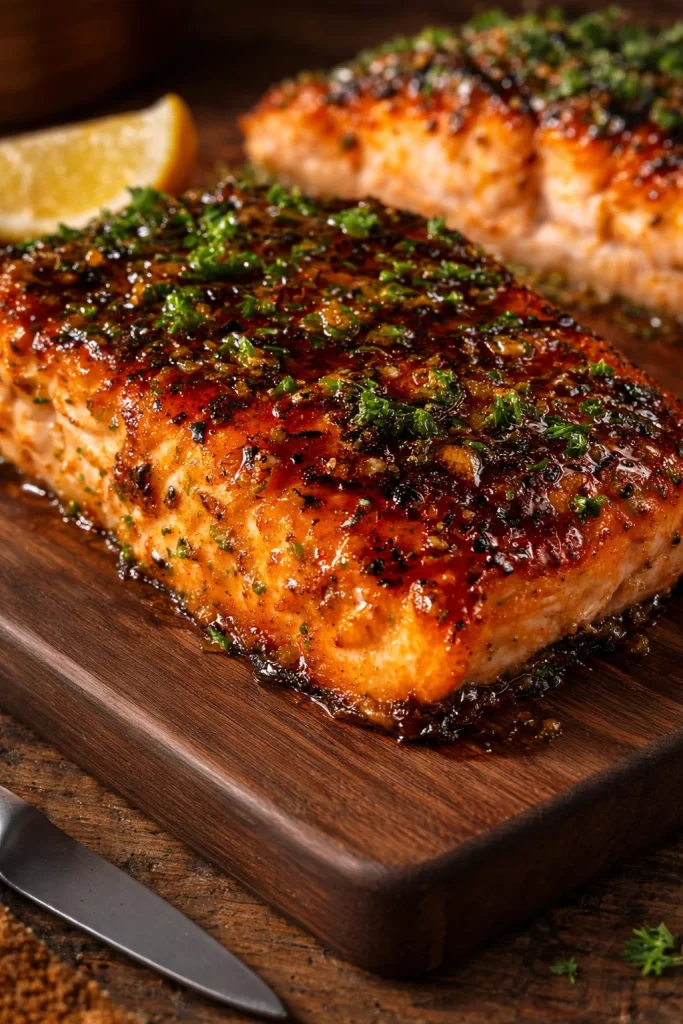
Texas Roadhouse-Style Salmon
Ingredients
Method
- Preheat the oven to 400°F (200°C) and line a rimmed baking sheet with parchment paper.
- In a small bowl, whisk together olive oil, lemon juice, garlic powder (or minced garlic), paprika, thyme, salt, and black pepper.
- Pat each salmon fillet dry with paper towels and place them skin-side down on the prepared baking sheet.
- Brush the oil-lemon mixture generously over the tops and sides of each fillet.
- Bake the salmon on the middle oven rack for 15 to 20 minutes, until it flakes easily and reaches your desired internal temperature (125–130°F for medium).
- Remove from the oven and let rest for 2–3 minutes before serving.