Irresistible Caramel Swirl Cheesecake

 235
235
 18
18
 1.30k
1.30k

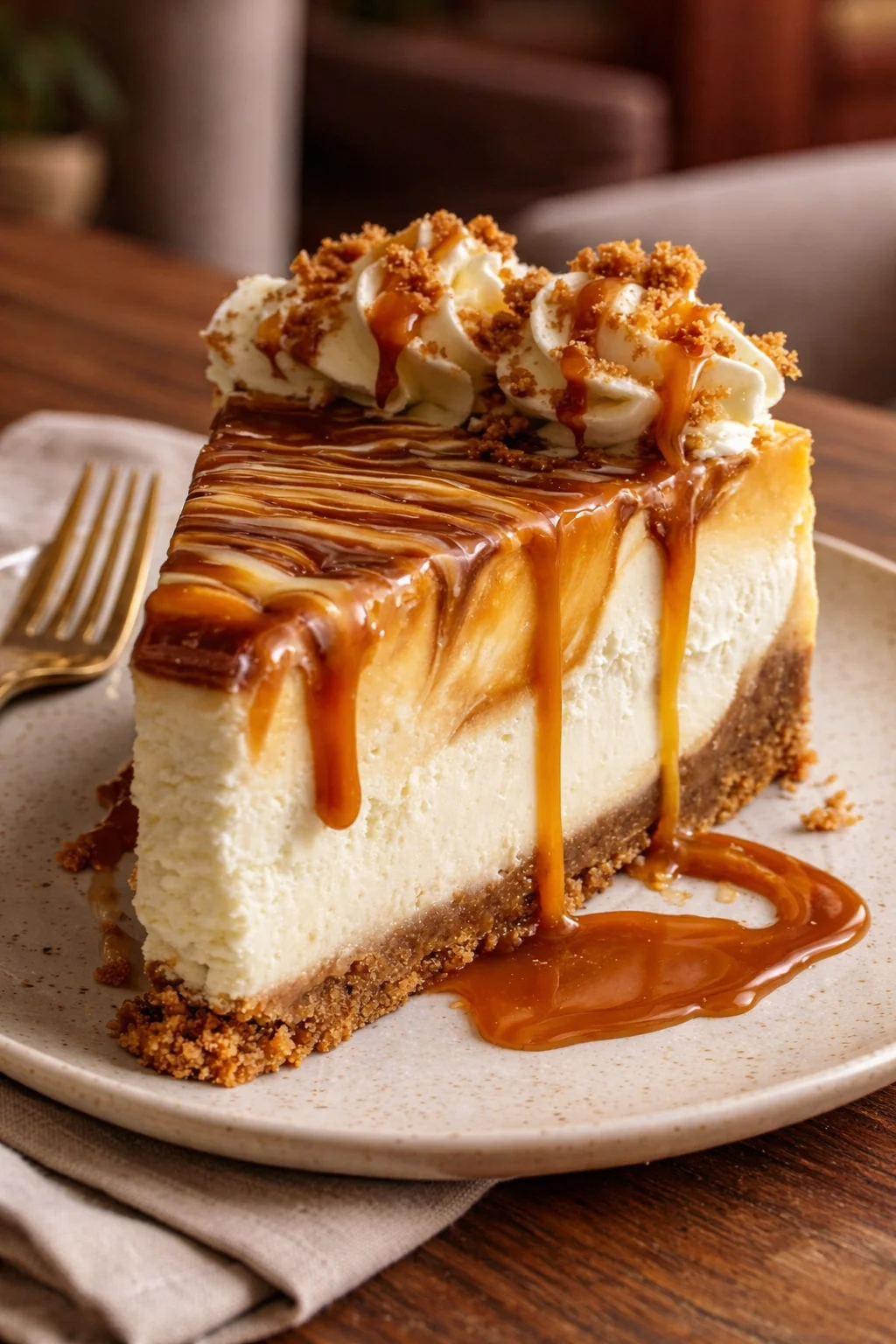
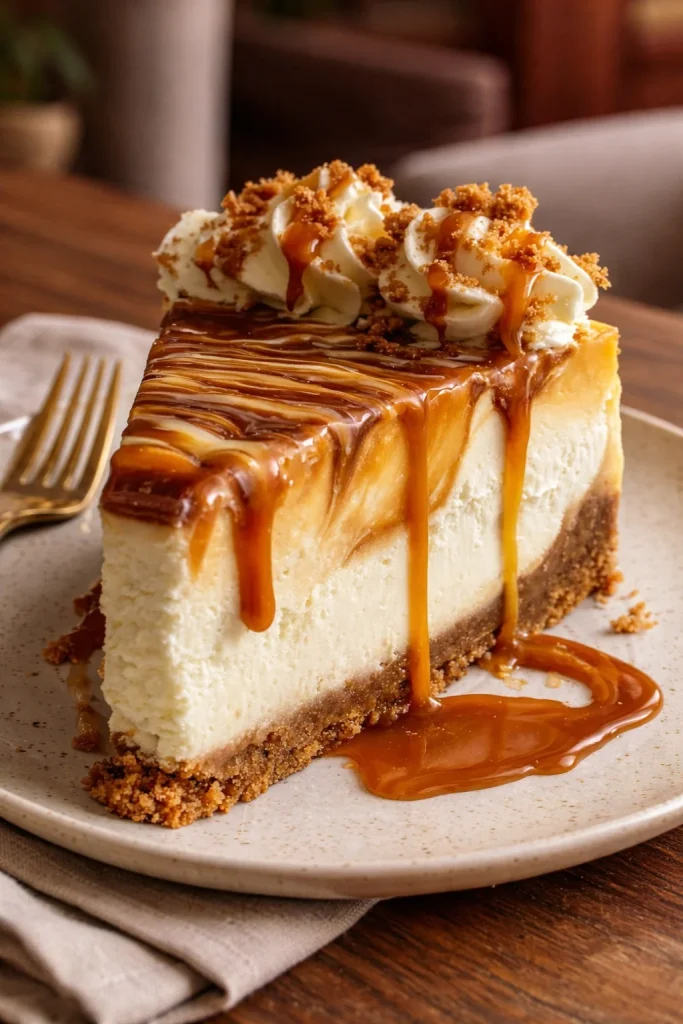
I first made this caramel swirl cheesecake for a small holiday dinner and it vanished so fast I had people asking for the recipe before I even got my second slice. It’s a classic creamy cheesecake with a buttery graham crust and a glossy ribbon of caramel running through the top — comfort-food decadence that’s easier to pull off than it looks. If you enjoy rich, crowd-pleasing desserts you can prep in advance, this is one to keep in your repertoire; and if you like similar flavor mashups, you might also enjoy these caramel apple cheesecake bars for another twist.
Why you’ll love this dish
This cheesecake hits the sweet spot between familiar and special-occasion dessert. The filling is smooth and tangy from cream cheese, the crust adds a toasty crunch, and the caramel swirl gives every slice a glossy, gooey finish without extra work. It’s ideal for holidays, potlucks, or a weekend baking project because you can bake it ahead, refrigerate, and serve chilled.
“Silky, not too sweet, and that caramel swirl makes it look bakery-fancy — my guests thought I’d bought it.” — a regular at my tasting table
Why choose this recipe over others? It uses simple, pantry-friendly ingredients, requires no water bath or complicated technique to get a lovely set, and the caramel can be store-bought for speed or homemade for a deeper flavor. It’s also very adaptable — swap the crust or use flavored caramel to match the season.
How this recipe comes together
Here’s a quick roadmap so you know what to expect before you start:
- Make the crust by combining graham crumbs with melted butter and press into a springform pan.
- Whip the softened cream cheese until smooth, then blend in sugar and vanilla.
- Add eggs one at a time so the texture stays silky.
- Pour the filling over the crust, spoon caramel on top, and swirl gently.
- Bake at a low temperature until the center is barely set; cool completely and then chill for best texture.
This overview helps set up timing: about 20–30 minutes active prep, 55–60 minutes baking, plus at least 4 hours chilling (overnight is best).
What you’ll need
- 2 cups graham cracker crumbs (about 10–12 full crackers crushed) — you can pulse them in a food processor or crush in a bag with a rolling pin.
- 1/2 cup (115 g) melted butter — unsalted is fine; use salted if you like a slightly savory edge.
- 24 oz (680 g) cream cheese, softened — full-fat yields the best texture.
- 1 cup (200 g) granulated sugar — can reduce by 1–2 tablespoons if you prefer less sweet.
- 1 teaspoon vanilla extract — pure vanilla improves flavor.
- 4 large eggs, at room temperature — bring them to room temp to avoid lumps in the batter.
- 1 cup caramel sauce — store-bought or homemade; see variations for warm salted caramel.
Substitution notes: For a gluten-free crust use gluten-free graham crumbs or a ground almond crust. For a lighter version, try 2/3 full-fat and 1/3 reduced-fat cream cheese, but the texture will be slightly less rich.
Directions to follow

- Preheat the oven to 325°F (160°C). Position a rack in the lower-middle of the oven.
- Mix the graham cracker crumbs and melted butter in a bowl until evenly moistened. Press the mixture firmly into the bottom of a 9-inch springform pan to form an even crust.
- In a large bowl, beat the softened cream cheese with an electric mixer on medium speed until smooth and free of lumps (about 2–3 minutes).
- Add the sugar and vanilla extract and continue to beat until well combined and creamy.
- Add the eggs one at a time, beating on low speed after each addition just until incorporated. Avoid overmixing to prevent excess air.
- Pour the cream cheese batter over the prepared crust and smooth the top with a spatula.
- Spoon the caramel sauce over the batter in dollops and use a knife or skewer to gently swirl the caramel through the top — don’t over-swirl or you’ll lose the marbled look.
- Bake for 55–60 minutes, or until the edges are set and the center jiggles only slightly when you gently shake the pan.
- Remove from the oven and let cool on a wire rack until close to room temperature, then refrigerate for at least 4 hours (overnight is best) before releasing from the springform and slicing.
Short tips inside the steps: keep the oven temperature steady and resist opening the door often. If the top browns too quickly, tent loosely with foil.
Best ways to enjoy it
Serve chilled in thin slices so each piece shows the caramel swirl. Top with:
- A small spoonful of warmed caramel and a pinch of flaky sea salt for contrast.
- Whipped cream and toasted pecans for crunch.
- Fresh berries to cut the richness (raspberries or sliced strawberries work well).
Pair with a strong black coffee, espresso, or a dessert wine like late-harvest Riesling. For a party, plate with a smear of extra caramel and a few candied nuts for a bakery-style presentation.
How to store & freeze
- Refrigeration: Cover the cake tightly with plastic wrap or keep it in an airtight container. It will keep well for 4–5 days.
- Freezing: Slice the chilled cheesecake into portions, wrap each slice in plastic wrap and then aluminum foil, and freeze up to 2 months. Thaw overnight in the refrigerator before serving.
- Reheating: This cheesecake is best served cold; if you prefer it slightly warm, microwave a single slice for 8–10 seconds or briefly warm the plate — avoid heating longer or the texture will become grainy.
Food safety: keep cheesecake refrigerated below 40°F (4°C) and don’t leave it at room temperature for more than 2 hours.
Pro chef tips
- Bring cream cheese and eggs to room temperature for a lump-free batter and a silkier finish.
- Mix on low when incorporating eggs to minimize air — trapped air can cause cracking or rising then collapsing.
- To reduce cracking, cool the cake gradually: after baking, switch the oven off, crack the door, and let the cheesecake sit inside for 30 minutes before moving to a rack.
- If you want a firmer crust, bake the crust for 8–10 minutes before adding the filling.
- For a prettier top, wait until the cheesecake is fully chilled before running a hot knife between the cake and pan ring to release cleanly. For more creative cheesecake ideas, I often reference flavor pairings from other recipes like these honey-lavender cheesecake recipes to inspire seasonal twists.
Flavor swaps
- Salted caramel swirl: stir 1/2 teaspoon flaky sea salt into the caramel before swirling for bright contrast.
- Chocolate-caramel: drop a few tablespoons of chocolate ganache on top and swirl together for a marbled turtle effect.
- Seasonal twist: stir pumpkin spice into the batter and use spiced caramel in autumn for a pumpkin-caramel cheesecake.
- Nutty crust: swap graham crumbs for finely ground almonds or a pecan-crumb mix for a deeper, toasty flavor.
- Dietary swaps: for gluten-free, use certified gluten-free crumbs; for lower sugar, choose a reduced-sugar caramel and cut sugar in the batter by up to 25% (texture may vary). If you want an inspiration that plays with nuts and oats, see this banana caramel peanut butter cheesecake for related ideas on crusts and toppings.
Common questions
Q: Can I use homemade caramel, and will it affect baking?
A: Yes — homemade caramel (cooled but pourable) works beautifully and often has richer flavor. Make sure it’s not too hot when you pour it on the batter, or it can meld too much and lose the swirl definition.
Q: My cheesecake cracked on top. How can I avoid that next time?
A: Cracks are usually from overbaking or too-rapid cooling. Bake until the center barely jiggles, and cool gradually (leave the oven door ajar for a bit or let it cool on the counter before chilling). Also avoid overbeating the batter.
Q: How long should I chill the cheesecake before serving?
A: At least 4 hours is required for structure and flavor; overnight is preferable. Chilling improves texture and makes slicing cleaner.
Q: Can I make this in a water bath to prevent cracking?
A: You can, but it’s not necessary with this recipe. If you use a water bath, wrap the springform pan tightly in foil to prevent leaks and bake as directed — the water bath will give an even creamier texture and reduce cracking further.
Conclusion
If you want another take on caramel paired with cheesecake for a seasonal bake, check out these creative bars: Caramel Swirl Pumpkin Cheesecake Bars for autumn inspiration. For background reading on how bakers talk about caramel swirls and technique, this bakery review of caramel swirls is a useful read. And if you like nuts with caramel, this Turtle Cheesecake with Almond-Oat Crust is a lovely flavor cousin worth trying.
Enjoy the baking — and don’t be surprised when everyone asks for seconds.
Caramel Swirl Cheesecake
Ingredients
Method
- Preheat the oven to 325°F (160°C) and position a rack in the lower-middle of the oven.
- Mix the graham cracker crumbs and melted butter until evenly moistened. Press firmly into the bottom of a 9-inch springform pan to form a crust.
- In a large bowl, beat the softened cream cheese with an electric mixer on medium speed until smooth and free of lumps (about 2–3 minutes).
- Add the sugar and vanilla extract, beating until well combined and creamy.
- Add the eggs one at a time, beating on low speed after each addition just until incorporated. Avoid overmixing.
- Pour the cream cheese batter over the prepared crust and smooth the top with a spatula.
- Spoon the caramel sauce over the batter in dollops and gently swirl with a knife or skewer — don’t over-swirl.
- Bake for 55–60 minutes, or until the edges are set and the center jiggles slightly.
- Let cool on a wire rack until close to room temperature, then refrigerate for at least 4 hours (overnight is best) before slicing.