Greek Spaghetti

 235
235
 18
18
 1.30k
1.30k

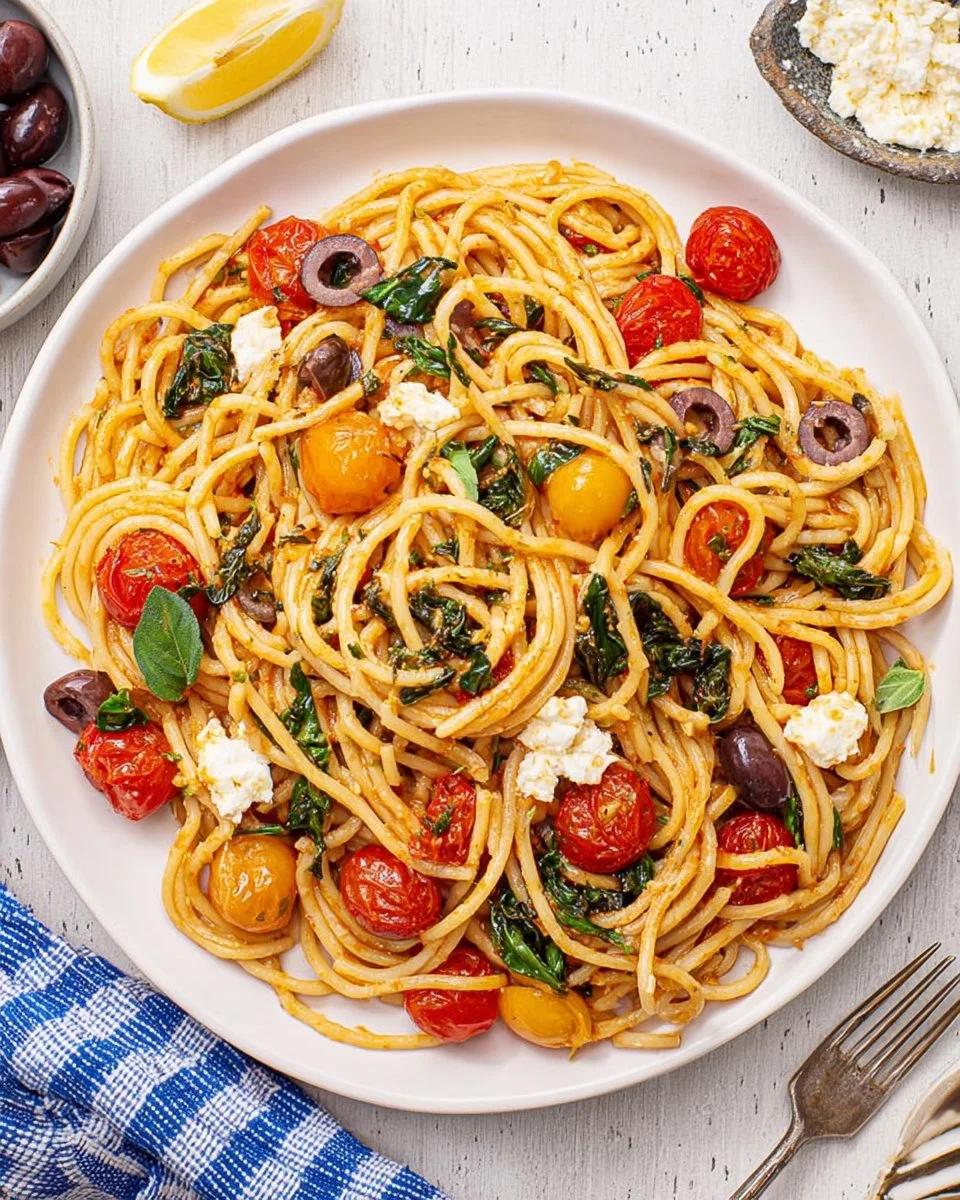
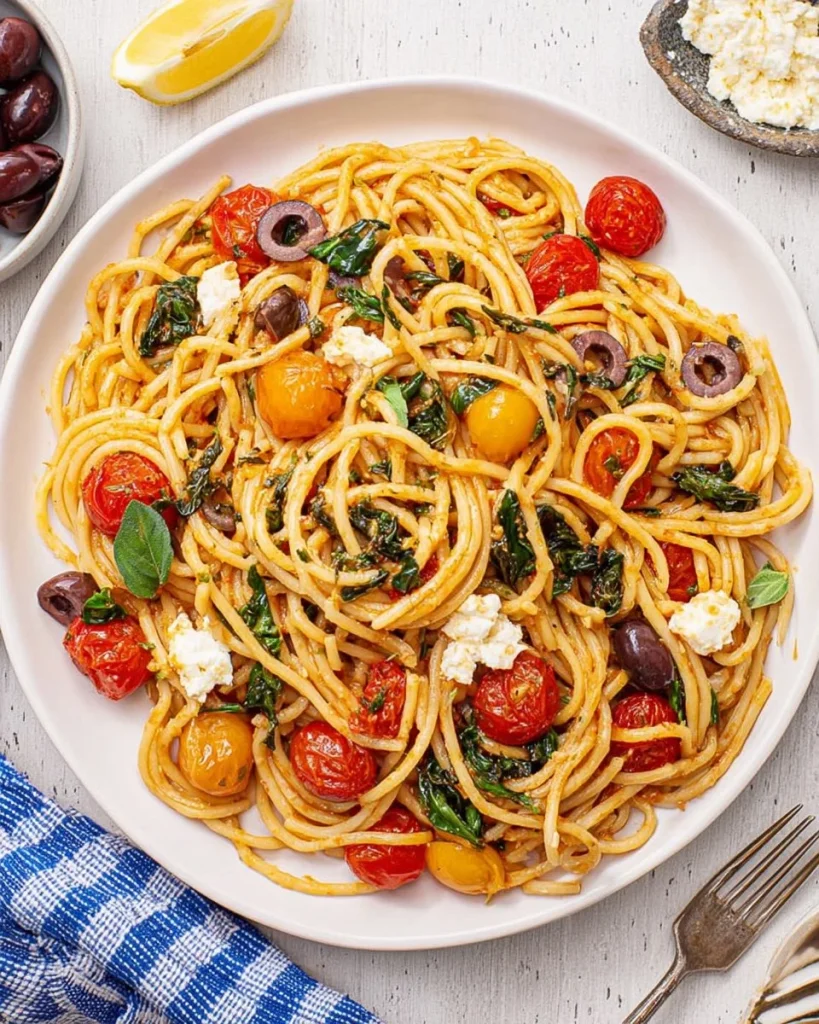
I make this Greek spaghetti on busy weeknights when I want dinner that feels bright, Mediterranean, and like I actually spent time on it — even when I didn’t. It’s spaghetti tossed with quick-sauteed onions, blistered cherry tomatoes, baby spinach, olives, lemon and a generous crumble of feta. The result is fresh, tangy, and satisfying: a pantry-friendly pasta that stretches to feed a family or passes as dinner-party fare with almost zero fuss. If you want variations and ratio ideas, see best Greek spaghetti tips for more inspiration.
Why you’ll love this dish
This recipe hits a lot of home-cooking sweet spots: it’s fast (about 25–30 minutes total), budget-friendly, and full of contrasting flavors — bright lemon, briny kalamata, sweet tomatoes, and creamy feta. It’s vegetarian but hearty enough for meat eaters, and the components are pantry- and fridge-friendly so you can throw it together on short notice.
“A weeknight winner: tangy, salty, and ready in under 30 minutes — every bite tastes like summer.” — happy home cook
The cooking process explained
Before you dive in, here’s a quick overview so you know what to expect:
- Boil the spaghetti and reserve a little pasta water.
- Saute aromatics (onion and garlic), then soften cherry tomatoes in olive oil so they release juices.
- Wilt spinach in the pan and add olives, lemon, vinegar, and oregano for a quick sauce.
- Toss hot spaghetti with the vegetable mixture, use reserved pasta water to loosen if needed, then stir in feta and fresh basil off the heat.
This structure keeps the pasta glossy and allows feta to gently melt into pockets rather than turning into a chalky mess.
What you’ll need
- 1 lb spaghetti
- 4 tablespoons olive oil (divided — 1 tbsp for pasta, 3 tbsp for skillet)
- 1 small red onion, finely diced
- 3 garlic cloves, minced
- Juice of ½ lemon (about 1–2 tablespoons)
- 1 tablespoon red wine vinegar
- 1 tablespoon dried oregano
- ½ teaspoon kosher salt
- ¼ teaspoon ground black pepper
- 2 cups cherry tomatoes, halved
- 2 cups fresh baby spinach
- ⅓ cup pitted kalamata olives, sliced
- 4 oz crumbled feta cheese
- 4–5 fresh basil leaves, thinly sliced
- Optional garnish: extra chopped basil or parsley
Notes/substitutions: Use linguine or other long pasta if you prefer. Swap lemon juice for a splash more red wine vinegar if you like sharper acidity. For a dairy-free version, omit feta and add toasted pine nuts or a drizzle of extra-virgin olive oil at the end. If you want alternate ingredient notes, see alternate ingredient notes.
Step-by-step instructions

- Bring a large pot of salted water to a boil and cook the spaghetti according to package directions until al dente. Before draining, scoop out and reserve ¼ cup pasta water. Drain the rest, add 1 tablespoon olive oil to the pasta, toss, and set aside.
- Heat 1 tablespoon olive oil in a large skillet over medium-high heat. Add the diced onion and sauté until soft and translucent, about 4–5 minutes.
- Add minced garlic and cook for 30–60 seconds, stirring, until fragrant. Don’t let it brown.
- Add the remaining olive oil and the halved cherry tomatoes. Sauté for several minutes until the tomatoes soften and begin to release their juices — you want them collapsing, not pureed.
- Stir in the baby spinach and cook until wilted, 1–2 minutes.
- Add the sliced kalamata olives, lemon juice, red wine vinegar, dried oregano, salt, and pepper. Cook together for another minute to marry the flavors.
- Remove the skillet from heat. Add the cooked spaghetti and toss to coat in the tomato-spinach mixture. If the pasta seems dry, add the reserved ¼ cup pasta water a little at a time until the sauce clings to the noodles.
- Add the crumbled feta and the thinly sliced basil. Toss gently one more time to distribute the cheese without breaking it down completely.
- Garnish with extra basil or parsley if desired and serve immediately.
Best ways to enjoy it
- Plate it family-style in a wide pasta bowl and let everyone help themselves; the torn basil looks great on top.
- Pair with a simple Greek salad (cucumber, tomato, red onion, olive oil, lemon) for a vibrant meal.
- Serve with crusty bread or garlic pita to mop up any leftover juices.
- For a heartier plate, add pan-seared chicken thighs or roasted chickpeas for extra protein.
Storage and reheating tips
- Refrigerator: Store leftovers in an airtight container for up to 3–4 days. The pasta will continue to absorb sauce, so expect it to tighten up.
- Reheating: Reheat gently on the stove over low heat with a splash of water or olive oil to loosen the sauce, stirring until warmed through. Microwave in short bursts, stirring between, and add a little water if it becomes dry.
- Freezing: I don’t recommend freezing the assembled dish; feta and spinach change texture. If you want to freeze components, simmer the tomato-onion base (without spinach or feta) and freeze that separately for up to 3 months. Thaw and finish with fresh greens and cheese when ready to serve.
Pro chef tips
- Reserve that pasta water — the starch helps the sauce stick and creates a silky finish.
- Don’t overcook the spinach. Add it last and remove the pan from heat as soon as it wilts.
- Use good-quality feta and drain it briefly on paper towel if it’s in a brine; excess brine can make the dish too salty.
- If your cherry tomatoes are very sweet, a pinch of red pepper flakes or an extra splash of vinegar balances them beautifully. For a slightly different technique and more ideas, check Greek spaghetti inspiration.
Creative twists
- Add protein: Stir in shredded rotisserie chicken or quick-cooked shrimp in step 7 for a non-vegetarian option.
- Make it smoky: Roast the cherry tomatoes under a broiler before adding them to the skillet for smoky depth.
- Low-carb: Substitute cooked spaghetti squash or a spiralized zucchini for the pasta.
- Cheesy bake: Transfer the tossed pasta to a baking dish, top with extra feta and mozzarella, and broil until bubbly for a gratin-like finish.
Common questions
Q: How long does this take to make?
A: About 25–30 minutes from start to finish if your pasta water is boiling while you prep the vegetables.
Q: Can I make this ahead?
A: You can prepare the tomato-onion mixture a day ahead and refrigerate. Add fresh spinach, pasta, and feta just before serving for the best texture.
Q: Is this recipe gluten-free or vegan-friendly?
A: To make it gluten-free, use gluten-free spaghetti. To make it vegan, omit the feta (or use a plant-based feta) and check your pasta for eggs if needed.
Q: Can I add meat?
A: Yes — cooked ground lamb or beef would play well with the Greek flavors, or add sliced grilled chicken for a leaner protein.
Q: How salty will it be with olives and feta?
A: Both add salt, so taste before additional seasoning. If your feta is briny, reduce added salt to avoid over-salting.
Conclusion
For a classic weeknight take that’s bright and Mediterranean, this Greek spaghetti delivers flavor without fuss. If you want another take that inspired many home cooks, check out Reluctant Entertainer’s Greek Spaghetti for a related approach. For a heartier, braised-meat and pasta pairing rooted in Greek tradition, see Heather Christo’s Braised Greek Pot Roast and Spaghetti. Curious about a meaty ragu version? Read the detailed take on Greek Spaghetti with Meat Sauce (Makaronia me Kima). And if you want a low-carb spin that swaps noodles for squash, try these Greek Spaghetti Squash Bowls for inspiration.
Greek Spaghetti
Ingredients
Method
- Bring a large pot of salted water to a boil and cook the spaghetti according to package directions until al dente. Before draining, scoop out and reserve ¼ cup pasta water. Drain the rest, add 1 tablespoon olive oil to the pasta, toss, and set aside.
- Heat 1 tablespoon olive oil in a large skillet over medium-high heat. Add the diced onion and sauté until soft and translucent, about 4–5 minutes.
- Add minced garlic and cook for 30–60 seconds, stirring, until fragrant. Don’t let it brown.
- Add the remaining olive oil and the halved cherry tomatoes. Sauté for several minutes until the tomatoes soften and begin to release their juices. You want them collapsing, not pureed.
- Stir in the baby spinach and cook until wilted, 1–2 minutes.
- Add the sliced kalamata olives, lemon juice, red wine vinegar, dried oregano, salt, and pepper. Cook together for another minute to marry the flavors.
- Remove the skillet from heat. Add the cooked spaghetti and toss to coat in the tomato-spinach mixture. If the pasta seems dry, add the reserved ¼ cup pasta water a little at a time until the sauce clings to the noodles.
- Add the crumbled feta and the thinly sliced basil. Toss gently one more time to distribute the cheese without breaking it down completely.
- Garnish with extra basil or parsley if desired and serve immediately.