Fall Off The Bone Beef Short Ribs

 235
235
 18
18
 1.30k
1.30k

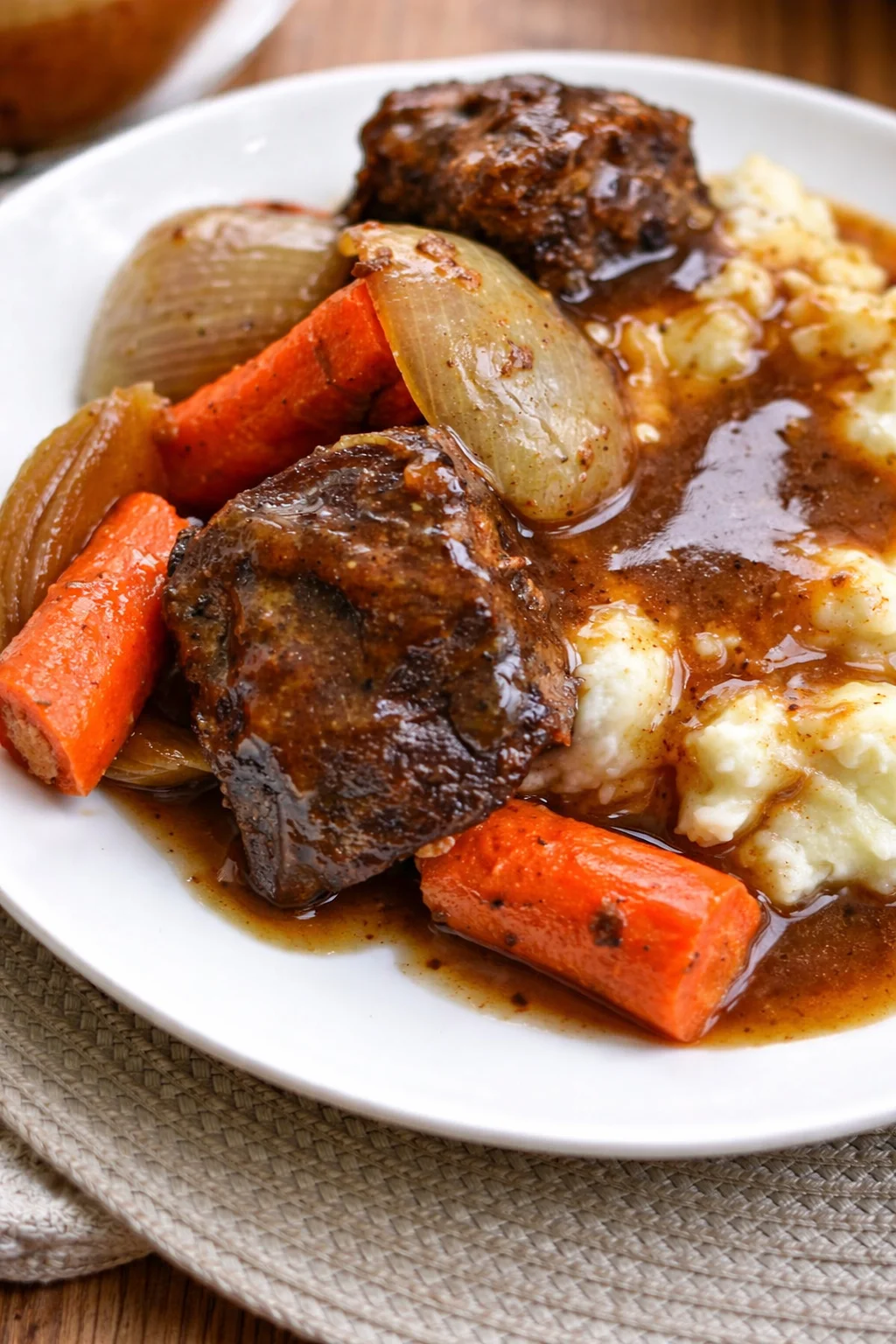
I’ve been making these fall-off-the-bone beef short ribs for years when I want something comforting, dramatic, and reliably delicious with minimal fuss. Slow-braised until the meat literally separates from the bone, this recipe uses simple pantry ingredients and a long, gentle cook to turn cheap-ish ribs into an elegant centerpiece for family dinners, Sunday suppers, or a special meal when you want to impress without stress. If you like deep, glossy sauce and melt-in-your-mouth beef, this one’s for you.
What makes this recipe special
This braised short ribs recipe is all about time and technique rather than fancy ingredients. You brown the ribs for flavor, deglaze the pot with red wine to capture those caramelized bits, then let low heat do the rest. The result is intensely beefy meat with a silky sauce that’s perfect spooned over mashed potatoes, polenta, or buttered egg noodles.
- Budget-smart: Short ribs are an affordable cut that rewards slow cooking.
- Low-effort elegance: Hands-on time is mostly browning and building the braise; the oven does the rest.
- Crowd-pleasing: Rich, saucy, and familiar — great for family meals and dinner parties.
“I served these at a small dinner and everyone asked for seconds — the sauce was the star and the meat fell right off the bone.” — a happy home cook
For a different take on red-wine braised ribs, check this variation I like to glance at when I want extra depth: red wine short ribs.
The cooking process explained
Step-by-step overview before you dive in: you’ll season and brown the ribs, sauté aromatics, add liquids and herbs, then braise covered at low temperature until fork-tender. Finally, you reduce the braising liquid (if desired), skim fat, and serve.
- Prep: Season ribs; preheat oven to 300°F (150°C).
- Sear: Brown all sides in olive oil for deep flavor.
- Build: Cook onion and garlic, add broth, wine, tomato paste, and herbs.
- Braise: Return ribs, cover, and bake for ~3 hours until they fall off the bone.
- Finish: Lift ribs, reduce or strain sauce, and serve hot.
Gather these items
What you’ll need (serves 4)
- 2–4 pounds beef short ribs (English-cut or flanken — about 4–8 ribs depending on size)
- Salt and freshly ground black pepper, to taste
- 2 tablespoons olive oil
- 1 large onion, chopped
- 4 garlic cloves, minced
- 1 cup beef broth (low-sodium if you plan to salt generously later)
- 1 cup dry red wine (cabernet, merlot, pinot noir — or sub extra broth if you avoid alcohol)
- 1 tablespoon tomato paste
- 2 sprigs fresh thyme
- 2 sprigs fresh rosemary
Ingredient notes and swaps:
- Wine substitute: Use a full cup of extra beef broth plus 1 tablespoon balsamic or red wine vinegar if you need non-alcoholic.
- Tomato paste adds body — 1–2 teaspoons soy sauce can deepen umami if you’re short on paste.
- Herbs: If you only have dried herbs, use about 1 teaspoon dried thyme and 1 teaspoon dried rosemary.
I often glance at flavor ideas in other recipes for inspiration — here’s a spicy, meaty riff that pairs well when you want a bolder profile: short ribs with chorizo.
How to prepare it

Step-by-step instructions
- Preheat the oven to 300°F (150°C). Position a rack in the middle.
- Pat the short ribs dry and season all over with salt and pepper. Dry meat browns better.
- Heat 2 tablespoons olive oil in a large Dutch oven over medium-high heat. When shimmering, add ribs in a single layer — don’t crowd the pot. Brown on all sides, 3–4 minutes per side. Work in batches if needed. Transfer browned ribs to a plate.
- Lower heat to medium. Add the chopped onion to the same pot and cook until translucent, about 5–7 minutes, scraping up browned bits. Stir in the minced garlic and sauté 30–60 seconds until fragrant.
- Stir in 1 tablespoon tomato paste and cook a minute to remove raw flavor. Pour in 1 cup red wine to deglaze, scraping the bottom to lift fond. Let it simmer 1–2 minutes to reduce slightly.
- Add 1 cup beef broth, 2 sprigs thyme, and 2 sprigs rosemary. Bring the liquid to a gentle simmer.
- Return the short ribs to the pot, nestling them into the braising liquid. Cover the Dutch oven with its lid.
- Transfer to the oven and braise for about 3 hours, or until the meat is very tender and falls from the bone when probed with a fork. Check at the 2½-hour mark — tougher ribs can take longer.
- Remove ribs and keep warm. Skim excess fat from the surface and reduce the braising liquid on the stovetop over medium-high heat to intensify flavor, if you like. Serve ribs hot with spooned sauce.
Quick safety and timing note: oven temperatures vary; cook until tender rather than strictly by time. Reheated leftovers should reach 165°F (74°C).
Best ways to enjoy it
Serving suggestions
- Classic: Spoon the ribs and sauce over creamy mashed potatoes and garnish with chopped parsley.
- Rustic: Serve on buttered polenta or stone-ground grits for a cozy bowl.
- Comfort-food mash-up: Shred the meat and pile into toasted baguette halves for short-rib French dip sandwiches.
- Lighter: Pair a single rib with roasted winter vegetables and a green salad to balance richness.
For a fun smothered-stew style, try serving the ribs with warm tortillas and beans — I’ve used this idea when turning leftovers into tacos: smothered beef and bean.
Storage and reheating tips
Keeping leftovers fresh
- Fridge: Cool ribs to room temperature (no more than 2 hours), then refrigerate in an airtight container up to 3–4 days. Keep sauce and meat together to maintain moisture.
- Freezer: For longer storage, freeze in a well-sealed container or heavy-duty freezer bag for up to 3 months. Thaw in the refrigerator overnight before reheating.
- Reheating: Gently rewarm on the stovetop over low heat with a splash of broth to loosen the sauce, or bake covered at 300°F (150°C) until warmed through. Reheated food should reach 165°F (74°C) internally. Avoid aggressively microwaving — it can make the meat tough.
- Tip: If your sauce solidifies in the fridge, remove the fat cap (it will be easier when chilled), then reheat the leaner sauce for better flavor.
Pro chef tips
Tricks for success
- Don’t skip the sear: Browning creates flavor through the Maillard reaction; it’s where depth comes from.
- Room-temperature meat browns more evenly — let ribs sit 20–30 minutes before searing.
- Don’t overcrowd the pan — multiple batches ensure good color.
- Deglaze well: The browned bits (fond) are the backbone of your sauce. Use the wine to lift them.
- Trim some fat but leave a bit for richness; you can always skim excess after chilling.
- If your sauce is thin at the end, remove ribs and simmer to reduce, or whisk in a knob of cold butter off heat for gloss and body.
- For even faster results, you can braise in a pressure cooker: reduce time to roughly 45–60 minutes under high pressure, then natural release.
Flavor swaps
Recipe variations
- Korean-style: Finish with gochujang and soy, and serve with steamed rice and kimchi.
- Barbecue braise: Add 2 tablespoons of your favorite BBQ sauce and a splash of apple cider vinegar in the last 30 minutes.
- Tomato-forward: Stir in a cup of crushed tomatoes and a bay leaf for a ragù-like sauce.
- Slow cooker method: After browning, transfer everything to a slow cooker and cook on low 6–8 hours.
- Vegetarian idea: Use this braising technique for heartier vegetables (like large portobellos or seitan) with vegetable stock and miso for umami.
Your questions answered
FAQ
Q: Can I skip the wine?
A: Yes — replace wine with an equal part beef broth plus 1 tablespoon balsamic or red wine vinegar to mimic acidity and depth.
Q: How do I know when the ribs are done?
A: They’re done when a fork slides in and the meat pulls away from the bone without resistance. Time is a guide; tenderness is the true test.
Q: Can I make this ahead for guests?
A: Absolutely. Make the day before, refrigerate, then skim fat, reheat slowly, and finish by warming in the oven. Flavors often improve overnight.
Q: Can I use a different cut of beef?
A: Chuck short ribs or bone-in chuck roast can be used; adjust cooking time based on size and thickness — aim for the same fork-tender doneness.
Q: How long will the sauce keep?
A: Sauce kept separate in the fridge lasts 3–4 days, or frozen for up to 3 months. Always reheat to 165°F (74°C).
Conclusion
If you want a reliably rich, restaurant-worthy meal that’s mostly hands-off, this fall-off-the-bone short ribs method is a winner. For more braising techniques and flavor ideas you can compare with this approach, I like the detailed, stepwise method over at Braised Short Ribs Recipe – Tastes Better From Scratch. If you prefer a video walkthrough to watch the browning and reduction steps, this Braised Beef Short Ribs (VIDEO) – CJ Eats Recipes clip is helpful. For an oven-baked angle and plating ideas, see The Best Oven Baked Beef Short Ribs – Alphafoodie.
Enjoy the slow-braised comfort — and don’t be surprised when everyone asks for the recipe.
Braised Short Ribs
Ingredients
Method
- Preheat the oven to 300°F (150°C). Position a rack in the middle.
- Pat the short ribs dry and season all over with salt and pepper.
- Heat olive oil in a large Dutch oven over medium-high heat. Add the ribs in a single layer and brown on all sides, about 3-4 minutes per side. Transfer browned ribs to a plate.
- Lower the heat to medium and add the chopped onion to the pot. Cook until translucent, about 5-7 minutes. Stir in the minced garlic and sauté for another 30-60 seconds.
- Stir in the tomato paste and let cook for a minute. Pour in the red wine to deglaze the pot and let simmer for 1-2 minutes.
- Add the beef broth, thyme, and rosemary. Bring the liquid to a gentle simmer.
- Return the short ribs to the pot, cover, and braise in the oven for about 3 hours, or until the meat is fork-tender.
- Once done, remove the ribs, skim excess fat from the sauce, and reduce the braising liquid over medium-high heat, if desired.
- Serve the ribs hot with the sauce spooned over them.