Balsamic Chicken

 235
235
 18
18
 1.30k
1.30k

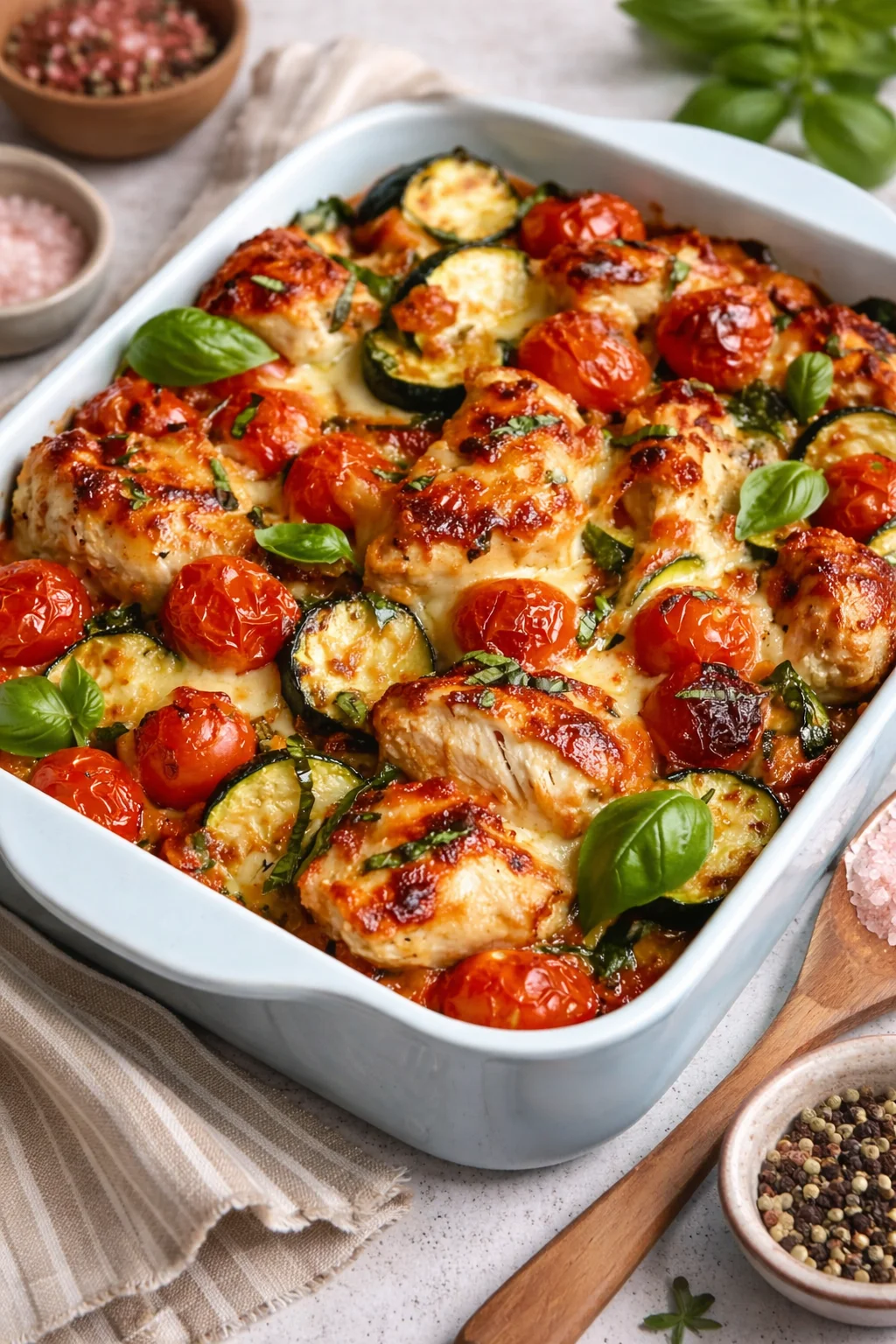
I’ve been making this balsamic chicken for weeknight dinners and casual guests for years — it hits the balance between saucy, savory, and a little sweet, and it comes together without fuss. Tender boneless chicken breasts get a quick sear, roast alongside bright tomatoes, asparagus and zucchini, then finish under melty provolone and mozzarella with a glossy balsamic reduction. If you want a dinner that looks restaurant-made but cooks in under an hour, this one’s for you. If you enjoy one-pan dinner ideas, you might also like this balsamic baked chicken breast recipe for another easy option.
Why you’ll love this dish
This balsamic chicken is a weeknight winner. It’s fast, uses simple pantry ingredients, and dresses up basic chicken breasts with a concentrated sweet-tangy glaze and gooey cheese. The vegetables roast in the same pan, so you get a full meal with minimal cleanup — perfect for busy nights, date nights at home, or when you want something a little special without the fuss.
“Bright tomatoes, crisp asparagus, and just the right balsamic punch — this has become our Friday favorite.” — a friend who can’t stop asking for seconds
Reasons to try it:
- Quick prep and cook time for busy evenings.
- Balanced flavors: acidity from balsamic, sweetness from tomatoes, creaminess from cheese.
- Flexible: swap veggies, use different cheeses, or make it dairy-free.
If you want another one-pan balsamic approach, check out the handy tips in this one-pan balsamic chicken guide for more inspiration.
How this recipe comes together
Before you dive into the ingredients, here’s the workflow so you know what to expect:
- Flatten or even out chicken breasts, season with garlic powder and salt.
- Sear in an ovenproof skillet to get color and flavor.
- Add chopped tomatoes, asparagus and sliced zucchini to the pan.
- Transfer the skillet to the oven to finish cooking the chicken and roast the vegetables.
- Top each breast with provolone and mozzarella, return to the oven briefly to melt.
- Finish with a drizzle of balsamic reduction and fresh herbs before serving.
This overview helps you pace the steps: a quick stovetop sear builds flavor, the oven cooks evenly, and the final cheese step gives you visual appeal and a creamy finish.
Gather these items
What you’ll need (serves 4)
- 4 boneless, skinless chicken breasts — about 6–8 oz each. (Pound thicker breasts to an even 1/2–3/4" for uniform cooking.)
- 2 cups chopped tomatoes — fresh Roma or vine-ripe, seeds optional. (Substitute 1 can diced tomatoes, drained, in a pinch.)
- 1 bunch asparagus — woody ends trimmed, cut into 2" pieces. (Substitute green beans or broccolini.)
- 1 medium zucchini — sliced into half-moons or rounds. (Yellow squash works too.)
- 1/2 cup balsamic reduction glaze — store-bought or homemade by simmering balsamic vinegar until thick. (If you only have regular balsamic vinegar, reduce it on the stove or use 2–3 tablespoons and add a teaspoon of honey.)
- 4 slices provolone cheese — for melty, savory slices. (Swap with fontina or cheddar.)
- 4 slices mozzarella cheese — creates that irresistible gooey top. (Use fresh mozzarella for a softer melt.)
- Fresh herbs, to taste — basil or rosemary work beautifully, chopped or torn.
- 1 teaspoon garlic powder — for a gentle savory lift. (Or use 2 cloves fresh garlic, minced, sautéed briefly.)
Note: If you need a dairy-free version, omit the cheeses and finish with a drizzle of extra balsamic glaze and chopped herbs.
Step-by-step instructions

Preparation
- Preheat the oven to 400°F (200°C).
- Pat chicken dry and, if needed, place each breast between plastic wrap and gently pound to an even thickness (about 1/2–3/4"). Season both sides with salt and the garlic powder.
- Prepare vegetables: chop tomatoes, trim asparagus, and slice the zucchini.
Cooking
- Heat a tablespoon of oil in a large ovenproof skillet over medium-high heat. When shimmering, add chicken breasts. Sear 3–4 minutes per side until golden brown (they won’t be fully cooked). Remove to a plate.
- Add a little more oil if the pan is dry. Add chopped tomatoes, asparagus, and zucchini. Sauté 2–3 minutes just to start softening and pick up the pan flavors. Season the vegetables lightly.
- Nestle the seared chicken on top of the vegetables in the skillet. Spoon a little of the pan juices over the chicken. Transfer the skillet to the preheated oven. Roast 12–18 minutes, depending on thickness, until the chicken reaches an internal temperature of 165°F (74°C). Use an instant-read thermometer at the thickest part.
- Remove skillet from oven. Top each breast with one slice provolone and one slice mozzarella. Return the skillet to the oven for 2–4 minutes, or until the cheese melts and is bubbly.
- Drizzle with 1–2 tablespoons balsamic reduction glaze per breast (or to taste) and scatter fresh herbs on top. Let rest 3–5 minutes before serving.
Quick tip: If your balsamic reduction is very sweet, add it sparingly at first — you can always add more at the table.
For other fast chicken techniques, consider reading a quick technique guide like this 20-minute air fryer sesame chicken to compare timing and methods.
Best ways to enjoy it
Serving suggestions:
- Plate the chicken atop the roasted vegetables and spoon pan juices over everything for a rustic presentation.
- Serve with a side of creamy mashed potatoes, buttery polenta, or garlic rice to soak up the balsamic glaze.
- For a lighter meal, pair with a green salad dressed in lemon vinaigrette or a simple arugula and parmesan salad.
- Garnish with extra basil leaves or a few lemon wedges to brighten the dish.
Wine pairing: A medium-bodied red like Merlot or a crisp Chardonnay complements the tangy balsamic and tomatoes.
Storage and reheating tips
Keeping leftovers fresh:
- Refrigerate in an airtight container within 2 hours of cooking. Consume within 3–4 days.
- To reheat: place chicken and vegetables in a 350°F (175°C) oven for 10–15 minutes, or microwave in 30–45 second intervals until warm. Add a splash of water or chicken stock to the vegetables to prevent drying.
- To freeze: cool completely, then wrap tightly and freeze up to 2 months. Thaw overnight in the fridge before reheating. Note that fresh vegetables will change texture after freezing; roasted veggies may become softer.
Food safety: Always confirm chicken hits 165°F (74°C) internally. Don’t reheat more than once.
Pro chef tips
- Even thickness: Pound chicken breasts for even cooking and faster roasting.
- Searing matters: A quick sear creates flavorful brown bits that build a better-tasting pan sauce when roasted with tomatoes.
- Balsamic timing: Add most of the balsamic glaze at the end to preserve its glossy finish and prevent burning.
- Thermometer: Use an instant-read thermometer — it’s the simplest way to avoid overcooked chicken.
- Cheese placement: Putting cheese on at the very end and briefly returning to the oven gives a melty top without drying the meat.
Recipe variations
Creative twists to try:
- Honey-balsamic: Mix 1 tablespoon honey into the balsamic reduction for a sweeter glaze.
- Herby goat cheese: Crumble goat cheese over the chicken instead of provolone for tangy creaminess.
- Low-carb: Serve over cauliflower mash and skip starchy sides.
- Thigh version: Use boneless thighs for juicier results and slightly longer roast time.
- Vegetarian swap: Replace chicken with thick slices of eggplant or portobello mushrooms; roast until tender and top with cheese and balsamic.
Your questions answered
Q: Can I use regular balsamic vinegar instead of a reduction?
A: Yes — but regular balsamic is thinner and less sweet. Simmer 1 cup balsamic vinegar gently until reduced to about 1/4 cup for a glaze, or use 2–3 tablespoons of the vinegar with a teaspoon of honey as a quick substitute. Add at the end to avoid burning.
Q: What’s the total time from start to table?
A: Plan on about 10–15 minutes prep, 6–8 minutes searing, and 12–18 minutes roasting, so roughly 35–45 minutes total depending on breast thickness.
Q: Can I prepare this ahead for guests?
A: Partially. Sear the chicken and roast the vegetables ahead of time, cool, and refrigerate. Reheat in a 350°F oven, add cheese and return briefly to melt just before serving. For best texture, finish with fresh herbs and balsamic right before plating.
Q: Can I use frozen chicken breasts?
A: Thaw fully before cooking for even searing and accurate timing. Cooking from frozen results in uneven browning and longer cook times.
Q: Any dairy-free tips?
A: Omit cheeses and finish with extra herbs, toasted pine nuts, or a dollop of mashed avocado for creaminess.
Conclusion
If you want more balsamic chicken inspiration and alternative techniques, these resources offer helpful variations and marinades: an easy balsamic chicken recipe with a great marinade, a classic balsamic chicken take from Allrecipes, and a honey-balsamic chicken thighs recipe with grilling/roasting options.
Enjoy your balsamic chicken — it’s one of those simple dishes that feels special but is easy enough for weeknights.
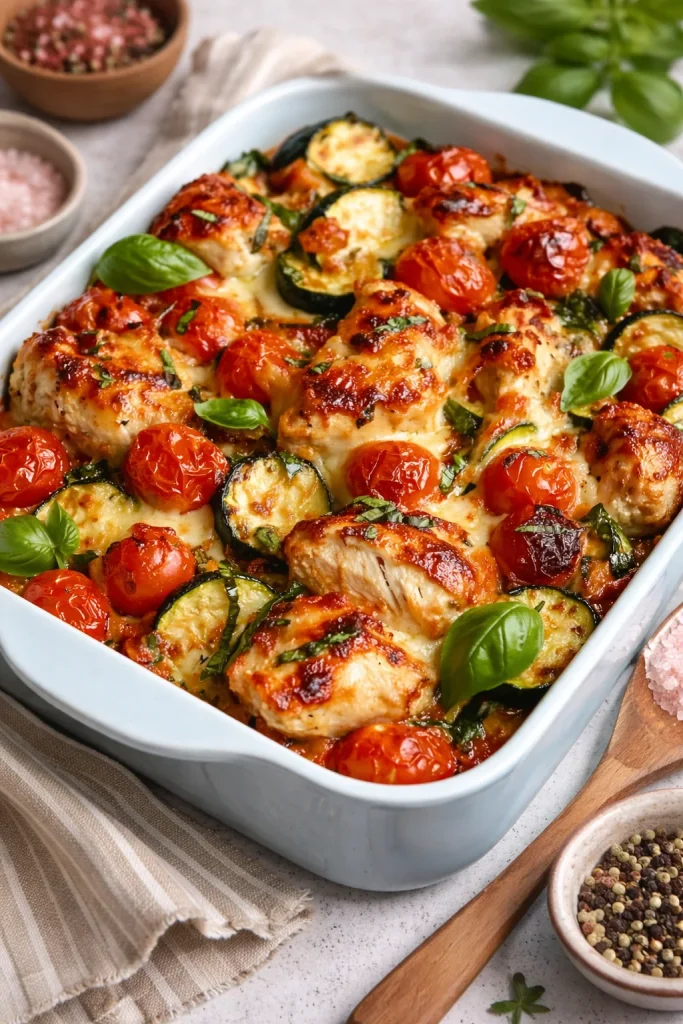
Balsamic Chicken
Ingredients
Method
- Preheat the oven to 400°F (200°C).
- Pat chicken dry and, if needed, place each breast between plastic wrap and gently pound to an even thickness (about 1/2–3/4"). Season both sides with salt and garlic powder.
- Prepare vegetables: chop tomatoes, trim asparagus, and slice zucchini.
- Heat a tablespoon of oil in a large ovenproof skillet over medium-high heat. When shimmering, add chicken breasts. Sear 3–4 minutes per side until golden brown (they won’t be fully cooked). Remove to a plate.
- Add a little more oil if the pan is dry. Add chopped tomatoes, asparagus, and zucchini. Sauté for 2–3 minutes just to start softening and pick up the pan flavors. Season the vegetables lightly.
- Nestle the seared chicken on top of the vegetables in the skillet. Spoon a little of the pan juices over the chicken. Transfer the skillet to the preheated oven. Roast for 12–18 minutes, depending on thickness, until the chicken reaches an internal temperature of 165°F (74°C).
- Remove the skillet from the oven. Top each breast with one slice provolone and one slice mozzarella. Return the skillet to the oven for 2–4 minutes, or until the cheese melts and is bubbly.
- Drizzle with 1–2 tablespoons balsamic reduction glaze per breast (or to taste) and scatter fresh herbs on top. Let rest for 3–5 minutes before serving.