corned beef, cabbage, carrots, and baby red potatoes.

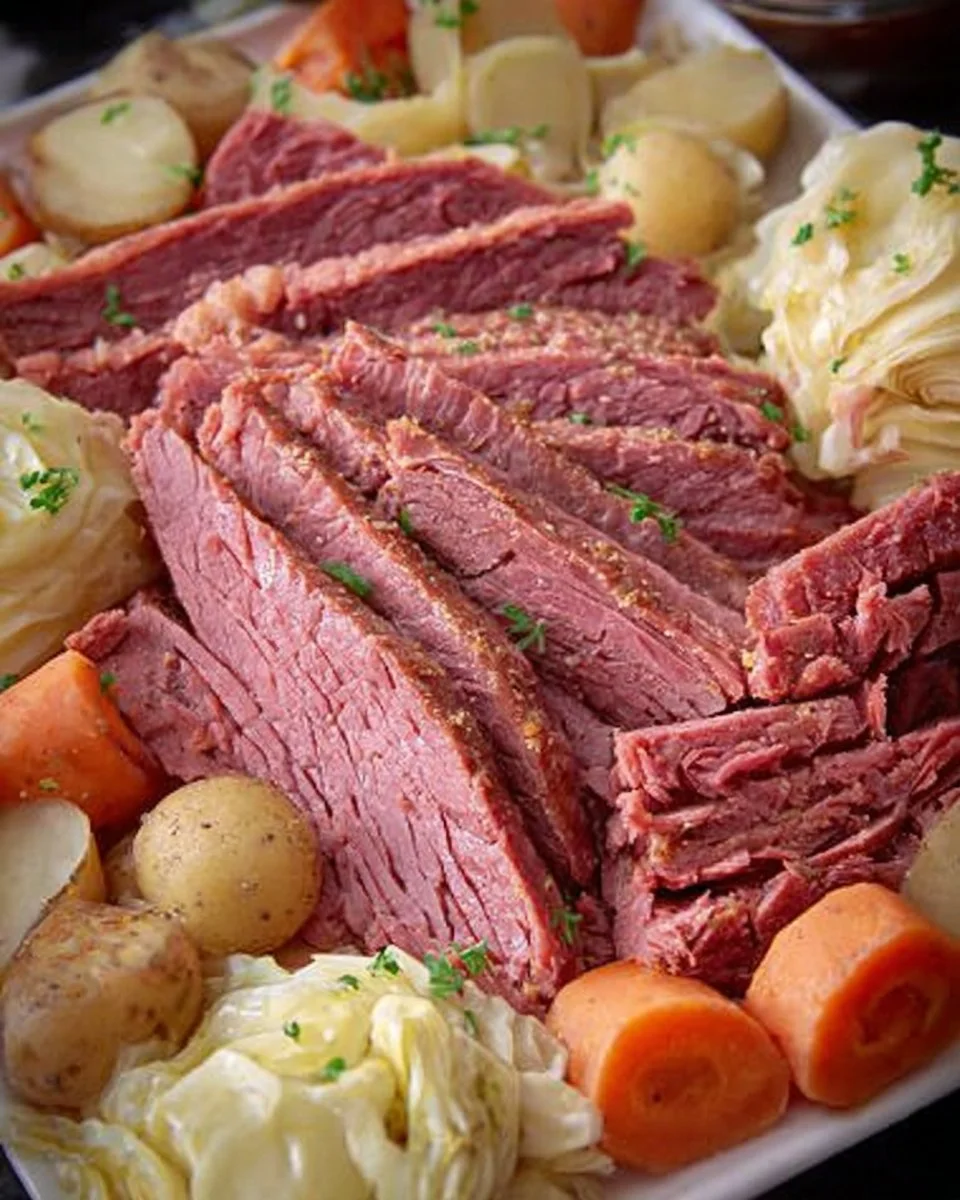
I grew up with corned beef simmering on St. Patrick’s Day: the kitchen smelled of pickling spices and slow-cooked beef while potatoes and cabbage softened in the same pot. This version keeps that tradition but pares the process down into clear, reliable steps so you get tender, flavorful corned beef with perfectly cooked carrots, baby red potatoes, and cabbage every time — no guesswork, no dried-out meat.
If you want a comforting holiday centerpiece that feeds a crowd and makes excellent leftovers, this is the one to cook.
I like to serve this with a touch of whole-grain mustard or horseradish sauce and a loaf of crusty bread to mop up the cooking liquid. If you enjoy other one-pot comfort meals, try my take on a simple, hearty meatball soup for weeknights: simple meatball soup recipe.

Reasons to try it
This corned beef and vegetables routine checks a lot of boxes:
- Crowd-pleasing: feeds many with minimal hands-on time.
- Economical: brisket or corned beef flat is affordable and satisfying.
- Flexible timing: make it on the stovetop, in a slow cooker, or an instant pot.
- One-pot flavor: vegetables absorb the seasoned cooking liquid for built-in side dishes.
“The beef was meltingly tender and the potatoes soaked up so much flavor — the whole family asked for seconds.”
The cooking process explained
Before the full ingredient list, here’s the quick overview so you know what to expect:
- Rinse and optionally soak the corned beef to adjust salt level.
- Simmer the brisket gently with pickling spices until fork-tender (2.5–3 hours stovetop; 8 hours low in slow cooker).
- Add baby red potatoes and carrots midway so they cook until tender but not mushy.
- Add cabbage wedges in the last 15–20 minutes so they remain bright and slightly crisp.
- Rest and slice against the grain. Serve with mustard or horseradish.
This timeline helps you plan oven or stovetop time, coordinate sides, and ensures everything finishes together.
Gather these items
- 3–4 lb corned beef brisket (flat cut preferred) with spice packet (or 3 tbsp pickling spice)
- 8–10 baby red potatoes, halved if large
- 4–5 large carrots, peeled and cut into 2-inch pieces
- 1 medium green cabbage, cored and cut into wedges
- 1 onion, quartered
- 3–4 garlic cloves, smashed
- 3 bay leaves
- 1 tsp black peppercorns (or the packet that comes with corn beef)
- 1 cup beef or chicken stock (optional; you can use water)
- 1–2 tbsp apple cider vinegar (optional, brightens flavor)
- 2 tbsp butter (optional, for finishing vegetables)
- Salt and freshly ground black pepper to taste
Substitutions/notes: If your brisket includes a seasoning packet, you can use that plus 1–2 tbsp pickling spice for more depth. Swap Yukon gold for baby red potatoes if needed. For a lower-sodium result, rinse the brisket under cold water and soak 1–2 hours, changing water once.
I also like making a crunchy side sometimes — for a lighter appetizer try these creamy chicken taquitos: creamy chicken taquitos.
Directions

- Prepare the brisket: Remove the corned beef from packaging. Rinse briefly under cold water to remove excess brine. Optional: soak 1–2 hours in cold water to reduce salt.
- Place in a large pot or Dutch oven: Add onion, garlic, bay leaves, peppercorns, and pickling spice. Pour in enough water or stock to cover the brisket by about 1 inch. Add apple cider vinegar if using.
- Bring to a simmer: Cover and reduce heat to maintain a gentle simmer. Skim any foam that rises to the surface in the first 15 minutes.
- Simmer gently: Cook for about 2.5–3 hours for a 3–4 lb brisket. Test by inserting a fork — it should slide in and out easily and the meat should be fork-tender. (If using a slow cooker, cook on low for 8 hours; in an Instant Pot, pressure cook on high for 90 minutes then natural release.)
- Add potatoes and carrots: With about 45–50 minutes left of total cook time, add the potatoes and carrots so they become tender but still hold shape.
- Add cabbage: Add cabbage wedges for the last 15–20 minutes so they stay bright and slightly crisp.
- Rest and slice: Remove the brisket to a cutting board and let rest 10–15 minutes before slicing against the grain in thin slices.
- Finish vegetables: If desired, stir butter into the potatoes and carrots and season with salt and pepper.
- Serve: Arrange slices of corned beef with the vegetables and ladle some cooking liquid at the table.
Keep action sentences short and focused: check tenderness, time the veggies, and rest before slicing.
Best ways to enjoy it
- Classic plate: sliced corned beef, cabbage wedge, carrots, and potatoes with a dollop of whole-grain mustard or prepared horseradish.
- Sandwich: stack thin slices on rye bread with Swiss cheese and a swipe of mustard.
- Reheated bowl: chop leftovers, briefly pan-fry in butter, and top with a fried egg for a hearty breakfast-for-dinner.
- Pairings: brown bread or soda bread, pickles or pickled beets, and an Irish stout or a crisp lager.
Presentation tip: fan the sliced meat across the plate and tuck colorful vegetables beside it. A spoonful of warmed cooking liquid adds shine and flavor.
How to store & freeze
- Refrigerate: Cool to room temperature no longer than 2 hours after cooking. Store slices and vegetables in airtight containers. Use within 3–4 days.
- Freeze: Wrap corned beef tightly in plastic wrap and then foil, or place in a freezer bag with cooking liquid to help prevent freezer burn. Freeze up to 3 months. Vegetables freeze okay but will be softer when reheated.
- Reheating: Thaw overnight in the fridge if frozen. Reheat gently in a pot with a little cooking liquid over low heat, or in a 325°F oven covered with foil until warmed through (about 20–30 minutes). Avoid high heat which dries the meat.
- Food safety: Always reheat to at least 165°F for leftovers. Discard any food left out over 2 hours.
Pro chef tips
- Slice against the grain: This shortens muscle fibers and gives a tender bite.
- Don’t boil aggressively: A rolling boil toughens meat. Keep a gentle simmer.
- Save the cooking liquid: It makes a flavorful broth for soups, gravy, or reheating the meat.
- Time the veg: Add potatoes and carrots later in the cook to avoid mushy results.
- Test doneness by texture: For corned beef use a fork-tender test rather than target internal temp; for shreddable brisket aim for 190–205°F, but for sliced corned beef fork-tender is sufficient.
- If short on time: Use an Instant Pot (90 minutes on high + natural release) or a slow cooker (8 hours low).
For more make-ahead and shortcut ideas, you might also enjoy this easy taquitos recipe I use for busy nights: creamy chicken taquitos for quick dinners.
Creative twists
- Guinness-braised: Replace half the cooking liquid with Guinness for a deep, malty flavor.
- Mustard-horseradish crust: After resting, brush slices with a mustard-horseradish mix and broil 2 minutes for a zingy finish.
- Slow-cooker BBQ corned beef: Shred leftover slices and toss with barbecue sauce for a sandwich filling.
- Vegetarian version: Simmer smoked tempeh or seitan with the same spices; add root veg and cabbage.
- Spiced citrus: Add orange peel and a cinnamon stick to the pot for a subtle citrus-spice lift.
Common questions
Q: How long does corned beef take to cook? A: For a 3–4 lb brisket simmered gently on the stove, plan 2.5–3 hours until fork-tender. Slow cooker low is about 8 hours. Instant Pot high pressure is roughly 90 minutes plus natural release.
Q: Do I need to rinse corned beef before cooking? A: Rinsing removes excess surface salt and is recommended if you prefer less salty results. Soaking 1–2 hours in cold water can further reduce saltiness.
Q: Can I cook corned beef and cabbage together? A: Yes — cook the corned beef first, adding potatoes and carrots partway through and cabbage at the end so each component finishes at the right texture.
Q: What temperature should corned beef reach? A: For safety, 145°F is the USDA minimum for beef; however, brisket requires higher internal heat and long cooking time to become tender. Use tenderness rather than temperature — the fork-tender test — to judge doneness for slicing.
Q: How do I reheat leftovers without drying them out? A: Reheat gently in a pot with reserved cooking liquid over low heat, or warm covered in the oven at 325°F with a little liquid added.
Conclusion
If you want more variations and inspiration for corned beef and cabbage, see this classic take with horseradish sauce at Food Charlatan’s corned beef and cabbage with horseradish sauce. For another straightforward home cook’s version, check the clear step-by-step approach at A Sweet Pea Chef’s corned beef and cabbage. If you prefer a slow-cooker method that’s nearly set-and-forget, this slow cooker brisket recipe is a helpful guide: Slow Cooker Corned Beef Brisket (w/ Cabbage + Potatoes!).
Enjoy the meal — and remember to slice against the grain for the best, most tender bites.
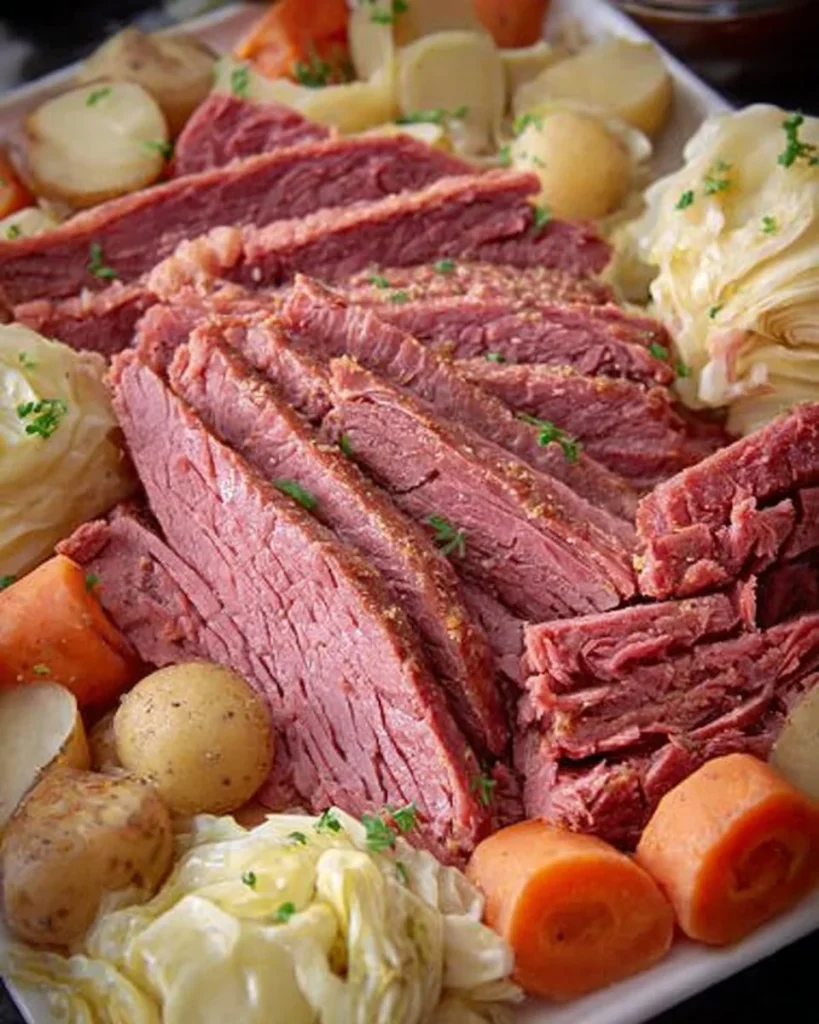
Corned Beef and Cabbage
Ingredients
Method
- Remove the corned beef from packaging. Rinse briefly under cold water to remove excess brine. Optionally soak for 1-2 hours to reduce salt.
- Place the brisket in a large pot or Dutch oven with onion, garlic, bay leaves, peppercorns, and pickling spice. Pour in enough water or stock to cover the brisket by about 1 inch. Add apple cider vinegar if using.
- Bring to a simmer, cover, and reduce heat to maintain a gentle simmer. Skim any foam that rises in the first 15 minutes.
- Simmer gently for about 2.5-3 hours until fork-tender. If using a slow cooker, cook on low for 8 hours; in an Instant Pot, pressure cook on high for 90 minutes then natural release.
- With about 45-50 minutes left, add potatoes and carrots.
- Add cabbage wedges for the last 15-20 minutes.
- Remove the brisket to a cutting board, let rest for 10-15 minutes, then slice against the grain.
- If desired, stir butter into the potatoes and carrots, season with salt and pepper before serving.
- Arrange slices of corned beef with the vegetables and ladle some cooking liquid at the table.