Loaded Scalloped Potatoes

 235
235
 18
18
 1.30k
1.30k

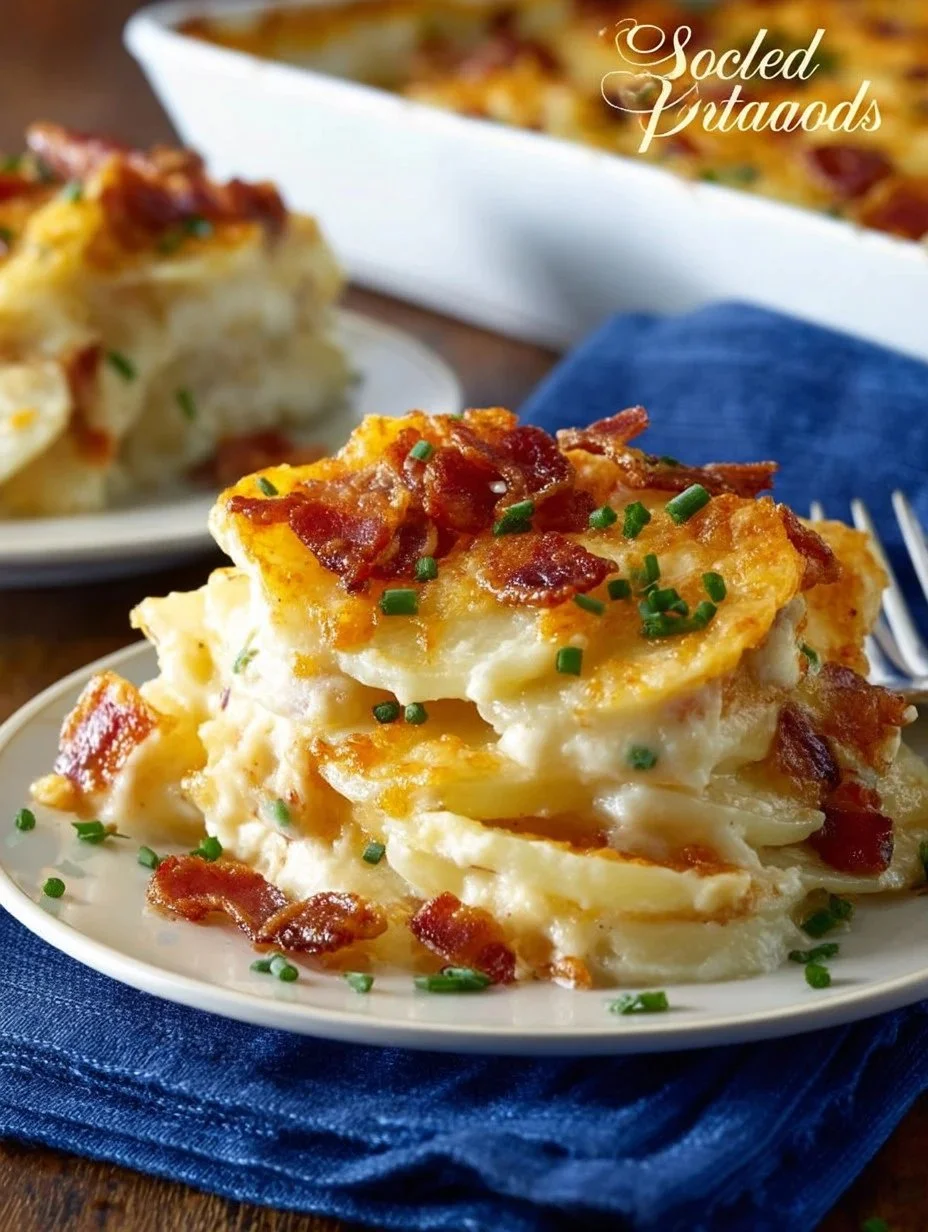
I learned to make Loaded Scalloped Potatoes the way my grandmother used to—rich, layered, and unapologetically cheesy. This version keeps the classic creamy sauce but adds crisp crumbled bacon and juicy caramelized onions for savory hits in every forkful. It’s a go-to for holiday tables, hearty weeknight dinners, or whenever you want a crowd-pleasing side that could double as a main. If you like meatier variations, try the cheesy beef and scalloped potatoes take for inspiration.
Why you’ll love this dish
Loaded Scalloped Potatoes combine comfort and texture: silky, béchamel-like sauce coats tender potato slices while crisp bacon and browned cheese add contrast. It’s a one-dish crowd-pleaser that scales easily, budgets well (potatoes and pantry ingredients), and is flexible for families — kids love the cheese, adults appreciate the depth from Gruyère and caramelized onions.
“Our family thinks this is the ultimate comfort side — rich, cheesy, and always the first dish to go at holiday dinners.”
This recipe is perfect for:
- Holiday gatherings and potlucks (feeds a crowd).
- Weeknight dinners when you want something make-ahead.
- Brunches that need a savory centerpiece.
The cooking process explained
Before you dig into ingredients, here’s a quick overview so you know what to expect:
- Cook and crumble bacon; caramelize onions in the bacon fat for extra flavor.
- Make a simple roux with butter and flour, then whisk in milk to create a smooth white sauce.
- Thinly slice potatoes and layer them in a buttered baking dish with cheese, bacon, and onions.
- Pour the hot milk sauce over the layers, finish with cheese, and bake until bubbling and golden.
This structure keeps the potatoes tender and prevents a gummy texture while ensuring the top becomes beautifully browned.
Gather these items
What you’ll need:
- 3 lbs potatoes, thinly sliced (Yukon Gold or russet; Yukon gives a creamier texture, russet gets fluffier)
- 12 oz bacon, cooked and crumbled (or use smoked ham for a milder, meatier version)
- 8 oz cheese total — sharp cheddar plus Gruyère is ideal (or use all cheddar if that’s what you have)
- 2 tbsp extra virgin olive oil (for frying onions; butter alone works too)
- 2 medium onions, thinly sliced (sweet onions caramelize well)
- 4 tbsp unsalted butter
- 4 tbsp all-purpose flour
- 3 cups whole milk (see notes below for substitutions)
- Salt and freshly ground black pepper to taste
Ingredient notes and possible swaps:
- Milk: whole milk gives a silky texture; swap for half-and-half or heavy cream for richer sauce, or use 2% for a lighter result.
- Flour: for a gluten-free version, swap with an equal portion of cornstarch (mixed with a little cold water first).
- Cheese: Gruyère adds nuttiness; if unavailable, Swiss or fontina are good alternatives.
For a garlic-forward spin, check out the cheesy garlic scalloped potatoes for ideas on adding roasted or minced garlic to the sauce.
Step-by-step instructions

Preparation
- Preheat oven to 375°F (190°C). Grease a 9×13-inch baking dish with butter.
- Cook bacon until crisp in a skillet. Drain on paper towels, then crumble. Reserve 1–2 tablespoons of bacon fat.
- In the same skillet, heat olive oil plus reserved bacon fat over medium. Add onions and a pinch of salt. Cook, stirring occasionally, until golden and soft (about 12–15 minutes). Set aside.
Making the sauce
4. Melt butter in a saucepan over medium heat. Add flour and whisk constantly for 1–2 minutes to cook the raw flour taste (this is your roux).
5. Gradually whisk in milk in a steady stream. Continue whisking until sauce thickens and coats the back of a spoon, about 6–8 minutes. Season with salt and pepper. Remove from heat.
Layering
6. Arrange a single layer of potato slices on the bottom of the baking dish. Season lightly with salt and pepper. Sprinkle a portion of crumbled bacon, caramelized onions, and a handful of cheese.
7. Repeat layers until potatoes are used, ending with a generous layer of cheese on top. Pour the warm milk sauce evenly over the layered potatoes — use a spoon to nudge sauce into gaps if needed.
Baking
8. Cover the dish loosely with foil and bake for 40 minutes. Remove foil and continue baking 20–25 minutes until potatoes are tender when pierced and top is golden and bubbly. If the top browns too fast, tent with foil.
9. Let rest 10–15 minutes before serving so the sauce firms slightly and slices hold better.
For a basic visual guide and timing tips, this step-by-step mirrors classic methods and keeps texture in mind to prevent gluey potatoes.
Best ways to enjoy it
Serving suggestions:
- As a main: pair with a simple green salad and steamed greens to cut richness.
- As a side: complement roast beef, baked ham, or rotisserie chicken for holiday meals.
- Brunch: add a poached egg on top and a sprinkle of chives for a decadent brunch plate.
Plating ideas:
- Spoon a neat square onto warmed plates and garnish with extra crumbled bacon and chopped parsley.
- For family-style service, place the baking dish on a trivet and serve with long spatulas — the browned edges are often the favorite part.
Keeping leftovers fresh
Storage
- Refrigerator: Cool to room temperature, then transfer to an airtight container and refrigerate for up to 4 days. Reheat only what you’ll eat.
- Freezing: You can freeze fully cooked portions for up to 2 months. Thaw overnight in the fridge before reheating.
Reheating
- Oven: For best texture, reheat a portion in a 350°F (175°C) oven covered with foil for 15–20 minutes until warmed through. Remove foil in the last 5 minutes to refresh the top.
- Microwave: Quick, but may make edges softer. Reheat on medium power in 1-minute bursts until warm, then finish in the oven or under the broiler briefly for a crisp top.
Food safety
- Don’t leave the dish at room temperature more than 2 hours. Reheat leftovers to 165°F (74°C) before serving.
Pro chef tips
- Slice uniformly: Use a mandoline or sharp knife to cut potatoes about 1/8-inch thick for even cooking.
- Don’t rush the roux: Cook flour and butter briefly before adding milk to avoid a raw taste and to give a smoother sauce.
- Warm the milk: Adding cold milk to a hot roux can create lumps. Warm (or at least room temperature) milk makes a silkier béchamel.
- Parboil option: If you’re short on time, parboil potato slices for 3–4 minutes to speed up baking; pat dry before layering.
- Rest before slicing: Let the finished dish sit 10–15 minutes so the sauce sets, which makes serving cleaner slices.
For more general scalloped potato techniques, see this simple cheesy scalloped potatoes guide.
Flavor swaps
Creative twists to try:
- Vegetarian: Omit bacon, add sautéed mushrooms and smoked paprika for umami.
- Ham and leek: Swap bacon for diced ham and stir thinly sliced leeks into the onions.
- Herb-forward: Fold chopped rosemary or thyme into the sauce for an aromatic lift.
- Spicy: Mix a little cayenne or hot sauce into the milk for a subtle kick.
- Sweet potato version: Use thinly sliced sweet potatoes and reduce baking time slightly; pair with gruyère and sage.
These variations let you tune richness, dietary needs, and flavor profiles without changing the core technique.
Your questions answered
Q: How long does this take from start to finish?
A: Active prep is about 30–40 minutes (slicing, cooking bacon and onions, making sauce). Bake time is roughly 60–65 minutes. Total: about 1 hour 40 minutes including resting.
Q: Can I use cream instead of milk?
A: Yes. Heavy cream gives an ultra-rich, custard-like texture. To balance richness, you can use half cream and half milk. If using only cream, bake at a slightly lower temperature to prevent scorching.
Q: Can I assemble the day before?
A: Absolutely. Assemble, cover tightly with foil, and refrigerate. Remove from fridge while the oven preheats and add 10–15 minutes to baking time since the dish will be cold.
Q: Will the potatoes get gluey?
A: Overworking the starch or slicing too thin can cause a gluey result. Slice uniformly (about 1/8-inch), don’t stir layers once assembled, and ensure the sauce is fully cooked and thickened before pouring.
Q: Is this freezer-friendly?
A: Yes — fully cooked portions freeze best. Wrap tightly and store up to 2 months. Thaw overnight and reheat in oven.
Conclusion
If you’d like alternate approaches from other home cooks, Mom On Timeout’s version highlights similar layers and comfort-focused tweaks in her Loaded Scalloped Potatoes recipe. For a chef-tested spin with extra savory notes, check Jo Cooks’ take on Loaded Scalloped Potatoes. And if you want a breakdown with photos and step timing, Melanie Makes offers a helpful visual guide in her Loaded Scalloped Potatoes post.

Loaded Scalloped Potatoes
Ingredients
Method
- Preheat oven to 375°F (190°C). Grease a 9x13-inch baking dish with butter.
- Cook bacon until crisp in a skillet. Drain on paper towels, then crumble. Reserve 1–2 tablespoons of bacon fat.
- In the same skillet, heat olive oil plus reserved bacon fat over medium. Add onions and a pinch of salt. Cook, stirring occasionally, until golden and soft (about 12–15 minutes). Set aside.
- Melt butter in a saucepan over medium heat. Add flour and whisk constantly for 1–2 minutes to cook the raw flour taste (this is your roux).
- Gradually whisk in milk in a steady stream. Continue whisking until sauce thickens and coats the back of a spoon, about 6–8 minutes. Season with salt and pepper. Remove from heat.
- Arrange a single layer of potato slices on the bottom of the baking dish. Season lightly with salt and pepper. Sprinkle a portion of crumbled bacon, caramelized onions, and a handful of cheese.
- Repeat layers until potatoes are used, ending with a generous layer of cheese on top. Pour the warm milk sauce evenly over the layered potatoes — use a spoon to nudge sauce into gaps if needed.
- Cover the dish loosely with foil and bake for 40 minutes. Remove foil and continue baking 20–25 minutes until potatoes are tender when pierced and top is golden and bubbly. If the top browns too fast, tent with foil.
- Let rest 10–15 minutes before serving so the sauce firms slightly and slices hold better.