Hungarian Goulash

 235
235
 18
18
 1.30k
1.30k

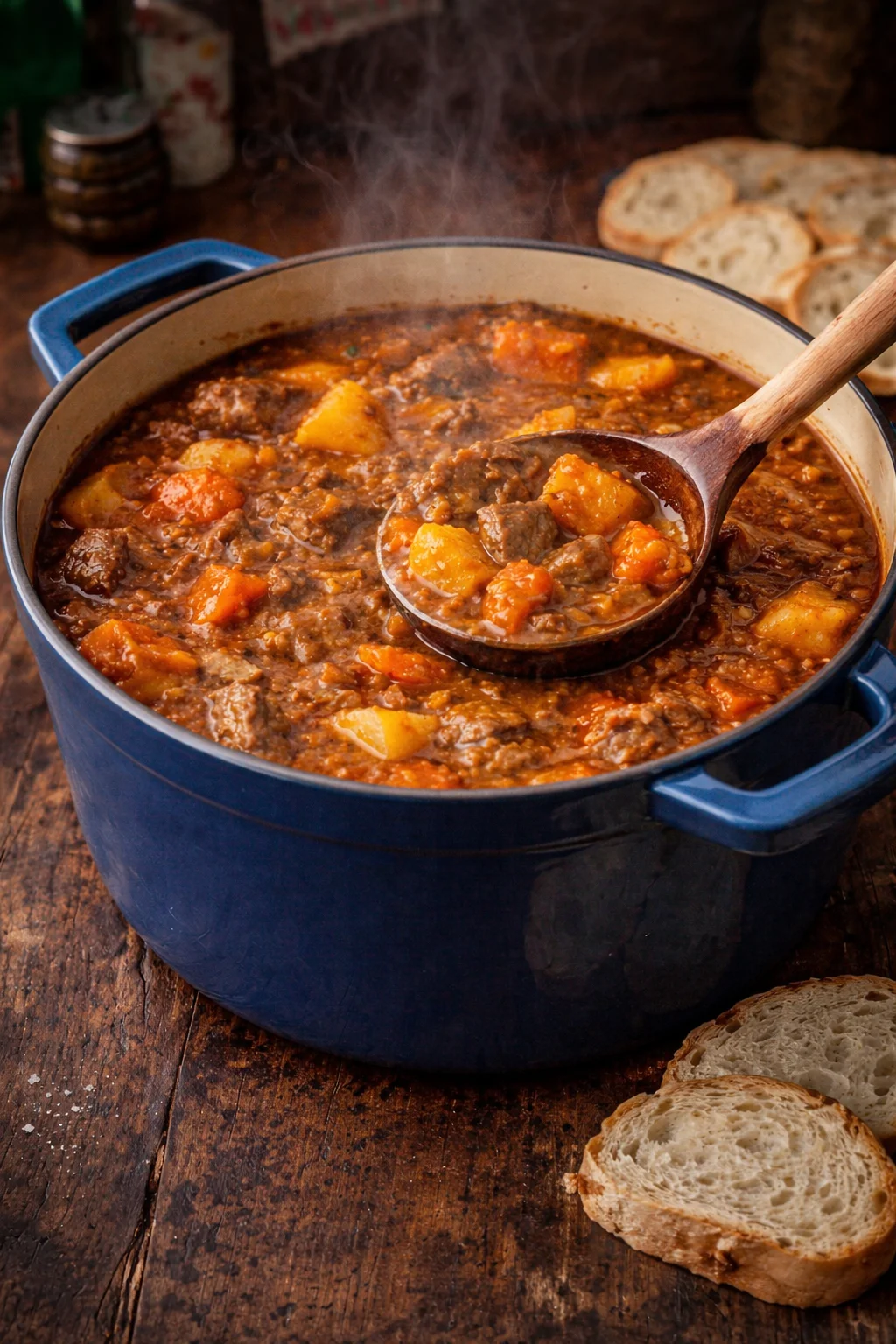
I still remember the first time I simmered a pot of Hungarian goulash on a rainy evening — the whole house smelled of sweet paprika and caramelized onions. This version is lovingly simple: tender beef chuck, russet potatoes, carrots, and a generous hit of Hungarian paprika and caraway seeds. It’s a comforting one-pot meal that’s perfect for weeknights, chilly weekends, or whenever you want something hearty without fuss. If you enjoy different takes on beef stew, you might also like how an American goulash recipe leans into tomato and pasta for a quicker, kid-friendly twist.
What makes this recipe special
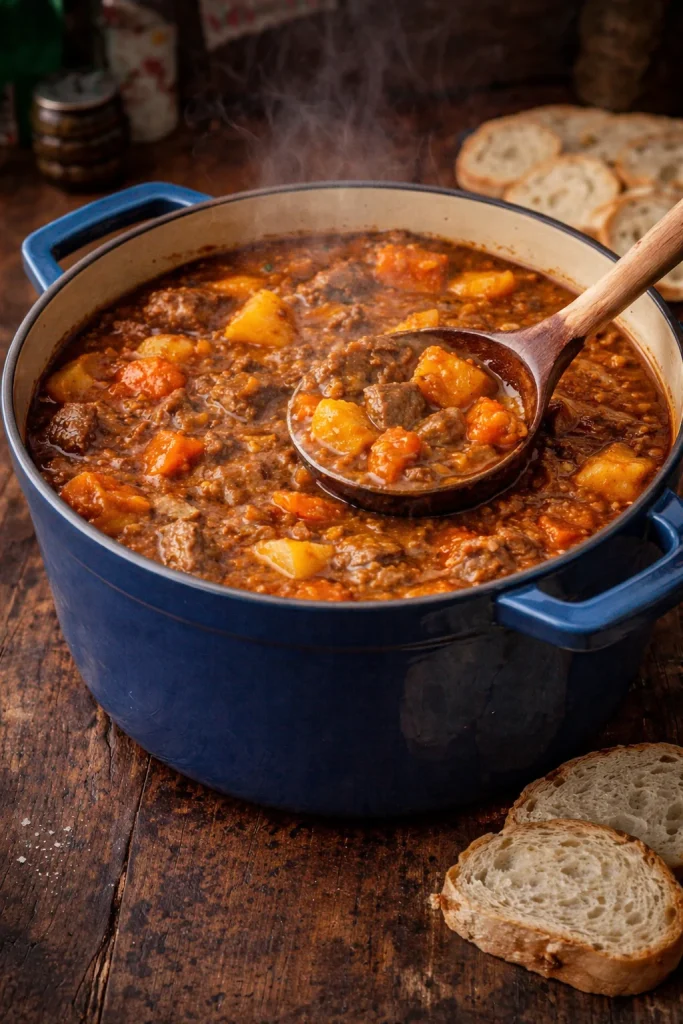
This Hungarian goulash keeps the focus on a few bold flavors: quality paprika, caraway seeds, and slow-simmered beef. The technique — browning bite-sized chuck and letting it bubble gently with potatoes and tomatoes — creates a rich, lightly thickened broth that’s more stew-like than soup-like, but still spoonable.
“Exactly the kind of comfort food that warms the kitchen and the heart — paprika-forward, tender beef, and potatoes that soak up every bit of flavor.”
Why people choose it:
- Budget-friendly: chuck roast is affordable and becomes meltingly tender with low heat.
- Minimal fuss: one pot, straightforward steps, pantry-friendly ingredients.
- Authentic flavor profile: Hungarian paprika and caraway give a distinct, earthy sweetness you won’t get from generic stew mixes.
Step-by-step overview
Quick overview so you know what’s coming:
- Sauté onions in butter until soft.
- Add caraway and paprika to bloom their aroma.
- Toss beef in flour and brown briefly.
- Add stock, tomatoes, potatoes, carrots, and seasonings.
- Simmer gently, covered, until the beef is fork-tender (about 1.5–2 hours).
This gives you a predictable rhythm — sautée, brown, simmer — and helps the flavors develop fully.
Gather these items
- 1 tbsp salted butter (or use oil if you prefer)
- 2 medium yellow onions, diced roughly
- 1 tsp caraway seeds (toasted lightly for more aroma, optional)
- 3 tbsp paprika (preferably Hungarian — sweet or smoked based on preference)
- 1/4 cup all-purpose flour
- 1 1/2 lbs beef chuck roast, fat trimmed and cut into 1-inch cubes
- 2 cups beef stock (low-sodium if you’ll add extra salt)
- 1 14.5 oz can diced tomatoes (undrained)
- 3 large russet potatoes, diced into 1-inch pieces
- 2 medium carrots, diced
- 1 tsp sea salt (adjust to taste)
- 1/4 tsp ground black pepper
Substitutions and notes:
- Paprika: sweet Hungarian paprika is traditional; use smoked paprika for a deeper, campfire note.
- Beef: chuck is ideal for braising. If you only have stew meat, it will work but may be leaner.
- Potatoes: waxy potatoes will hold shape better; russets break down slightly and thicken the broth.
You can also compare ingredient balances to an American goulash comparison if you want a tomato-heavier profile.
Directions to follow

- Heat a large soup pot over medium-high heat and melt the butter.
- Add the diced onions and sauté until tender, about 2–3 minutes. Stir so they don’t brown too quickly.
- Toss in the caraway seeds and paprika. Stir for 30 seconds to bloom the spices and release their aroma.
- Pour the flour into a shallow bowl. Toss the cubed chuck roast pieces until lightly coated with flour. Shake off excess.
- Add the coated beef to the pot and sear for 3–4 minutes, turning so each side gets a light brown crust. Don’t overcrowd the pot.
- Pour in the beef stock and add the diced tomatoes (with juices). Scrape the pot bottom to loosen browned bits.
- Stir in the diced potatoes and carrots. Season with sea salt and ground black pepper. Combine everything thoroughly.
- Bring the pot to a boil. Once boiling, put the lid on and reduce heat to medium-low. Let simmer gently for 1.5 to 2 hours.
- Check doneness: the beef should be fork-tender and the potatoes cooked through. Adjust salt and pepper before serving.
Pair these short, clear actions with a kitchen timer. If your simmer is vigorous, lower the heat — a gentle bubble gives the best texture.
How to plate and pair
- Spoon goulash into shallow bowls so the chunky pieces are visible.
- Top with a dollop of sour cream or a swirl of plain yogurt for creaminess and tang.
- Garnish with chopped fresh parsley for color.
- Serve with crusty bread, egg noodles, or spaetzle to soak up the broth.
Drink pairings: a medium-bodied red (kékfrankos or a fruity cabernet) or a malty amber beer complements the paprika and beef.
Keeping leftovers fresh
- Refrigerator: Cool within two hours, transfer to an airtight container, and refrigerate up to 3–4 days.
- Freezer: Portion into freezer-safe containers and freeze for up to 3 months. Thaw overnight in the fridge before reheating.
- Reheating: Gently reheat on low-medium heat on the stovetop, stirring occasionally. Bring to a safe internal temperature of 165°F (74°C) before serving. Alternatively, microwave in covered, vented containers in 1-minute bursts, stirring in between.
Food safety note: don’t leave cooked goulash at room temperature for more than two hours to avoid bacterial growth.
Pro chef tips
- Toast the caraway seeds in the dry pot for 20–30 seconds before adding onions to intensify their flavor.
- Bloom paprika off-heat: paprika can turn bitter if overcooked. Stir it into the onions for a short time, then add a splash of stock to keep it bright.
- Use a heavy-bottomed pot to prevent scorching and to develop fond (the browned bits) for richer flavor.
- For a thicker sauce: mash a few potato pieces against the pot side and stir; the starch will naturally thicken the broth.
- To speed things up: use a pressure cooker (set to high for 30–35 minutes) — adjust liquid slightly and follow manufacturer guidance.
If you like poultry variations, try this creamy chicken paprikash for a lighter, faster meal.
Flavor swaps
- Vegetarian: replace beef with chunky seared mushrooms and add extra root vegetables. Use vegetable stock.
- Spicy version: add 1/2 tsp cayenne or hot Hungarian paprika with the sweet paprika.
- Smoky twist: substitute 1 tbsp smoked paprika for 1 tbsp sweet paprika.
- Richer gravy: stir in 1/4 cup sour cream or crème fraîche off the heat for a creamier finish.
- Wine lift: add 1/2 cup dry red wine with the stock for aromatic depth.
Your questions answered
Q: How long does this goulash take from start to table?
A: Active prep is about 20–30 minutes (cutting vegetables, coating beef). Simmer time is 1.5–2 hours, so plan roughly 2–2.5 hours total for best tenderness.
Q: Can I use stew meat instead of chuck roast?
A: Yes. Stew meat works but often contains leaner cuts that can become dry if overcooked. Chuck is preferred because of its marbling, which melts into tenderness.
Q: Do I have to use caraway seeds?
A: Caraway adds a subtle, anise-like note traditional to many Central European stews. If you don’t have them, omit them or substitute a pinch of fennel seeds, but the flavor will be different.
Q: My goulash is too thin — how can I thicken it?
A: Mash a few potato pieces into the broth, simmer uncovered to reduce, or mix 1 tbsp cornstarch with 1 tbsp cold water and stir in, simmering until thickened.
Q: Is Hungarian goulash the same as American goulash?
A: Not exactly. Hungarian goulash emphasizes paprika and caraway with larger beef pieces and potatoes, while American goulash typically uses ground beef, tomatoes, and pasta and is quicker and more tomato-forward.
Conclusion
For a faithful, richly spiced take on this classic, see the traditional gulyás method at The Daring Gourmet’s Hungarian goulash (gulyás), which dives into regional techniques. If you want a range of user-tested variants and reader comments, check out the long-running recipe on Allrecipes’ Hungarian Goulash. For another modern home-cook approach with step-by-step photos and tips, RecipeTin Eats offers a helpful version at RecipeTin Eats’ Hungarian goulash.
Hungarian Goulash
Ingredients
Method
- Heat a large soup pot over medium-high heat and melt the butter.
- Add the diced onions and sauté until tender, about 2-3 minutes.
- Toss in the caraway seeds and paprika, stirring for 30 seconds to bloom the spices.
- Pour the flour into a shallow bowl and toss the cubed chuck roast until coated with flour.
- Add the coated beef to the pot and sear for 3-4 minutes, turning to brown all sides.
- Add beef stock and diced tomatoes, scraping the pot bottom to loosen browned bits.
- Stir in the diced potatoes and carrots; season with sea salt and black pepper.
- Bring to a boil, cover, and reduce heat to medium-low, simmering for 1.5-2 hours or until beef is fork-tender.
- Adjust salt and pepper before serving.