Slow Cooker Irish Beef Stew

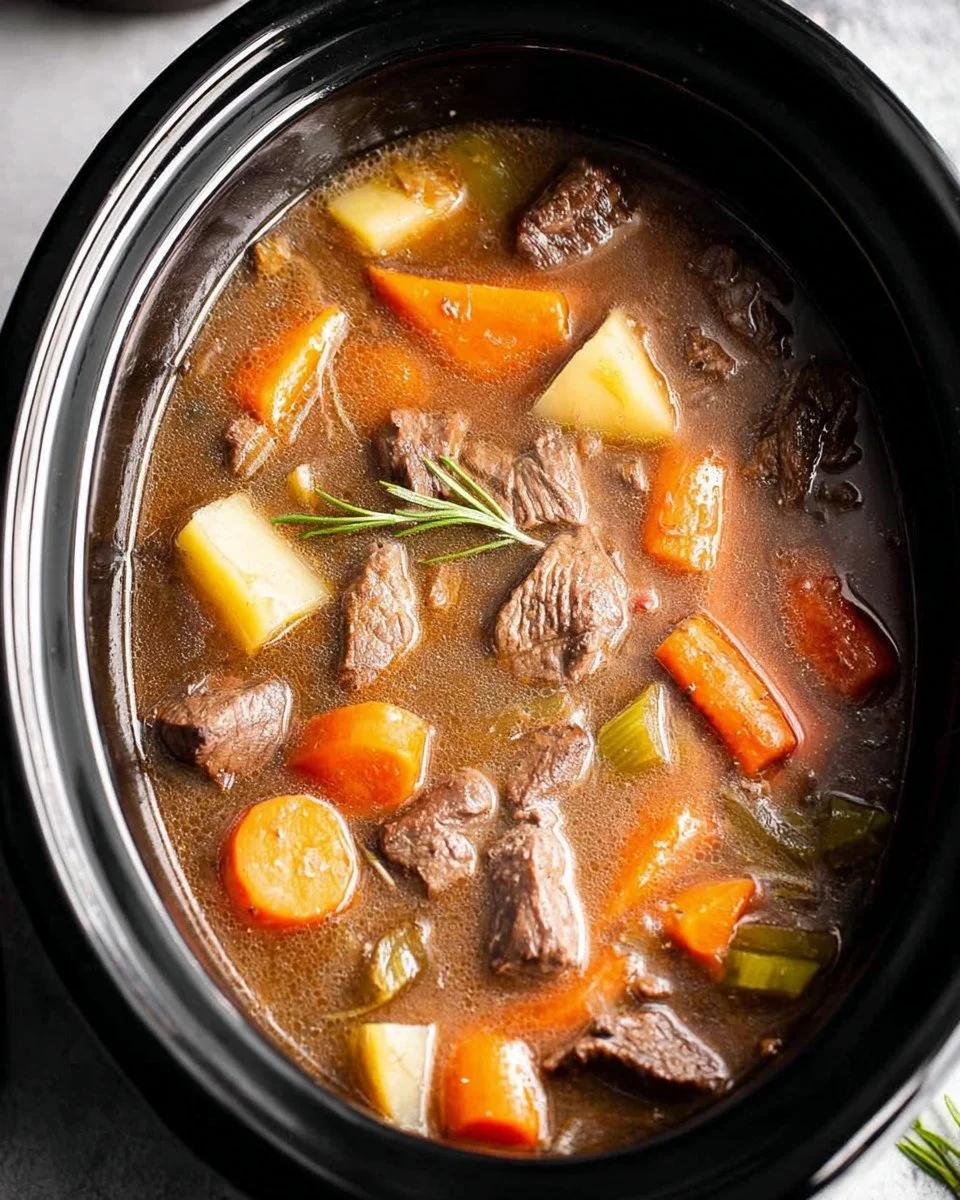
I’ve been making this Slow Cooker Irish Beef Stew all through chilly nights—they’re the kind of meals that turn the house into a warm, cozy place and make everyone ask for seconds. It’s a straightforward one-pot (well, a skillet plus slow cooker) comfort stew: browned beef, onions deglazed with beef broth, waxy potatoes and carrots, and a rich broth thickened at the end so it clings to every spoonful. If you like hands-off dinners that still taste homemade, this is the recipe to keep in rotation. For a quicker, similar option to try on a busier night, I sometimes pair it with a simple slow cooker beef and carrot stew.
Why you’ll love this dish
This recipe nails the slow-cooked comfort food formula: deep, brown-seared flavor from the meat, softened root vegetables, and a glossy, comforting gravy. It’s perfect for family dinners, meal prep for the week, or when you want something make-ahead for guests. Budget-friendly cuts of beef become tender over long, gentle heat, and the final cornstarch thickening gives you control over consistency without an over-reliance on flour roux.
“A perfect weeknight slow-cooker stew—rich, tender beef and potatoes that soak up all the savory juices. Cozy, simple, and seriously satisfying.”
How this recipe comes together
- Brown the beef in a hot skillet to build flavor through the Maillard reaction.
- Quickly sauté the onions in the same pan and deglaze with beef broth to capture those fond bits.
- Layer the browned beef, vegetables, and herbs in the slow cooker.
- Combine broth, Worcestershire, and flour to create a light slurry that thickens as it cooks.
- Cook low and slow for fall-apart beef, then finish by stirring in a cornstarch slurry and simmering briefly without the lid to reach the desired thickness.
This overview prepares you for about 10–20 minutes active time at the start, then 4–8 hours unattended in the slow cooker, and a final 15–30 minutes to thicken.

What you’ll need
- 1 tablespoon oil (vegetable or canola)
- 1.5 lbs beef stew meat, cut into 1–2 inch cubes (chuck roast is ideal)
- 2 small–medium onions, peeled and cut into slim wedges
- 2 cloves garlic, crushed
- 1 pound waxy potatoes (Yukon Gold or red), peeled and cut into chunks
- 4 medium carrots, peeled and cut into chunks
- 3 sticks celery, sliced
- 4 cups beef broth (low-sodium if preferred)
- 1 tablespoon Worcestershire sauce
- 4 tablespoons white flour (can substitute gluten-free flour or omit; see tips)
- 1/2 teaspoon salt
- Ground black pepper, to taste
- 1 sprig thyme OR 1/4 teaspoon dried thyme
- 1 sprig rosemary OR 1/4 teaspoon dried rosemary
- 1 bay leaf (optional)
- 2 tablespoons cornstarch (for finishing slurry)
Notes/substitutions inline:
- Use waxy potatoes so they hold shape after long cooking; starchy potatoes (russets) will break down more.
- For a gluten-free stew, skip the flour and use a cornstarch slurry at the end (increase cornstarch slightly).
Step-by-step instructions

- Heat the oil in a large skillet over medium-high heat. Add the beef in a single layer and brown on all sides without crowding the pan. Work in batches if needed. Transfer the browned meat to a 4–6 quart slow cooker.
- In the same hot skillet, add the onions and cook over medium heat until softened, about 4–5 minutes. Add the crushed garlic and cook 30 seconds until fragrant.
- Pour about 1/2 cup of the beef broth into the skillet and scrape the browned bits (fond) off the bottom with a wooden spoon. Take the skillet off the heat and carefully pour the deglazed liquid and onions into the slow cooker over the meat.
- Add the potatoes, carrots and celery into the slow cooker on top of the beef.
- In a measuring jug, whisk together the remaining beef broth, Worcestershire sauce, and flour until smooth. Pour this mixture over the meat and vegetables and stir gently to combine. Tuck in the thyme, rosemary, and optional bay leaf. Season with 1/2 teaspoon salt and fresh ground pepper to taste.
- Cover and cook on LOW for 7–8 hours or on HIGH for 4 hours, until the beef is fork-tender and the vegetables are cooked through.
- When ready to thicken, remove the lid and stir the stew. Mix 2 tablespoons cornstarch with 3–4 tablespoons cold water to make a smooth slurry. Stir the slurry into the hot stew.
- Simmer on HIGH without the lid for 15–30 minutes, stirring occasionally, until the gravy has thickened to your liking. Taste and adjust seasoning before serving.
Best ways to enjoy it
- Serve in deep bowls with a thick ladle of stew and a crusty loaf or soda bread to soak up the sauce.
- Top with chopped parsley for brightness or a spoonful of whole-grain mustard for bite.
- Pair with a simple green salad or steamed green beans to add freshness on the side.
- For a pub-style pairing, a pint of mild ale or a dry Irish stout complements the rich beef flavors.
Storage and reheating tips
- Refrigerator: Cool the stew to room temperature (within 2 hours), then store in an airtight container for 3–4 days.
- Freezer: Portion into freezer-safe containers and freeze for up to 3 months. Leave some headspace, or use freezer bags laid flat for faster thawing.
- Reheat: Thaw overnight in the refrigerator if frozen. Reheat gently on the stovetop over low-medium heat, stirring occasionally, until heated through. If the gravy thickened too much in the fridge, stir in a splash of broth or water while reheating.
- Food safety: Always reheat until steaming hot (internal temperature 165°F / 74°C) and never refreeze previously thawed stew.
Helpful cooking tips
- Don’t skip browning: Even a quick sear adds deep flavor that slow cooking alone won’t create.
- Use a wide skillet when searing so you get good caramelization. Overcrowding chills the pan and prevents browning.
- If you want a clearer broth, skip the flour in the initial liquid and only use cornstarch at the end to control thickness.
- Cut vegetables to roughly the same size so they cook evenly—potatoes might need slightly larger pieces than carrots if you prefer them firmer.
- If the gravy seems thin at the end, an extra cornstarch slurry (mixed cold first) will thicken it quickly; if it’s too thick, thin with a splash of broth.
- For hands-off timing, set the slow cooker on LOW for 7–8 hours if you’ll be out during the day. HIGH for 4 hours works well if you need it ready same-day.
For other methods and related recipes, I often consult a few variations and experiments; here’s a post with more slow cooker stew tricks that I use when I want to change texture or timing.
Creative twists
- Guinness or stout version: Replace 1–2 cups of beef broth with stout for deeper, slightly bitter notes (adds complexity—see linked recipe ideas in the conclusion).
- Root vegetable boost: Add parsnips or turnips for an earthier flavor profile.
- Herb-forward: Chop fresh parsley and chives and stir in at the end for brightness.
- Gluten-free: Omit the flour and use cornstarch only at the end, or use a gluten-free all-purpose flour in the broth mixture.
- Lighter option: Swap some beef for mushrooms and reduce oil; mushrooms add umami and bulk while lowering the calorie density.
- Pressure-cooker adaptation: Brown the meat, then use a pressure cooker for 35–40 minutes on high and quick-release; thicken afterward with a cornstarch slurry.
Across ingredient variations, keep the backbone of brown beef, onions, potatoes, carrots, and a good beef broth—those are the flavors that make it unmistakably an Irish-style stew.
Your questions answered
Q: Can I substitute frozen stew meat?
A: Yes. If meat is frozen solid, thaw before searing—browning works best with thawed meat. If you’re short on time, you can skip browning, but expect slightly less depth of flavor.
Q: Is it okay to use instant potatoes or mash to thicken?
A: I don’t recommend instant mash for thickening; it can make the texture gummy. Use flour in the initial broth and a cornstarch slurry at the end for the best texture control.
Q: How long does it take to cool before refrigerating?
A: Cool to room temperature within two hours of cooking. To speed this, divide into shallow containers before refrigerating.
Q: Can I add peas or delicate greens?
A: Add frozen peas in the last 5–10 minutes of cooking. Fresh spinach or kale should be stirred in during the final 5–10 minutes so it wilts but stays bright.
Q: What internal temperature indicates the beef is safe and done?
A: For safety, beef should reach at least 145°F when measured, but for stew cuts you’re aiming for tenderness rather than a target temp; cook until fork-tender.
Conclusion
If you want another slow-cooker take on Irish-style beef stew, this Slow Cooker Irish Beef Stew Recipe – Savory Nothings offers a slightly different seasoning profile. For a version with simple, approachable steps and family-friendly notes, see the Slow Cooker Irish Beef Stew – Fox and Briar post. And if you’re curious about using stout in place of some broth for a richer stew, this Slow Cooker Guinness Beef Stew – Aberdeen’s Kitchen is a great reference.
Enjoy the slow-cooked savory warmth—this stew rewards patience and makes excellent leftovers.
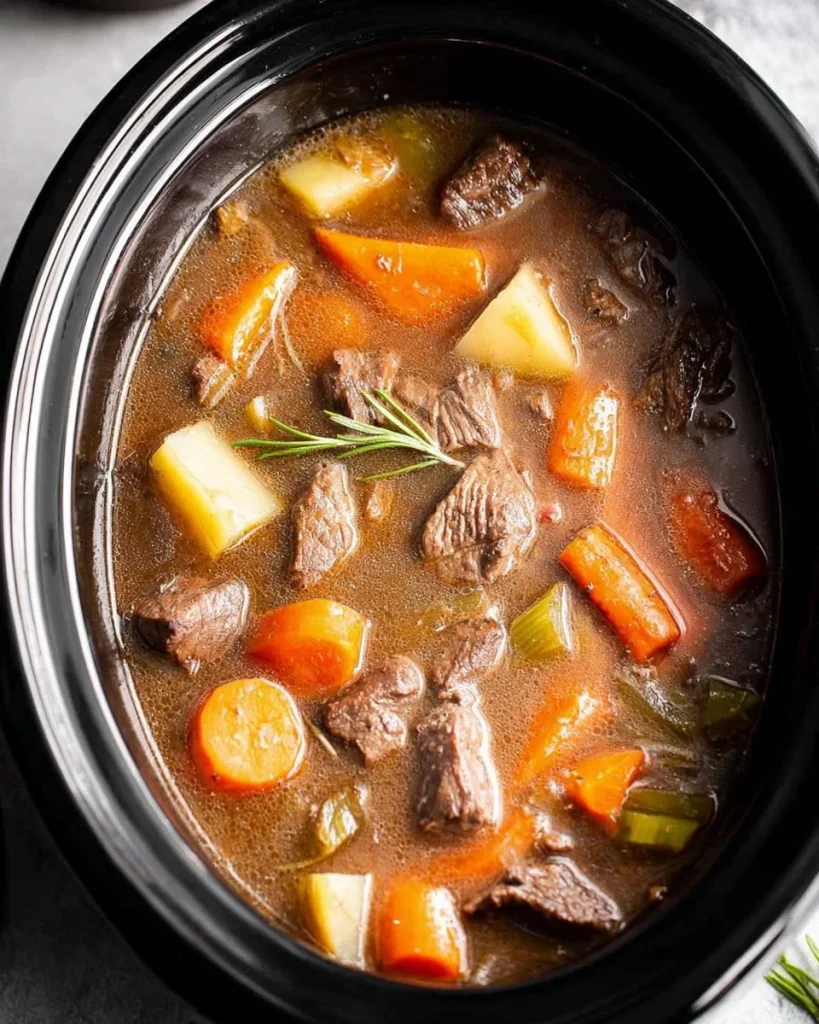
Slow Cooker Irish Beef Stew
Ingredients
Method
- Heat the oil in a large skillet over medium-high heat. Add the beef in a single layer and brown on all sides without crowding the pan. Work in batches if needed. Transfer the browned meat to a 4–6 quart slow cooker.
- In the same hot skillet, add the onions and cook over medium heat until softened, about 4–5 minutes. Add the crushed garlic and cook 30 seconds until fragrant.
- Pour about 1/2 cup of the beef broth into the skillet and scrape the browned bits (fond) off the bottom with a wooden spoon. Take the skillet off the heat and carefully pour the deglazed liquid and onions into the slow cooker over the meat.
- Add the potatoes, carrots and celery into the slow cooker on top of the beef.
- In a measuring jug, whisk together the remaining beef broth, Worcestershire sauce, and flour until smooth. Pour this mixture over the meat and vegetables and stir gently to combine. Tuck in the thyme, rosemary, and optional bay leaf. Season with 1/2 teaspoon salt and fresh ground pepper to taste.
- Cover and cook on LOW for 7–8 hours or on HIGH for 4 hours, until the beef is fork-tender and the vegetables are cooked through.
- When ready to thicken, remove the lid and stir the stew. Mix 2 tablespoons cornstarch with 3–4 tablespoons cold water to make a smooth slurry. Stir the slurry into the hot stew.
- Simmer on HIGH without the lid for 15–30 minutes, stirring occasionally, until the gravy has thickened to your liking. Taste and adjust seasoning before serving.