Lemon Pound Cake


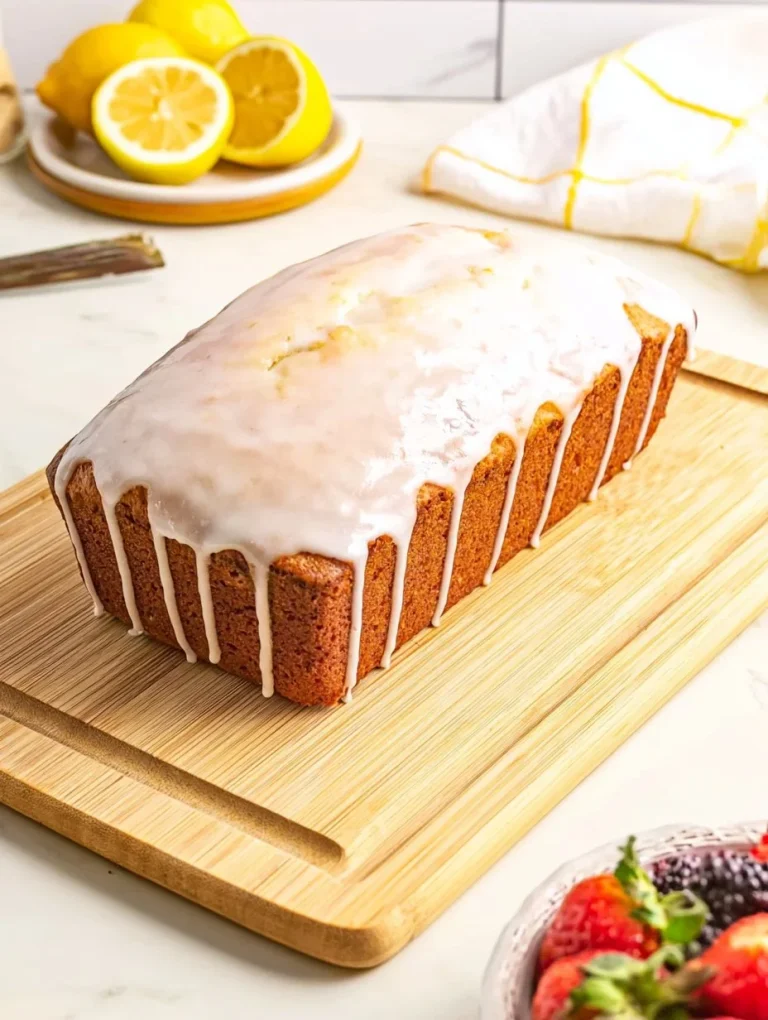
I first tried this lemon pound cake on a rainy weekend and it immediately became my go-to when I needed a simple, citrus-packed dessert that travels well and keeps for days. This loaf is rich from butter, bright from fresh lemon juice and zest, and finished with a glossy lemon glaze that cuts through the richness. If you love the idea of lemon with a twist, I also like the lemon-blueberry pound cake for a fruit-laced alternative.
Why you’ll love this dish
This is the kind of cake that hits multiple sweet spots: it’s buttery and comforting like a classic pound cake, but the lemon juice and zest give it freshness so it never feels heavy. It’s perfect for afternoon tea, a casual brunch, or wrapped up as a homemade gift.
“A perfectly balanced loaf — moist crumb, bright lemon, and a glaze that makes every slice feel special.” — home baker review
Reasons to try it:

- Simple pantry ingredients with a guaranteed crowd-pleaser result.
- Makes ahead easily and keeps without losing texture.
- Kid-friendly and elegant enough for a holiday table.
How this recipe comes together
Step-by-step overview:
- Cream the butter and sugar until pale and aerated to build structure.
- Add eggs one at a time to maintain a smooth, emulsified batter.
- Alternate dry flour and milk so the batter stays tender.
- Stir in lemon juice and zest for fresh citrus flavor.
- Bake in a standard 9×5 loaf pan until a skewer comes out clean.
- Glaze while the cake is warm so the glaze sets with a shiny finish.
This overview gives a sense of the workflow: preparation, mixing, bake, cool slightly, glaze, and serve.
What you’ll need
- 1 cup unsalted butter, softened — forms the rich base of the cake. (Room temperature is critical: press gently with a finger; it should leave an impression.)
- 2 cups granulated sugar — sweetens the batter and helps with texture.
- 4 large eggs — bind and provide structure; use room-temperature eggs for better volume.
- 3 cups all-purpose flour — the backbone of the cake. Spoon and level the flour for accurate measurement.
- 1/2 cup milk — keeps the crumb moist; whole milk gives best flavor, but 2% works.
- 1/4 cup fresh lemon juice — the bright, zesty core flavor.
- Zest of 2 lemons — adds aromatic citrus oils; don’t skip zest for the best flavor.
- 1/2 teaspoon baking powder — gives a gentle lift.
- 1/2 teaspoon salt — balances sweetness and rounds flavors.
- 1 cup powdered sugar — for the sweet, glossy glaze.
- 2 tablespoons fresh lemon juice — to make the glaze tart and refreshing.
Notes and substitutions:
- If you don’t have fresh lemons, bottled juice works in a pinch, but fresh zest is essential for aroma.
- For a lighter crumb, substitute 1/2 cup of the flour with cake flour.
- For a dairy-free version, swap the milk with unsweetened almond milk and use a dairy-free butter alternative (results will vary).
Step-by-step instructions

Preparation
- Preheat the oven to 325°F (160°C). Grease and flour a 9×5-inch loaf pan, tapping out excess flour.
- In a large bowl, beat 1 cup softened unsalted butter with 2 cups granulated sugar until light and pale (3–5 minutes with a hand mixer or stand mixer on medium).
- Add 4 large eggs one at a time, beating briefly after each addition until just incorporated.
- Stir in 1/4 cup fresh lemon juice and the zest of 2 lemons.
Baking
5. Whisk together 3 cups all-purpose flour, 1/2 teaspoon baking powder, and 1/2 teaspoon salt in a separate bowl.
6. Add the dry ingredients to the butter mixture in three parts, alternating with 1/2 cup milk (begin and end with the dry ingredients). Mix on low until just combined — avoid overmixing.
7. Pour the batter into the prepared pan, smooth the top, and bake at 325°F for 55–70 minutes. Start checking at 50 minutes; the cake is done when a toothpick inserted in the center comes out with a few moist crumbs but no raw batter.
8. Let the cake cool in the pan for 10–15 minutes, then remove to a wire rack.
Glazing
9. While the cake cools, whisk 1 cup powdered sugar with 2 tablespoons fresh lemon juice until smooth. If too thick, add a teaspoon of water at a time.
10. When the cake is still slightly warm, spoon or brush the glaze over the top, letting it drip down the sides. The residual heat helps the glaze set with a thin, shiny crust.
Serving
11. Allow the glaze to set for 15–20 minutes. Slice with a serrated knife and serve slightly warm or at room temperature.
Tip: For even slicing, chill the cake for 20 minutes after glazing so the glaze firms up and the crumb is less likely to crumble.
Best ways to enjoy it
- Serve slices plain with a cup of coffee or Earl Grey tea for a quiet morning treat.
- Top with lightly sweetened whipped cream and fresh berries for brunch.
- For a dessert plate, serve with a scoop of vanilla ice cream and a drizzle of berry coulis.
- Cut into smaller slices, wrap in parchment, and include in a picnic box — the loaf holds up well on the go.
Storage and reheating tips
- At room temperature: store wrapped in plastic wrap or in an airtight container for up to 3 days.
- In the refrigerator: wrap tightly and refrigerate up to 1 week (bring to room temperature before serving for best flavor).
- Freezing: double-wrap slices or the whole loaf in plastic and foil, freeze up to 3 months. Thaw overnight in the refrigerator or at room temperature for a few hours.
- Reheating: warm single slices in the microwave for 10–15 seconds, or for a crispier edge, toast briefly in a 325°F oven for 8–10 minutes.
Food safety: because this cake contains eggs, follow the above storage guidelines and discard after recommended times.
Pro chef tips
- Don’t over-cream the butter and sugar; you want them light, not fluffy with too much air, which can cause collapsing.
- Room temperature ingredients blend more smoothly and produce a more even crumb.
- Use a microplane for zest to avoid bitter white pith.
- Measure flour by spooning into the cup and leveling — packing flour will make the loaf dense.
- If the top browns too quickly, tent the loaf loosely with foil for the last 10–20 minutes of baking.
- For a finer, more tender crumb, sift the powdered sugar for the glaze to avoid lumps. For another approach to lemon cakes and additions, see this blueberry-forward version for inspiration: lemon-blueberry pound cake with tips.
Creative twists
- Blueberry lemon: fold 1 to 1 1/2 cups fresh or frozen (tossed in a tablespoon flour) into the batter before baking.
- Lemon-cream cheese swirl: fold softened cream cheese sweetened with a tablespoon sugar into the batter for ribbons of tang.
- Coconut-lemon: replace 1/4 cup flour with 1/4 cup shredded coconut and sprinkle toasted coconut on the glaze.
- Gluten-free: substitute a 1:1 gluten-free flour blend and add 1/2 teaspoon xanthan gum if your blend lacks it.
- Mini loaves or muffins: bake in mini loaf pans or muffins at 350°F; start checking at 18–25 minutes.
For more plating and presentation ideas with lemon cakes, you might like this alternative recipe presentation: lemon-blueberry pound cake presentation.
Your questions answered
Q: Can I use bottled lemon juice instead of fresh?
A: Fresh lemon juice is best for flavor brightness and fresh aroma; bottled will work but won’t give the same aromatic zip. Always use fresh zest.
Q: Why did my pound cake come out dense or gummy?
A: Common causes include overmeasuring flour, overmixing after adding flour, or underbaking. Use the spoon-and-level method for flour and mix until just combined.
Q: Can I make this dairy-free or vegan?
A: You can swap milk for plant milk and use a vegan butter, but eggs are structural. For egg-free, try a tested vegan pound cake recipe that uses flax eggs or commercial egg replacer, as texture will differ.
Q: How long does the glaze stay set?
A: The glaze firms to a thin crust within 20–30 minutes at room temperature; it will soften if refrigerated but still tastes great.
Q: Can I turn this into cupcakes?
A: Yes — bake at 350°F and check after 18–22 minutes. Cupcakes will be quicker and are great for portioning.
Conclusion
If you enjoy a classic, buttery loaf with a bright lemon punch, this lemon pound cake is an easy, reliable bake that rewards simple technique. For additional glazed lemon cake methods, check the detailed glazing approach in Iced Lemon Pound Cake – Sally’s Baking Addiction. For a science-forward take on texture and technique, I recommend reading the Serious Eats breakdown at Lemon Pound Cake Recipe – Serious Eats. And if you want a moist, buttery variation with extra tips, this recipe from Once Upon a Chef is an excellent companion: Best Lemon Pound Cake Recipe – Moist & Buttery – Once Upon a Chef.

Lemon Pound Cake
Ingredients
Method
- Preheat the oven to 325°F (160°C). Grease and flour a 9×5-inch loaf pan.
- In a large bowl, beat the softened unsalted butter with granulated sugar until light and pale (3–5 minutes with a hand mixer or stand mixer on medium).
- Add the eggs one at a time, beating briefly after each addition until just incorporated.
- Stir in the fresh lemon juice and the lemon zest.
- Whisk together the all-purpose flour, baking powder, and salt in a separate bowl.
- Add the dry ingredients to the butter mixture in three parts, alternating with the milk. Mix on low until just combined — avoid overmixing.
- Pour the batter into the prepared pan, smooth the top, and bake for 55–70 minutes. Check at 50 minutes; the cake is done when a toothpick inserted in the center comes out with a few moist crumbs but no raw batter.
- Let the cake cool in the pan for 10–15 minutes, then remove to a wire rack.
- While the cake cools, whisk the powdered sugar with the fresh lemon juice until smooth. If too thick, add a teaspoon of water at a time.
- When the cake is still slightly warm, spoon or brush the glaze over the top, letting it drip down the sides.
- Allow the glaze to set for 15–20 minutes. Slice and serve slightly warm or at room temperature.