Flan in a Cup for Business

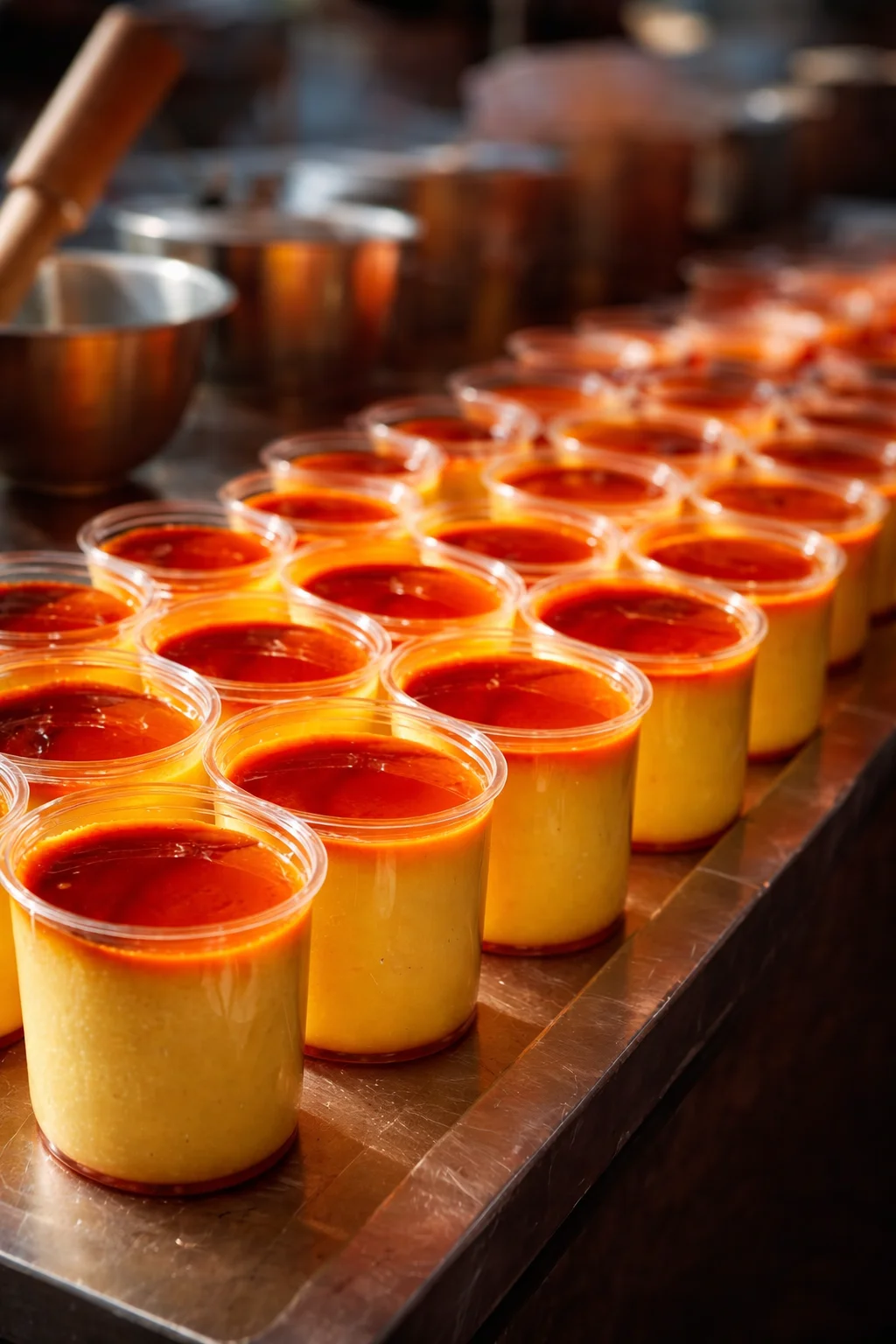
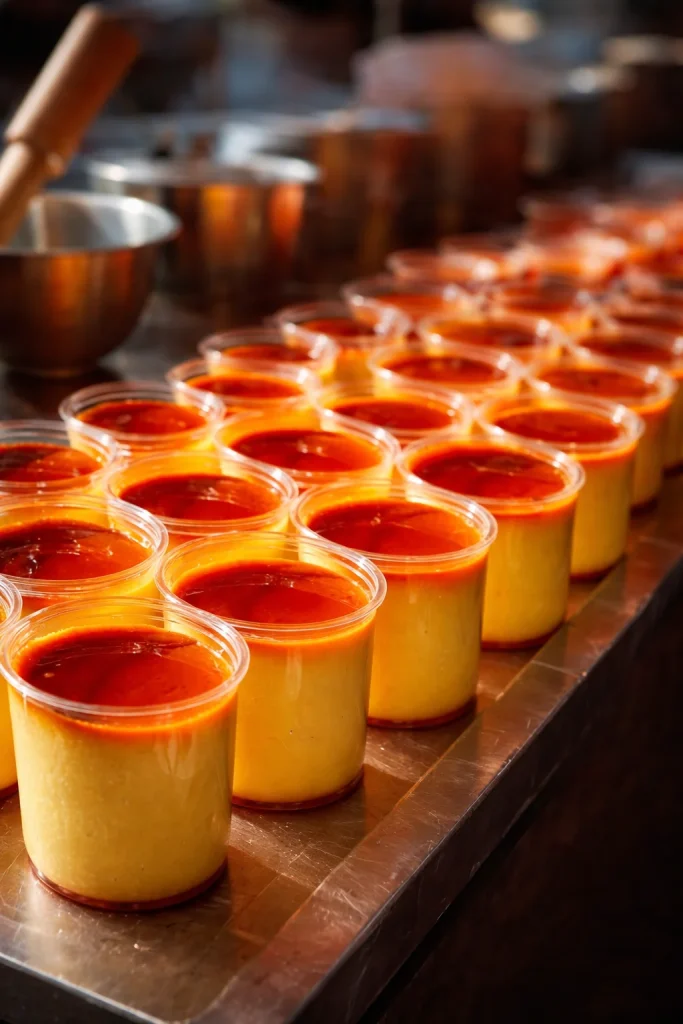
I still remember the first time I made these flans in plastic cups for a bake-sale—simple ingredients, fast assembly, and every cup disappeared. Flan in a Cup for Business is a creamy, portable flan made with cream cheese, a packet of flan mix, condensed milk, and gelatin, finished with a little cajeta at the bottom of each cup. It’s ideal for selling at markets, catering small events, or prepping a crowd-pleasing dessert that travels well. If you want a savory main to pair at a pop-up or event, consider a hearty option like this quick sheet-pan chicken with sweet potatoes & asparagus for contrast: sheet-pan chicken with sweet potatoes & asparagus.
Why you’ll love this dish
This recipe checks a lot of boxes: cost-effective ingredients, minimal hands-on time, and a consistent set-and-forget finish once the cups are chilled. Because you assemble in individual cups, portion control is automatic and they’re easy to transport. It’s also forgiving—flan mix plus cream cheese gives a silkier texture than standard milk-only flans, and the cajeta adds an irresistible caramel note at the bottom.
"Perfect for selling or serving at parties—creamy, stable, and customers love the cajeta surprise at the bottom."
What makes it special beyond convenience is texture: the cream cheese adds richness and body, while the gelatin ensures the flan holds up in warm display cases better than an egg-based custard.

Step-by-step overview
- Bloom and dissolve the gelatin, then blend it with cream cheese, condensed milk, the flan packet, and vanilla.
- Add milk gradually while blending to achieve a smooth, pourable mixture.
- Spoon cajeta into cups, pour in the flan mix, and tint if you want a classic yellow hue.
- Chill until fully set (generally a few hours or overnight).
This short process makes it easy to scale up for dozens or hundreds of cups.
What you’ll need
- 1 block (1 paquete) cream cheese — room temperature for easier blending (you can use neufchâtel to cut fat).
- 1 packet of flan mix — any brand will do; use a standard single-serving/packet size.
- 1 small can sweetened condensed milk — this adds sweetness and body.
- 5 tablespoons gelatin (grenetina) — powdered; see tips for blooming instructions.
- Vanilla to taste — 1–2 teaspoons is typical.
- Yellow food coloring (optional) — for that classic flan color.
- Cajeta (goat’s milk caramel) — a tablespoon or two per cup for the base.
- 1.5 liters milk — add gradually; whole milk gives the creamiest result (you can swap part for evaporated milk for extra silkiness).
Substitutions and notes:
- For a lighter option, swap half the cream cheese for Greek yogurt, but the texture will be slightly less dense.
- If you need vegetarian gelatin alternatives, use agar-agar (adjust proportion and method; agar sets differently).
- Use pasteurized dairy and unopened canned condensed milk for safety and consistency.
How to prepare Flan in a Cup for Business

- Bloom the powdered gelatin: sprinkle the 5 tablespoons over about 1/2 cup of cold milk and let it sit for 5 minutes, then gently warm until dissolved (do not boil). This step ensures smooth, lump-free gel.
- Blend the softened cream cheese, the flan mix, condensed milk, dissolved gelatin, and vanilla until smooth.
- With the blender running, add the remaining milk in a slow steady stream until you have a silky, pourable mixture.
- Prepare clear plastic or glass cups and spoon cajeta into the bottom of each.
- Pour the flan mixture into the cups, leaving a small headspace. Add a drop or two of yellow food coloring if you like.
- Refrigerate for at least 3–4 hours, preferably overnight, until fully set.
Ingredients list
- 1 block cream cheese (room temperature)
- 1 packet flan mix
- 1 small can sweetened condensed milk
- 5 tablespoons powdered gelatin (grenetina)
- Vanilla extract, to taste (about 1–2 tsp)
- Yellow food coloring (optional)
- Cajeta for the cup bottom (about 1 tbsp per cup)
- 1.5 liters milk (whole milk recommended)
Tips on ingredient quality:
- Use full-fat cream cheese and whole milk for the creamiest mouthfeel.
- If you plan to sell commercially, check ingredient labeling requirements and use food-safe packaging like the 125 ml gelatin cups recommended for single-serve desserts.
Directions to follow
- Bloom the gelatin: sprinkle it over 1/2 cup cold milk and let sit 3–5 minutes. Warm gently until fully dissolved; do not boil.
- In a blender, combine room-temperature cream cheese, the flan packet, condensed milk, dissolved gelatin, and vanilla. Blend until smooth.
- With the blender on low, pour the remaining milk gradually into the mixture until homogeneous and pourable. Stop and scrape the sides if needed.
- Prepare the cups: spoon 1 tablespoon of cajeta into the bottom of each serving cup.
- Pour the flan mixture into the cups over the cajeta. If you want the classic yellow color, add a couple of drops of yellow food coloring to the blender before pouring.
- Cover the cups (plastic lids or wrap) and refrigerate for at least 3–4 hours, preferably 6–8, until the flan is firm. Enjoy chilled.
Best ways to enjoy it
- Serve chilled straight from the cup; guests can eat with spoons or you can add a decorative lid and a tiny spoon for takeaways.
- Garnish with a small swirl of extra cajeta, a sprinkle of toasted coconut, or chopped nuts for texture.
- For a contrasting savory pairing at events, try a creamy pasta or a bright salad. A rich pasta like creamy mushroom & asparagus chicken penne can make a satisfying main before these sweet cups.
Presentation tip: clear cups show off the cajeta layer and the custard color, which sells well visually.
Storage and reheating tips
- Refrigerate: keep flan cups covered in the fridge and consume within 3–4 days for best texture and safety.
- Do not leave at room temperature for more than 2 hours (1 hour if ambient temps exceed 32°C/90°F).
- Freezing: not recommended—gelatin-based desserts can become grainy after freezing and thawing. If you must freeze, expect a change in texture and thaw overnight in the refrigerator.
- Transport: keep on ice or in coolers during transport; maintain ≤4°C to prevent spoilage.
Extra advice
- Helpful cooking tips: always bloom gelatin—skipping this can cause lumps or weak setting. Warm the dissolved gelatin just enough to melt; overheating can reduce setting strength.
- Scaling: multiply ingredients proportionally; use a large blender or work in batches. For many cups, consider dissolving gelatin in a saucepan with a small portion of milk and then whisking into a larger mixing bowl.
- Packaging for sale: use tamper-evident lids and label with ingredients and “keep refrigerated” and a use-by date. For display, refrigerate on a cold shelf or use refrigerated display cases.
- For a quicker set, chill in a blast chiller if you have one—commercial sellers often use this to speed turnaround. Also, check local food-safety rules for selling refrigerated desserts. For another savory option to serve alongside at an event, try this Caesar chicken with asparagus recipe as a main course inspiration: Caesar chicken with asparagus.
Creative twists
- Dulce de leche swirl: instead of cajeta, swirl dulce de leche on top before serving for a different caramel profile.
- Coffee flan: dissolve about 1–2 teaspoons instant espresso into the milk for a subtle coffee flavor.
- Chocolate flan cups: add 2–3 tablespoons cocoa powder to the blender for a chocolate variation (balance with a touch more condensed milk if needed).
- Vegan/vegetarian: swap gelatin for agar-agar (follow agar package instructions for setting and proportions) and replace cream cheese with a silken tofu or vegan cream cheese alternative.
- Mini cheesecakes: reduce milk to get a denser texture and top each cup with fresh fruit for a cheesecake-like treat.
Your questions answered
- How long does it take to set? Allow at least 3–4 hours in the fridge for a full set; overnight is best if you need a firmer texture for transport.
- Can I use plain gelatin sheets instead of powdered? Yes—follow the conversion on the gelatin packet (typically 1 sheet ≈ 1 teaspoon powdered gelatin) and bloom accordingly.
- Is this safe to sell commercially? Yes, if you follow local food-safety and labeling regulations: keep products refrigerated, label allergens (milk), and follow a safe use-by window (usually 3–4 days).
- What if my flan is too soft? Next batch, ensure the gelatin fully dissolved and use slightly less milk or a touch more gelatin (add 1/2 tablespoon). Blooming and properly dissolving the gelatin is the most common fix.
- Can I make the flan without cream cheese? You can—omit cream cheese and increase condensed milk or use evaporated milk plus more gelatin, but texture will be lighter and less rich.
Conclusion
For detailed visual tips on making flan in disposable cups, this guide walks through the process step by step: Cómo hacer un delicioso flan en vaso de plástico. If you’re interested in a ready-made business course or product about flan cups for selling, check this commercial resource: FLAN EN VASO PARA NEGOCIO – Paolo Lopez | Hotmart. For a classic egg-based flan reference and inspiration on flavors, see the recipe library here: Goya Recetas Flan | Goya Foods. When you need packaging options for retail portions, these standard 125 ml gelatin cups are convenient and food-safe: Vaso Gelatinero o Para Flan, 4.5 oz,125ml, 100Pzs : Amazon.com.mx.
Enjoy making these flan cups—whether you’re selling them at your next event or serving them for family gatherings, they’re a reliably delicious and profitable dessert.
Flan in a Cup
Ingredients
Method
- Bloom the powdered gelatin: sprinkle the 5 tablespoons over about 1/2 cup of cold milk and let it sit for 5 minutes, then gently warm until dissolved (do not boil).
- Blend the softened cream cheese, flan mix, condensed milk, dissolved gelatin, and vanilla until smooth.
- With the blender running, add the remaining milk in a slow steady stream until you have a silky, pourable mixture.
- Prepare clear plastic or glass cups and spoon cajeta into the bottom of each.
- Pour the flan mixture into the cups, leaving a small headspace. Add a drop or two of yellow food coloring if desired.
- Cover the cups and refrigerate for at least 3–4 hours, preferably overnight, until fully set.